Blizzard of 2005 - February 13
2005 · Boston, United States
An intense winter storm known as the Blizzard of 2005 affects the Northeastern United States, leading to widespread disruptions.
February 16, 1899
The worst blizzard in recorded history in Washington, D.C. caused heavy snow, severely disrupting communications and transportation.
Washington, D.C., United States | United States Weather Bureau
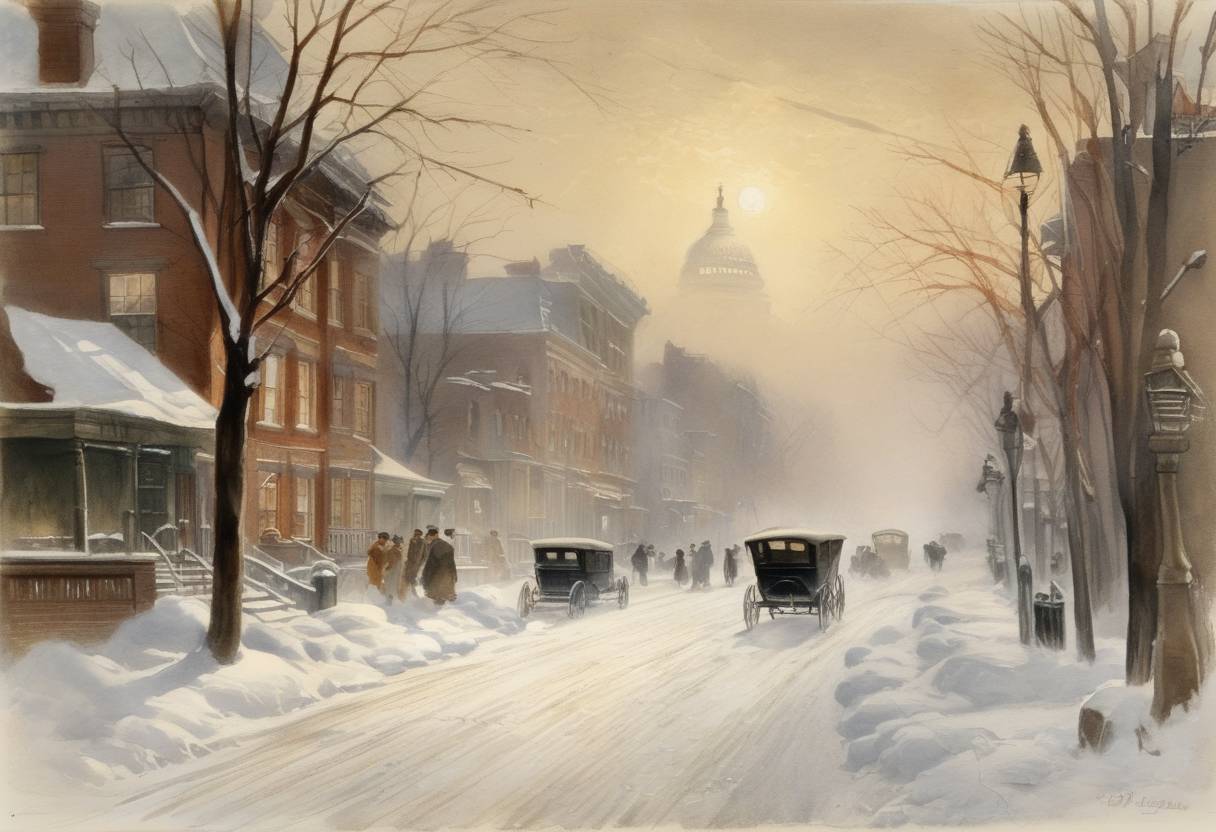
On February 16, 1899, Washington, D.C. was in the grips of what was dubbed one of the most severe blizzards in the city’s recorded history. Known as the Great Blizzard of 1899, this formidable snowstorm was the climax of a wider event known as the “Great Arctic Outbreak” that spread its icy grip across much of the eastern United States.
The Great Arctic Outbreak began earlier in February 1899, characterized by an extraordinary blast of cold air descending from the Arctic. This weather pattern was marked by severe cold and snowfalls that swept across the Midwest and Eastern Seaboard, affecting states from the Great Lakes to the Gulf of Mexico.
By February 16, Washington, D.C. was buried under an overwhelming accumulation of snow. Reports indicate that the snow measured up to 21 inches in the capital, marking it as one of the heaviest snowfalls the city had experienced. The blizzard caused massive disruption throughout the area:
Transportation: Railway systems, a crucial means of transport at the time, were severely hampered. Snow drifts and frozen tracks led to significant delays and cancellations, effectively isolating the city from the rest of the country.
Communication: Telegraph lines, the primary mode of long-distance communication, were knocked out by the weight of snow and ice. This loss of communication compounded the difficulties faced by residents and authorities in coordinating relief efforts and maintaining contact with other regions.
The Great Blizzard of 1899 was a significant meteorological event with far-reaching impacts beyond Washington, D.C.:
Record Temperatures: February 1899 set records for low temperatures in 15 states, and Washington, D.C. itself recorded unprecedented cold.
Economic Disruption: The cost to local economies was substantial, with businesses closed and vital agricultural activities disrupted by the persistent cold.
Social Challenges: Everyday life for residents was profoundly affected, from heating challenges due to shortages of coal to the increased burden on local resources and emergency services.
The severity of the blizzard underscored the vulnerability of urban centers to extreme weather events and highlighted the need for improved infrastructure and emergency preparedness. In the following years, improvements in forecasting and the development of better transportation and communication networks reflected responses to lessons learned from such natural disasters.
The Great Blizzard of 1899 remains etched in the historical memory as a benchmark for future cold-weather events, illustrating the broader impacts of climate phenomena on society.
Source: www.weather.gov