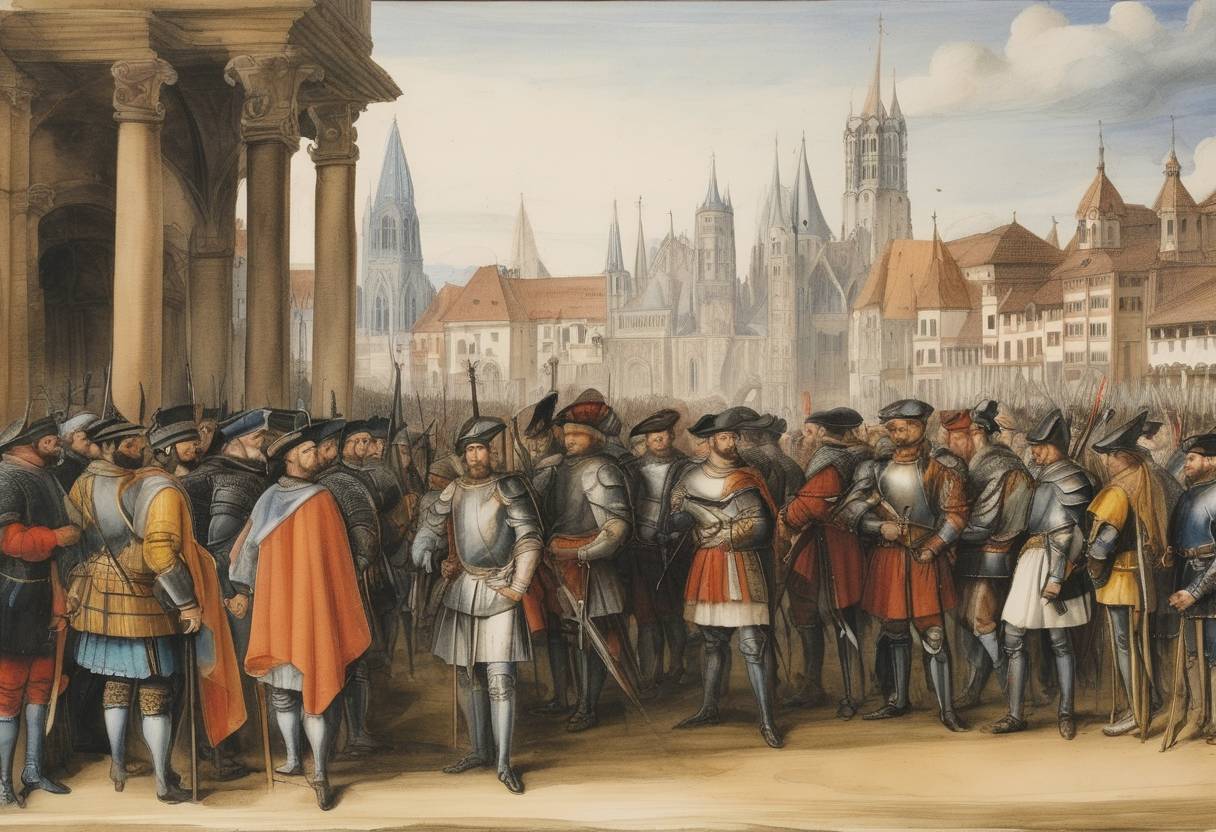
The Treaty of Speyer: May 7, 1544
On May 7, 1544, a significant diplomatic milestone was achieved with the signing of the Treaty of Speyer, an accord that temporarily paused hostilities between France and Spain during the protracted Italian Wars. This treaty emerged as a critical component in the complex geopolitical landscape of 16th-century Europe, predominantly shaped by power struggles over territories in the Italian Peninsula.
Background
The Italian Wars, a series of conflicts from 1494 to 1559, involved major European powers vying for dominance over regions in Italy. This period saw France and Spain frequently positioned as principal adversaries. The wars were marked by shifting alliances and widespread militarized engagements, all seeking control over the strategically vital and economically prosperous Italian states.
By the 1540s, both countries had been embroiled in a particularly intense phase of this enduring conflict. France, led by King Francis I, sought to regain territories lost to Spain, while Charles V, Holy Roman Emperor and King of Spain, aimed to maintain and expand Habsburg influence across Europe.
The Treaty
The Treaty of Speyer represented a temporary, albeit crucial, cessation in this turbulent period of conflict. By signing the treaty, both France and Spain acknowledged a mutual need for reprieve from sustained military engagement. The agreement temporarily alleviated the burden of military operations in Northern Italy, allowing both nations time to address economic strains and internal challenges.
Consequences and Significance
Though the Treaty of Speyer quelled hostilities temporarily, it did not resolve the underlying territorial disputes or long-term rivalries. As was common with many treaties of this era, it served more as a tactical pause rather than a permanent peace. However, it underscored the intricate balance of power politics during the Renaissance and the limitations of military campaigns in achieving lasting resolution without diplomatic dialogue.
The Italian Wars would ultimately continue, shifting in intensity and focus, until the Treaty of Cateau-Cambrésis in 1559, which more definitively ended hostilities between France and Spain over Italian territories.
The Treaty of Speyer remains a noteworthy reflection of the era’s diplomatic dynamics, symbolizing momentary peace amid protracted conflict and exemplifying the use of negotiation as a tool for conflict management during one of Europe’s most tumultuous historical periods.