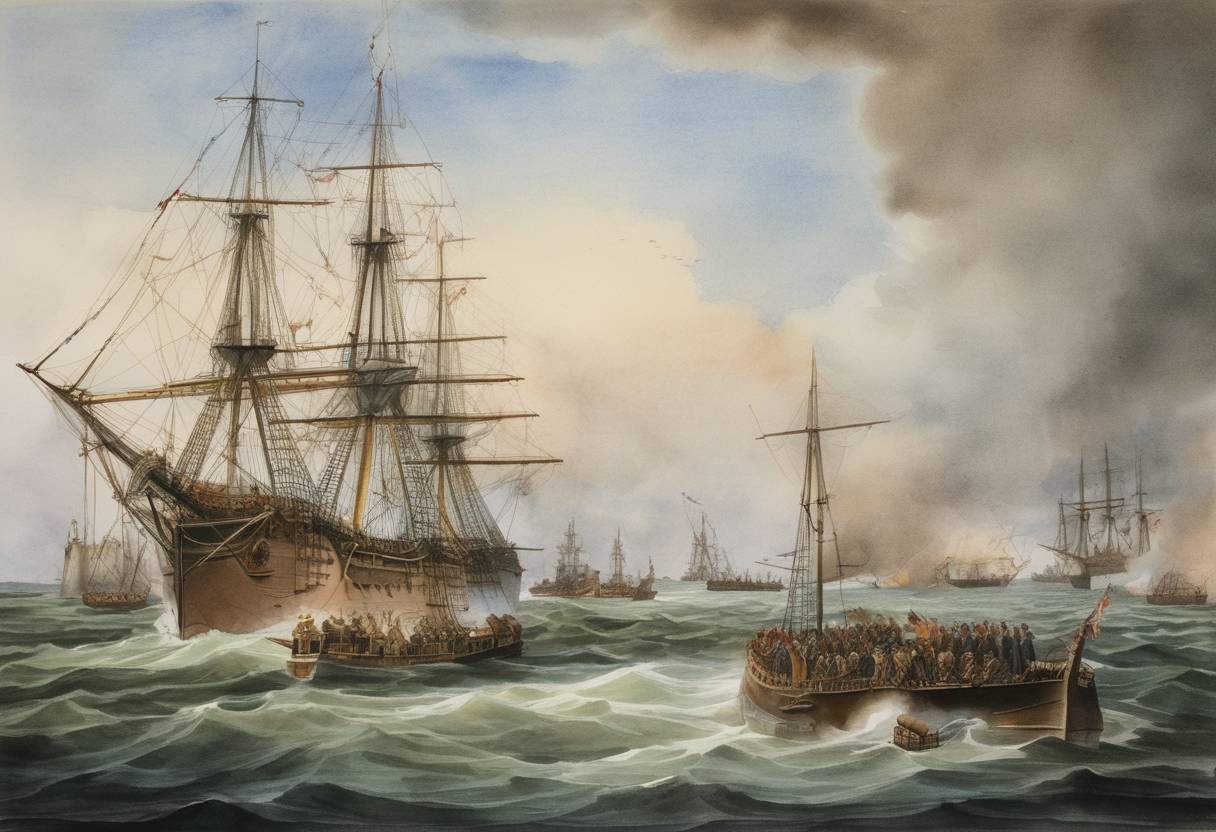
John Paul Jones Takes Command of the USS Bonhomme Richard
On August 13, 1779, John Paul Jones, a prominent naval commander during the American Revolutionary War, took command of the USS Bonhomme Richard. This event marked a pivotal moment in his naval career and set the stage for one of his most famous victories against the British.
Context
The American Revolutionary War (1775–1783) was a conflict between Great Britain and its thirteen American colonies who sought independence. The Continental Congress understood the importance of maritime power and sought to disrupt British supply lines and garner international support.
John Paul Jones, already known for his daring exploits and tactical prowess, had been securing resources and alliances in France. With the support of the French Crown, Jones was provided with a refurbished merchant ship, the Duc de Duras, which he renamed Bonhomme Richard in honor of Benjamin Franklin’s “Poor Richard’s Almanack”.
Key Events Leading Up
Before taking command of the Bonhomme Richard, Jones had established himself with several successful missions aimed at disrupting British maritime activities. His tenacity and aggressive strategies distinguished him among his peers, leading the French government and the Continental Congress to place him at the helm of the newly acquired vessel.
Command and Impact
Upon assuming command, Jones embarked on a mission to raid British shipping interests around the British Isles, aiming to bring the war to British waters and disturb their sense of security. The presence of Bonhomme Richard in these waters symbolized American persistence and skill against the well-equipped Royal Navy.
A crucial victory occurred later on September 23, 1779, against the British warship HMS Serapis. The battle was fierce, and despite suffering heavy damage, Jones famously refused to surrender, declaring, “I have not yet begun to fight!” Eventually, his perseverance led to a British surrender, elevating his status as a national naval hero and cementing his legacy in naval warfare history.
Aftermath and Historical Significance
The command of Bonhomme Richard and the subsequent victory against Serapis had important consequences. It showcased American resolve and capability on the high seas, boosting morale and international perception of the American cause. This success helped secure further support from France, proving vital to the overall success of the American Revolution.
John Paul Jones’ leadership during this period exemplified the importance of strategic naval operations in warfare and left a lasting legacy in naval history, with Bonhomme Richard becoming a symbol of American tenacity and determination.