The Russian Federation Gains Independence from the Soviet Union
1991 · Moscow, Russia
The Russian Federation gains independence from the Soviet Union, marking a significant moment in the dissolution of the USSR.
August 19, 1991
The August Coup, an attempt by Soviet hardliners to take control of the Soviet government from Mikhail Gorbachev, is initiated. This coup ultimately fails, leading to the dissolution of the Soviet Union.
Moscow, USSR | State Committee on the State of Emergency
On August 19, 1991, a group of hardline members within the Soviet government, opposed to General Secretary Mikhail Gorbachev’s reform policies, initiated a coup d’état in an attempt to take control of the Soviet Union. This event is commonly referred to as “The August Coup” or the “August Putsch”.
By 1991, Gorbachev’s policies of glasnost (openness) and perestroika (restructuring) had introduced significant political and economic changes aimed at reviving the Soviet Union. These reforms, however, were met with resistance from hardliners who were concerned about the loss of the Communist Party’s control and the increasing autonomy of Soviet republics.
Early in the morning of August 19, the State Committee on the State of Emergency (GKChP) announced on state television and radio that Gorbachev was unable to carry out his duties due to illness. The committee declared a state of emergency in certain regions of the Soviet Union.
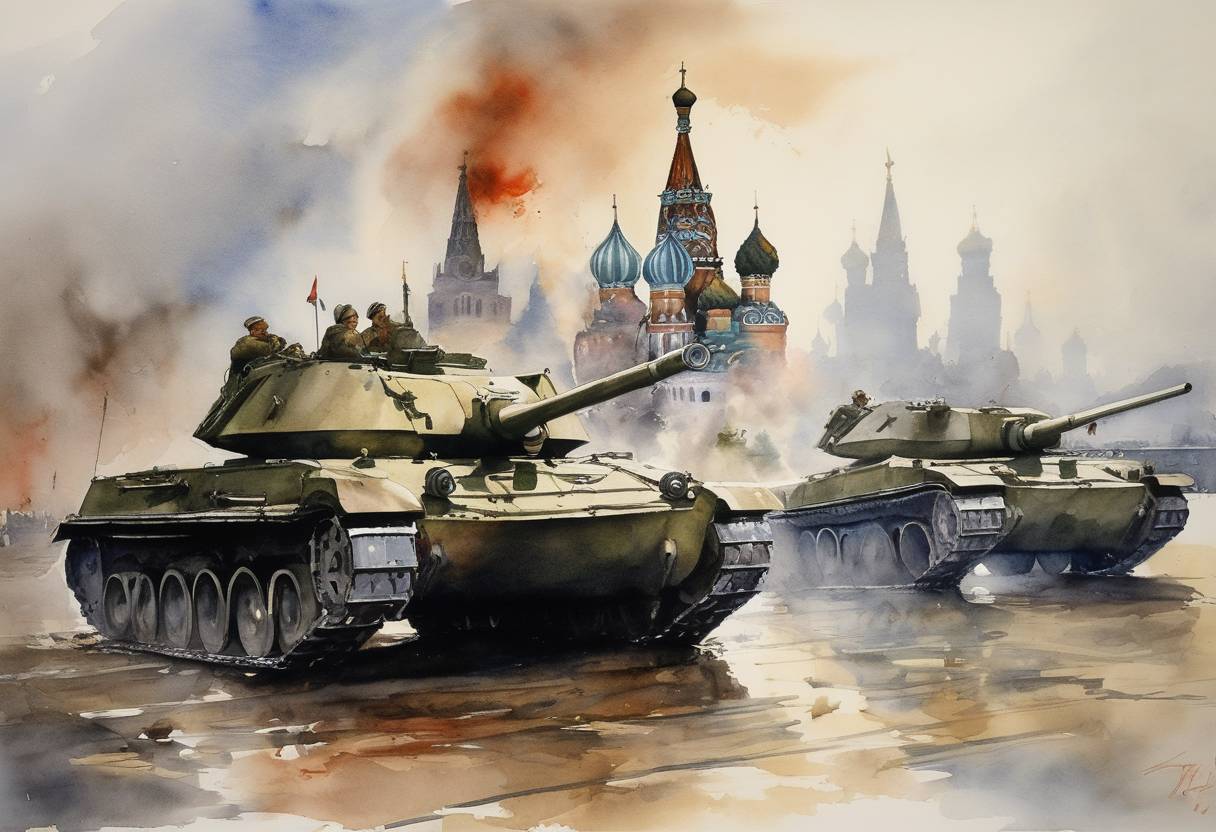
Tanks and troops moved into Moscow, enforcing the coup leaders’ orders, intended to quell potential resistance.
Key figures in the coup included Soviet Vice President Gennady Yanayev, KGB Chairman Vladimir Kryuchkov, Defense Minister Dmitry Yazov, and Prime Minister Valentin Pavlov. They sought to prevent the signing of a new union treaty that would further decentralize power.
Boris Yeltsin, the President of the Russian Soviet Federative Socialist Republic, emerged as the leading figure of resistance against the coup. He famously stood on a tank outside the Russian White House (the parliament building) encouraging citizens to resist and denouncing the coup as unconstitutional.
Crowds gathered in Moscow, defending the legislature and supporting Yeltsin. The Russian people, including a significant number of the military and police forces, largely sided with the anti-coup movement.
By August 21, the coup collapsed due to a lack of decisive action, widespread public opposition, and the unwillingness of military forces to suppress the resistance forcefully.
Gorbachev returned to Moscow from his vacation home in Crimea, where he had been held under house arrest during the coup.
The failure of the coup significantly weakened the position of the Communist Party and accelerated the dissolution of the Soviet Union. Gorbachev resigned as General Secretary of the Communist Party in August, and by December 1991, the Soviet Union had formally dissolved, marking the end of the Cold War era.
The August Coup highlighted the deep divisions within the Soviet leadership and society, and symbolized the ultimate failure of conservative forces to preserve the Soviet system in its existing form. It set in motion the final stages of the Soviet Union’s dissolution, with newly independent republics emerging and global geopolitical realignments taking place.
Source: en.wikipedia.org