The Supernova SN 1054 and the Creation of the Crab Nebula
1054 · N/A, China
The supernova SN 1054 is observed by Chinese astronomers, leading to the creation of the Crab Nebula.
July 5, 1054
A significant astronomical event occurred when a supernova was observed by Chinese astronomers. The supernova's remnant is now known as the Crab Nebula.
Kaifeng, China | Imperial Astronomical Bureau
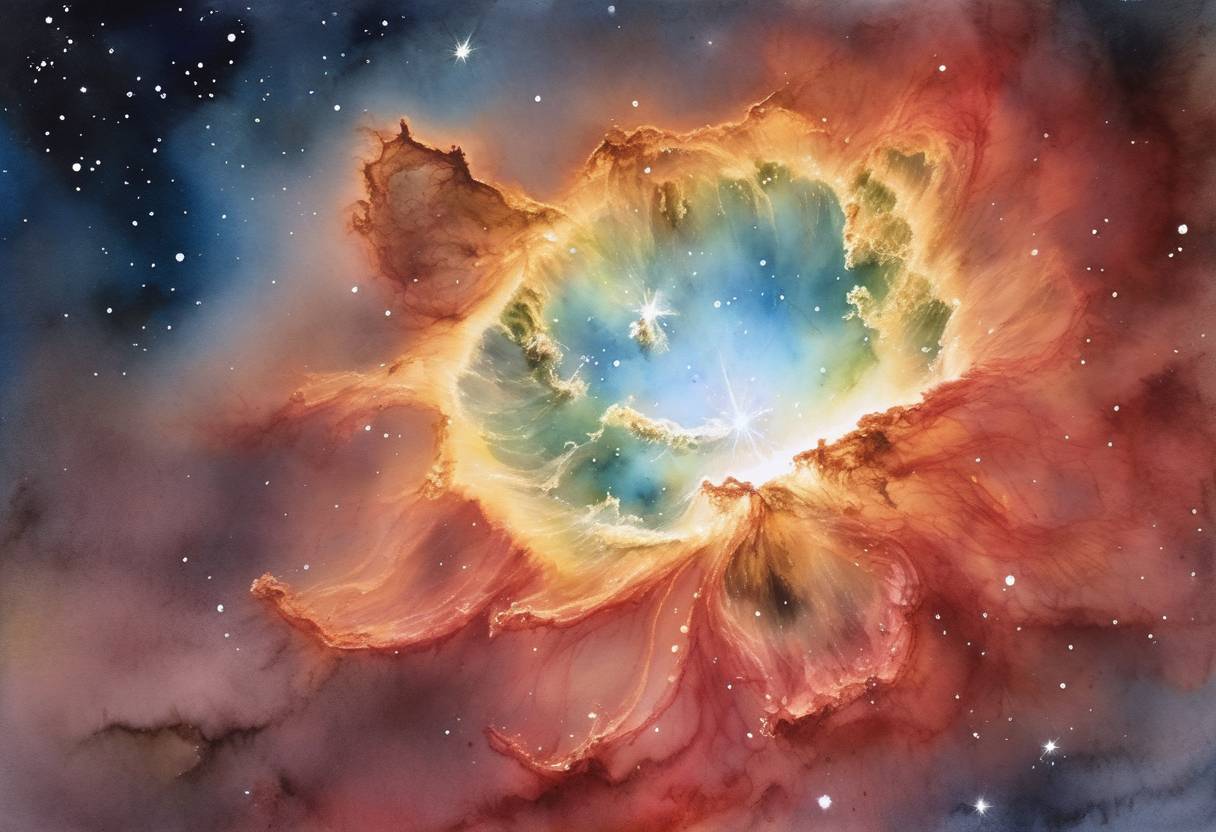
On July 5, 1054, Chinese astronomers recorded a significant astronomical event: the appearance of a bright supernova. This event transpired during the Song Dynasty and was meticulously chronicled in several Chinese records, but it was not exclusively noted in East Asia; records from Japan and the Arab world also reference the event.
The supernova was visible in the daytime sky for 23 days and was one of the brightest stellar events recorded at the time. At night, it remained visible for nearly two years. It appeared in the constellation Taurus, near the star Zeta Tauri. The supernova was described as a “guest star” in the sky, a traditional term used by Chinese astronomers to denote stars that appear temporarily and were not part of the known celestial configuration.
The supernova’s remnants are known today as the Crab Nebula (cataloged as M1 or NGC 1952). This nebula is one of the most studied astronomical objects. Its existence provides critical insight into the life cycle of stars and the processes leading to supernovae. The nebula is currently expanding, with the outer layers moving away from its center.
The precise and widely distributed documentation of the supernova provides modern astronomers with valuable historical data, allowing them to study this celestial event in detail. The supernova that created the Crab Nebula is particularly significant because it was one of the earliest supernovae to be recorded by civilizations capable of documenting such phenomena, and it offers a benchmark for understanding stellar evolution.
The 1054 supernova is a striking example of early human observation of cosmic events. It exemplifies how historical records, when combined with modern scientific techniques, can enrich our understanding of the universe and highlight the continuity of human curiosity and discovery across centuries.
Source: en.wikipedia.org