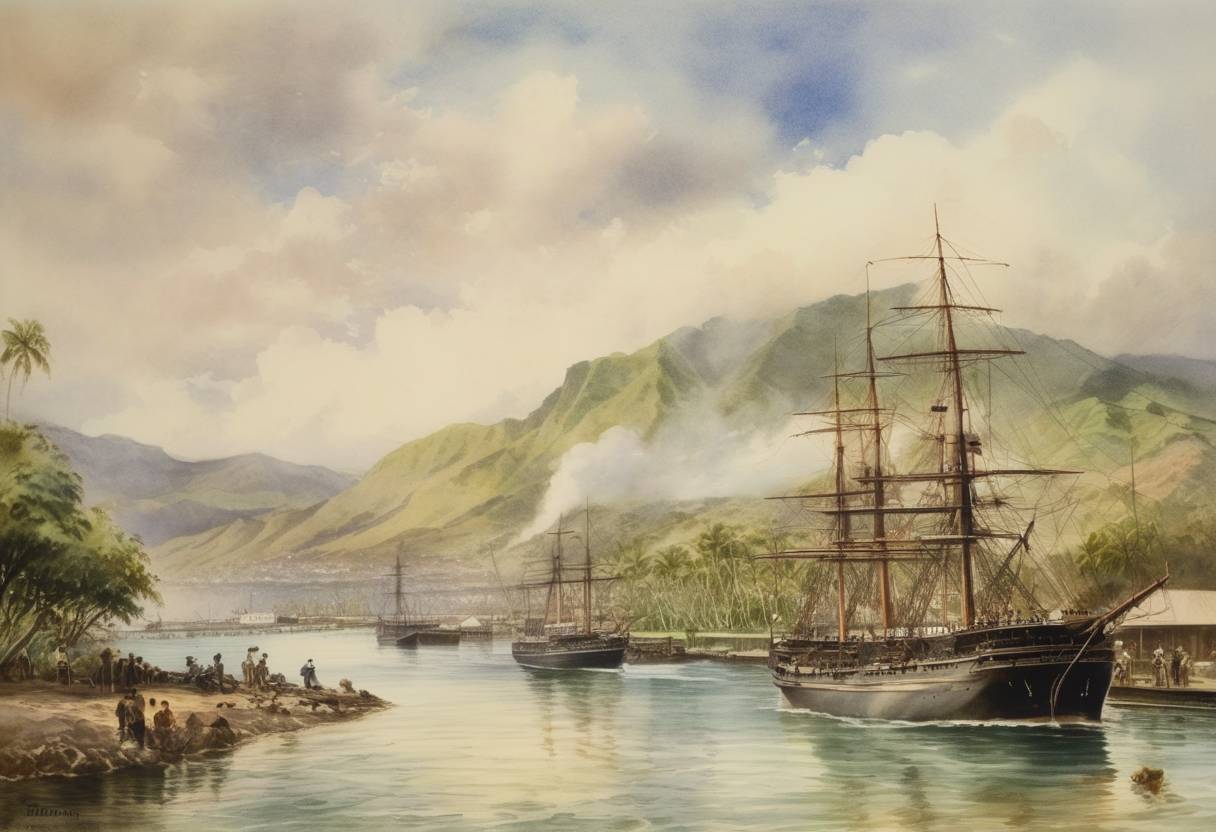
The United States Receives Rights to Pearl Harbor on the Hawaiian Islands
On November 9, 1887, the United States secured exclusive rights to establish a naval base at Pearl Harbor on the Hawaiian Islands. This pivotal moment came as a result of the “Reciprocity Treaty of 1875” and its subsequent amendment, which opened up critical strategic and economic opportunities for the United States in the Pacific region.
Background and Lead-up Events
Reciprocity Treaty of 1875: Initially established favorable trade conditions between the Kingdom of Hawaii and the United States. It allowed Hawaiian sugar access to U.S. markets duty-free, which significantly boosted Hawaii’s economy and solidified economic ties between the two regions.
Political and Economic Pressure: By the mid-1880s, American interests, particularly those involved in Hawaii’s prosperous sugar industry, sought greater influence and security privileges. American businesspersons and missionaries had been establishing deeper roots in the islands, demanding enhanced protections and commercial benefits.
Bayonet Constitution of 1887: Triggered by political unrest and demands from American and European settlers, King Kalākaua of Hawaii was coerced into signing a new constitution that limited the monarchy’s power. This effectively increased the political influence of foreign nationals in Hawaii and paved the way for further concessions to American interests.
The 1887 Agreement
The modification of the Reciprocity Treaty in 1887 specifically granted the United States the exclusive use of Pearl Harbor as a coaling and repair station for its ships. This development demonstrated the United States’ increasing strategic interest in establishing a solid military and naval presence in the Pacific.
Significance and Aftermath
Strategic Importance: Pearl Harbor’s strategic location made it a pivotal naval asset, allowing the United States to project power across the Pacific. It dramatically enhanced U.S. military capabilities and paved the way for greater involvement in Asia and the Pacific in subsequent decades.
Annexation of Hawaii: These developments foreshadowed the eventual overthrow of the Hawaiian monarchy in 1893 and the annexation of Hawaii by the United States in 1898, further solidifying American control over the islands.
Long-term Impact: Pearl Harbor would later become crucial during World War II, especially following the attack on December 7, 1941, which propelled the United States into the conflict. The naval base’s evolution into a major military hub underscores the longstanding strategic value initially recognized in 1887.
This agreement marked a significant juncture in the history of U.S. expansionism and illustrated the growing intersection of economic interests and military strategy in American foreign policy during the late 19th century.