The Opening of The Hermitage Museum to the Public on February 5, 1852
1852 · Saint Petersburg, Russia
The Hermitage Museum in Saint Petersburg, Russia, opens to the public.
June 15, 1985
Rembrandt's painting "Danaë" is damaged in an attack with sulfuric acid by a vandal at the Hermitage Museum in Leningrad (now Saint Petersburg), Russia.
Leningrad, Soviet Union | Hermitage Museum
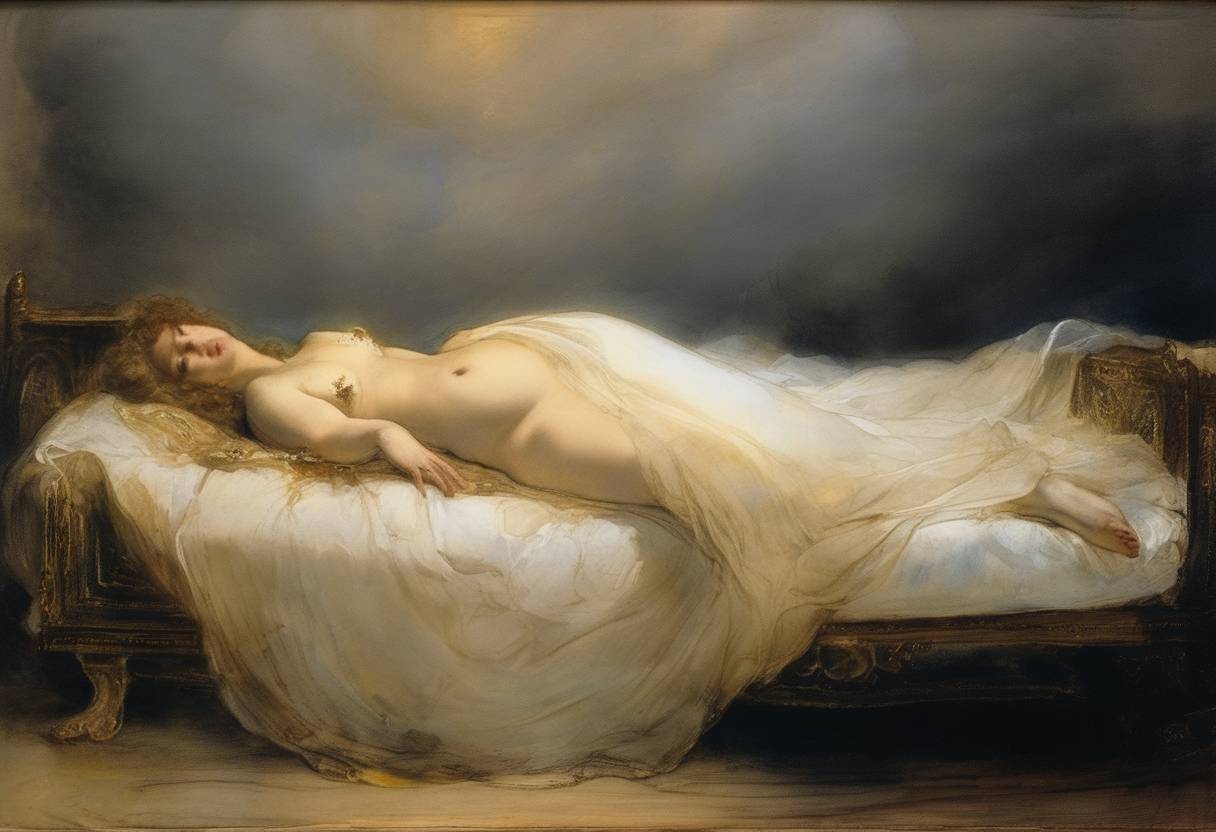
On June 15, 1985, Rembrandt van Rijn’s masterpiece painting “Danaë” suffered a devastating attack at the Hermitage Museum in Leningrad (now Saint Petersburg), Russia. The painting, which was part of the museum’s significant collection since 1772, was severely damaged when a vandal threw sulfuric acid onto its surface and then used a knife to further harm the canvas.
The attacker was a Lithuanian national named Bronius Maigys, who reportedly voiced political frustrations as a motive for his actions. Upon entering the museum, Maigys poured sulfuric acid over the lower half of the painting, causing extensive chemical damage. He then inflicted multiple cuts with a knife, further degrading the iconic image.
The sulfuric acid quickly eroded the paint, particularly affecting Danaë’s legs and draperies, altering their texture and color. The knife slashes extended across the canvas, creating physical ruptures. The damage was significant, with indistinct areas where once detailed brushwork portrayed the mythological scene.
Immediately following the attack, museum staff and restorers embarked on an arduous and delicate restoration process. Given the monumental challenge, the conservation efforts spanned over a decade and employed advanced techniques.
The restorative work involved neutralizing the acid, repairing the slashes, and retouching the obliterated paint. Experts carefully studied Rembrandt’s original methods to restore the piece as accurately as possible, ensuring the essence of Rembrandt’s vision was retained.
The vandalism of “Danaë” highlighted the vulnerabilities of cultural heritage properties. It sparked an international dialogue on art conservation, museum security, and the preservation of historical artworks. The event also underscored the emotional and cultural impact that art holds in society, prompting increased efforts to protect such invaluable treasures.
Nearly twelve years after the vandalism, in 1997, “Danaë” was once again exhibited to the public, symbolizing resilience and the enduring significance of cultural preservation. Although the painting bears the scars of the attack, it continues to be a beacon of artistic brilliance and historical intrigue.
Source: en.wikipedia.org