The First Barbary War: Stephen Decatur's Raid on February 16, 1804
1804 · Tripoli, Libya
The first Barbary War: Stephen Decatur leads a raid to burn the captured USS Philadelphia.
June 10, 1805
The First Barbary War, a conflict between the United States and Tripolitania (present-day Libya), concluded with the signing of a peace treaty aboard the USS Constitution. The treaty ended hostilities and promised the release of American prisoners.
Tripoli, Libya | United States Navy
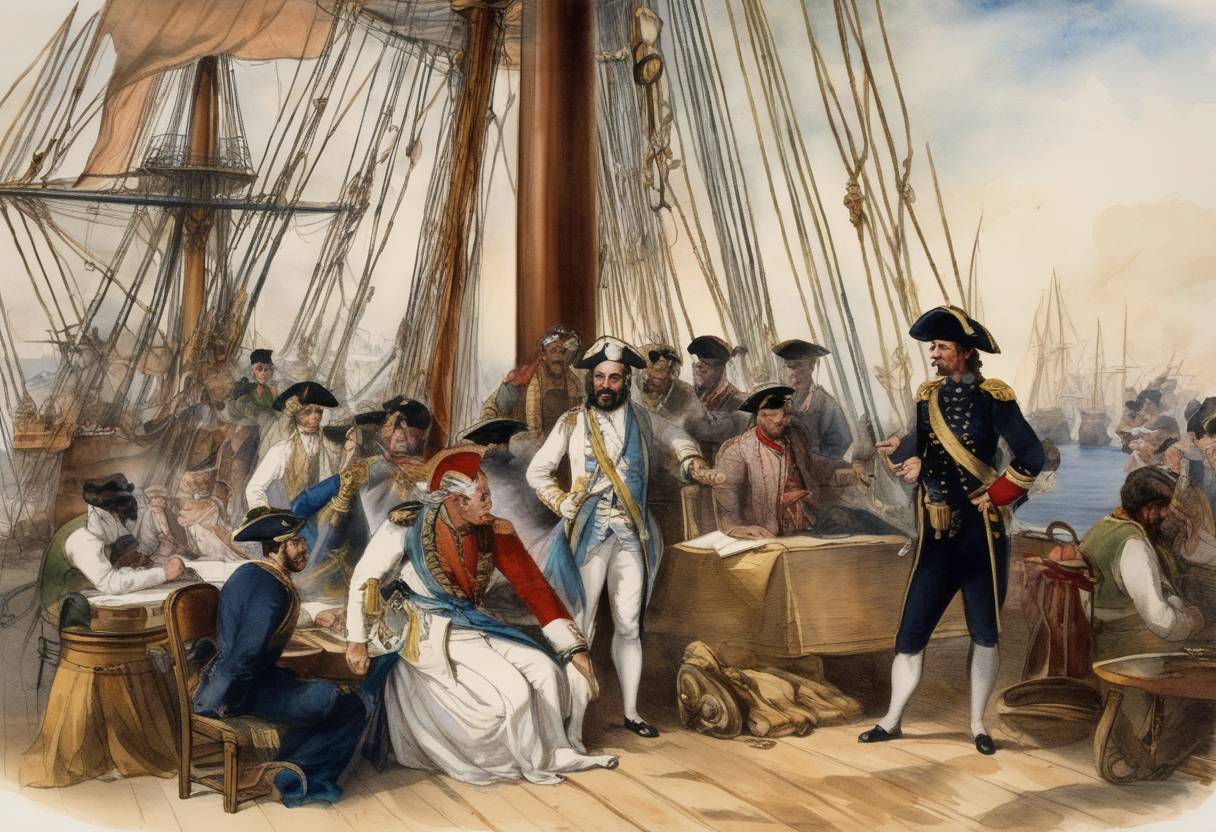
The First Barbary War, a significant conflict between the United States and the Barbary States, primarily Tripolitania (modern-day Libya), concluded on June 10, 1805. This resolution marked an essential chapter in early American naval history, showcasing the young nation’s resolve and military capability.
The First Barbary War (1801-1805) erupted due to piracy issues and demands for tribute by the Barbary States—Tripoli, Tunis, Algiers, and Morocco—along the North African coast. American merchant ships faced threats from privateers. The US, then an emergent maritime power, refused to pay exorbitant tributes, prompting war.
The conflict saw several naval engagements and notable actions, including the daring 1804 raid led by Lieutenant Stephen Decatur to burn the captured USS Philadelphia in Tripoli’s harbor. Under the leadership of Commodore Edward Preble and later Commodore Samuel Barron, US naval forces executed a blockade and launched assaults on captured territories.
To complement these naval efforts, the US also engaged in a land campaign. The notable action involved William Eaton, a former consul to Tunis, who led a band of Marines and mercenaries in an overland march from Egypt, capturing the city of Derna with the support of a naval bombardment.
Hostilities effectively concluded with the negotiation of a peace treaty. On June 10, 1805, the treaty was signed aboard the USS Constitution, also known as “Old Ironsides,” a prominent US warship. Under the terms of the treaty:
Although the treaty did not entirely abolish tribute payments to the Barbary States, it marked a decisive assertion of American naval power. It solidified the US’s commitment to defending its interests overseas without succumbing to foreign coercion.
The war and its resolution set a precedent for future American foreign engagements, emphasizing military readiness and diplomatic negotiations. It enhanced the reputation of the US Navy and provided valuable military experience for future conflicts, including the War of 1812.
Source: www.history.navy.mil