Discovery of Guadeloupe by Christopher Columbus on November 4, 1493
1493 · Guadeloupe, France
Christopher Columbus discovered the island of Guadeloupe during his second voyage to the New World.
December 26, 1492
Italian explorer Christopher Columbus, during his first voyage to the New World, found the settlement known as La Navidad in present-day Haiti, which became the first European colony in the Americas.
La Navidad, Haiti | Spanish Crown
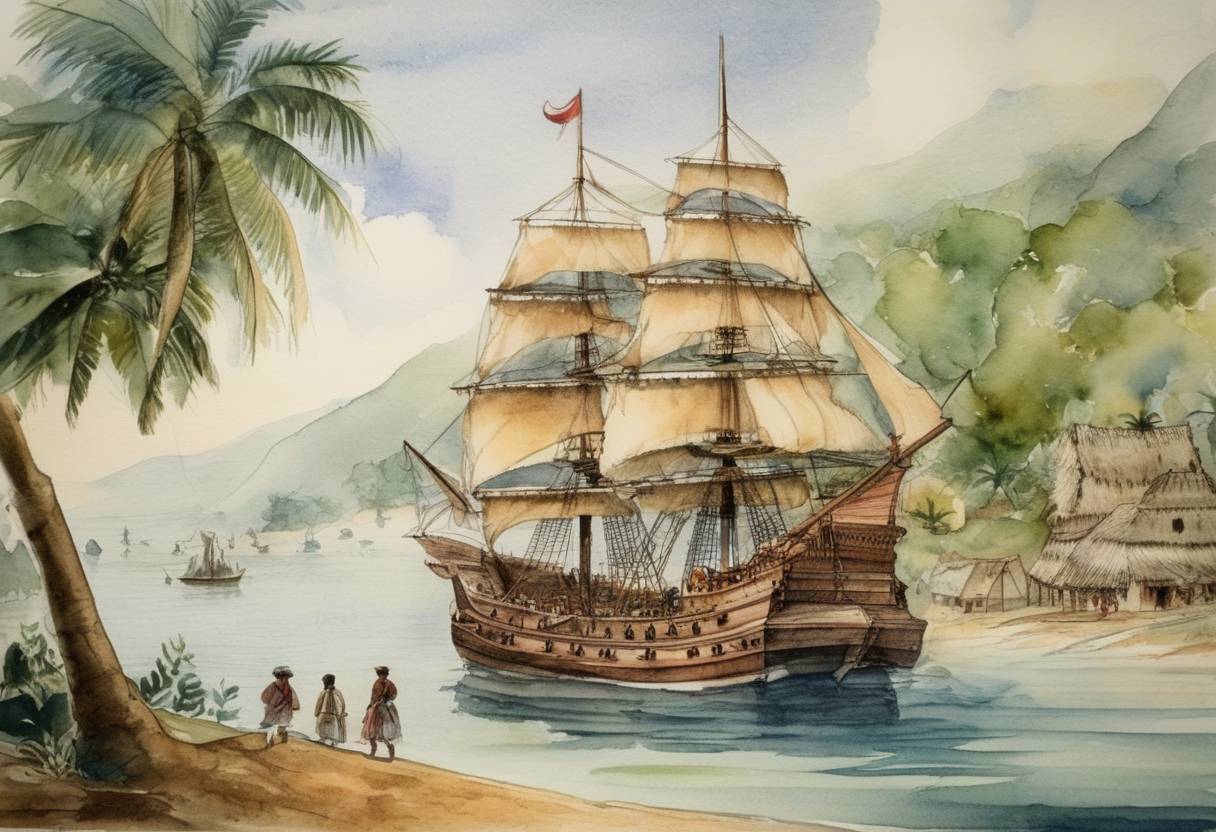
On December 26, 1492, Italian explorer Christopher Columbus, on his first voyage to what would become known as the New World, established the settlement of La Navidad on the northern coast of present-day Haiti. This marked the foundation of the first European colony in the Americas.
Christopher Columbus set sail under the auspices of the Catholic Monarchs of Spain, aiming to discover a western sea route to the lucrative markets of Asia. On October 12, 1492, he landed in the Bahamas, a momentous event that led to further exploration of the Caribbean islands.
The creation of La Navidad was inadvertently precipitated by the grounding and subsequent destruction of the flagship, the Santa Maria, on a coral reef off the coast of Hispaniola on Christmas Day, 1492. With the ship beyond repair, Columbus decided to use its timbers to establish a fortified settlement.
With limited space on the Niña and the Pinta, Columbus left behind 39 men at La Navidad. He appointed Diego de Arana as governor, entrusting them to explore and gather resources until his return. The fort was constructed using the remains of the Santa Maria and was positioned near a welcoming indigenous Taíno village, which facilitated initial peaceful interactions.
La Navidad holds significant historical importance as the first European foothold in the Americas. While intending to be a strategic and economic base for further exploration, the settlement faced immense challenges. Upon Columbus’s return on his second voyage in November 1493, he discovered La Navidad destroyed and the men missing, the result of conflict with the native population.
This encounter and its ultimate failure underscored the strife that would become characteristic of European colonial endeavors in the New World. The destruction of La Navidad highlighted the clash of cultures and the complexities of European expansion, preluding the extensive impact of European colonization on indigenous societies.
The establishment of La Navidad on December 26, 1492, marked a pivotal moment in history as the first European settlement in the Americas. Although short-lived, it set the stage for subsequent waves of exploration and colonization that would forever alter the Americas.
Source: www.britannica.com