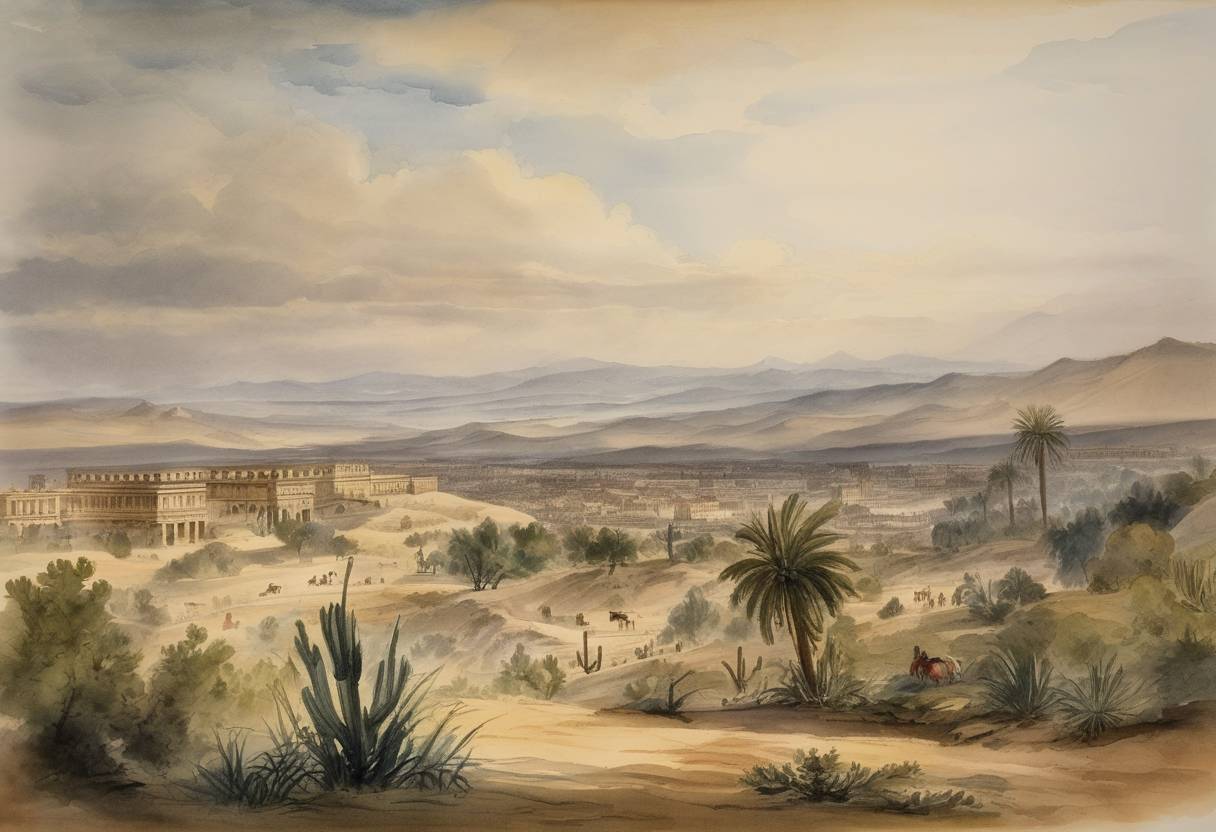
The Gadsden Purchase: December 31, 1853
On December 31, 1853, the United States and Mexico signed the Gadsden Purchase agreement, a significant land transaction that further defined the territorial boundaries between the two nations. This agreement involved the purchase of a strip of land that is now part of the southern borders of present-day Arizona and New Mexico.
Context and Background
Following the Mexican-American War (1846-1848) and the Treaty of Guadalupe Hidalgo, which ended the conflict, tensions persisted over territory and border security. The discovery of gold in California and the establishment of new western territories prompted a need for a more direct southern transcontinental railway route, which was a crucial factor in the negotiation of the Gadsden Purchase. The U.S. was particularly interested in acquiring land to facilitate a southern route for the railroad, which was critical for economic expansion and improved connectivity between the Southern states and the West Coast.
Negotiations
James Gadsden, the U.S. Minister to Mexico, was tasked by U.S. President Franklin Pierce to negotiate the purchase. Gadsden met with Mexican President Antonio López de Santa Anna to secure the deal. Initially, Gadsden was authorized to purchase a much larger area, but eventually, both parties agreed on a smaller section of land.
Terms of the Agreement
The agreement, signed on the last day of 1853 in Mexico City, stipulated that the United States would pay Mexico $10 million for approximately 29,670 square miles of territory. This land acquisition provided the necessary corridor for the southern transcontinental railroad and resolved various border disputes between the two countries.
Aftermath and Significance
The purchase was ratified by the U.S. Senate in April 1854, with some modification to the original proposal. This treaty emphasized the U.S.’s continued territorial expansion and its ambitions to strengthen infrastructure and trade routes across the continent. For Mexico, the agreement represented both a much-needed financial bolstering and a reduction in territorial disputes, albeit at the cost of further land cessions.
The Gadsden Purchase clarified the U.S.-Mexico border, which stands largely unaltered to this day. It exemplified the era’s prevalent idea of Manifest Destiny—the belief that the United States was destined to expand across the North American continent.