The Battle of York: April 27, 1813
1813 · York, Canada
During the War of 1812, American troops captured the capital of Upper Canada, York (now Toronto), in the Battle of York.
October 18, 1812
The Battle of the Thames was fought during the War of 1812, where American forces led by General William Henry Harrison defeated a British and Native American force, leading to the death of the Shawnee leader Tecumseh.
Chatham, Canada | United States Army
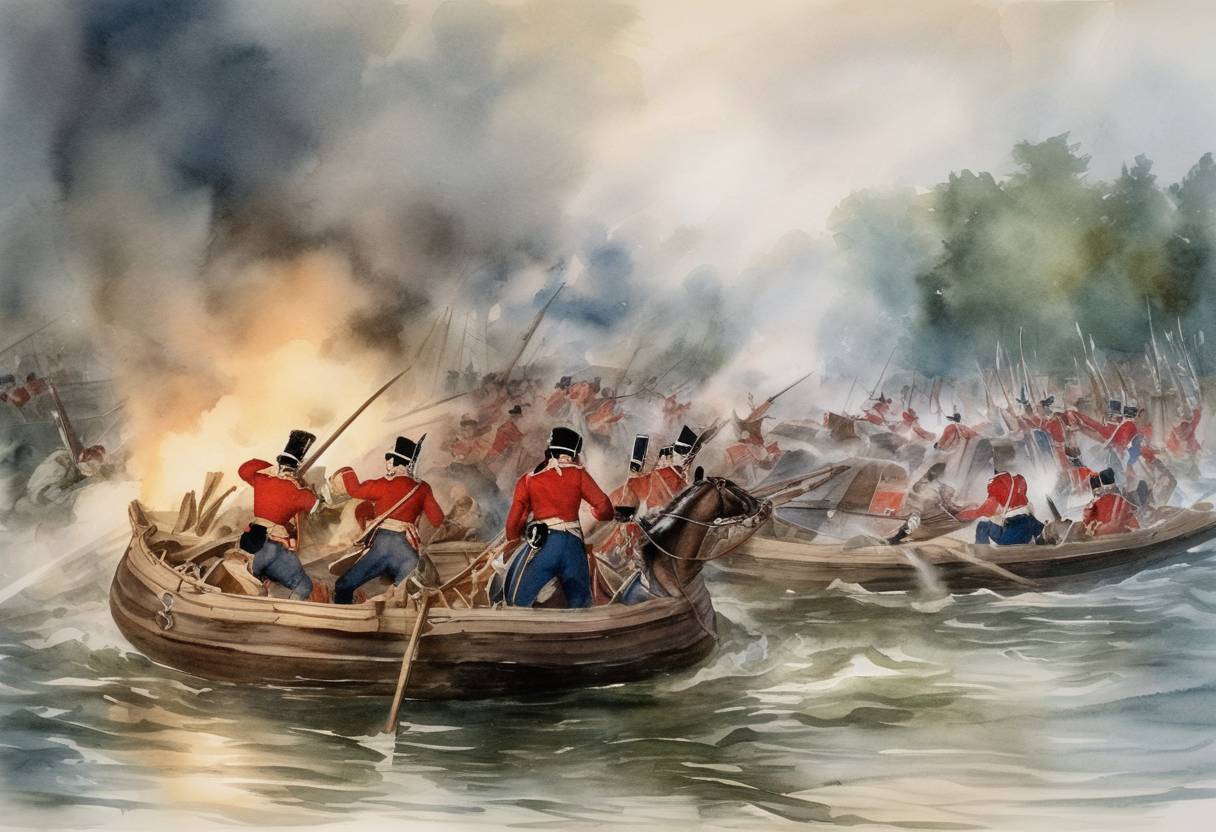
The Battle of the Thames, fought on October 5, 1813, during the War of 1812, emerged from a series of military engagements between the United States, its Native American allies, and the British forces. A pivotal aspect of this conflict was the struggle for control over the northwestern frontier territories. In the days leading up to the battle, the American forces, bolstered by victories in the Great Lakes region, had gained a strategic advantage. The defeat of the British fleet at the Battle of Lake Erie on September 10, 1813, allowed General William Henry Harrison to pursue retreating British and Native forces up through Upper Canada.
The American troops, led by General Harrison, pursued the retreating British forces commanded by Major General Henry Procter and their allies, including Shawnee Chief Tecumseh. By October 5, the two forces met near present-day Chatham, Ontario along the Thames River. The American forces, numbering approximately 3,500, were superior in number compared to the roughly 800 British soldiers and several hundred Native American warriors.
The confrontation began with a decisive cavalry charge ordered by Harrison, which quickly overwhelmed the British line. The British forces, suffering from low morale and dwindling supplies, were swiftly defeated as many soldiers, lacking cohesion, surrendered. At the same time, the Native American forces, led by Tecumseh, engaged in a fierce resistance.
The battle is most noted for the death of Tecumseh, the renowned Shawnee leader and a significant figure in Native American resistance against United States expansion. Tecumseh’s death was a blow to the Indigenous confederacy he had helped to form, significantly impacting the Native American resistance in the region.
The American victory at the Battle of the Thames marked a crucial turning point in the War of 1812. It effectively ended British and Native American control over the Old Northwest and bolstered American morale. The defeat weakened coalition efforts to resist American expansion in the territory. Politically, the battle elevated William Henry Harrison’s national stature, eventually assisting his path to the presidency in 1840.
The Battle of the Thames remains a significant example of how American territorial ambitions and expansionist policies clashed with indigenous sovereignty and British imperial interests during this period.
Source: en.wikipedia.org