Test Baker: The First Underwater Atomic Bomb Test
On July 25, 1946, the United States conducted Test Baker, the world’s first underwater test of an atomic bomb, as part of Operation Crossroads. This significant event took place at Bikini Atoll in the Marshall Islands, a site selected for its remote location that was deemed suitable for testing due to its isolated geographic setting in the Pacific Ocean.
Background and Objectives
Operation Crossroads was conceived primarily to investigate the effects of nuclear weapons on naval ships, equipment, and material. After the successful but controversial Trinity Test in 1945, military and scientific minds were eager to understand the implications of nuclear explosions in different environments. Test Baker was the second test of the operation; the first was Test Able, which occurred earlier in July and detonated an atomic bomb in the air above the atoll.
The Test
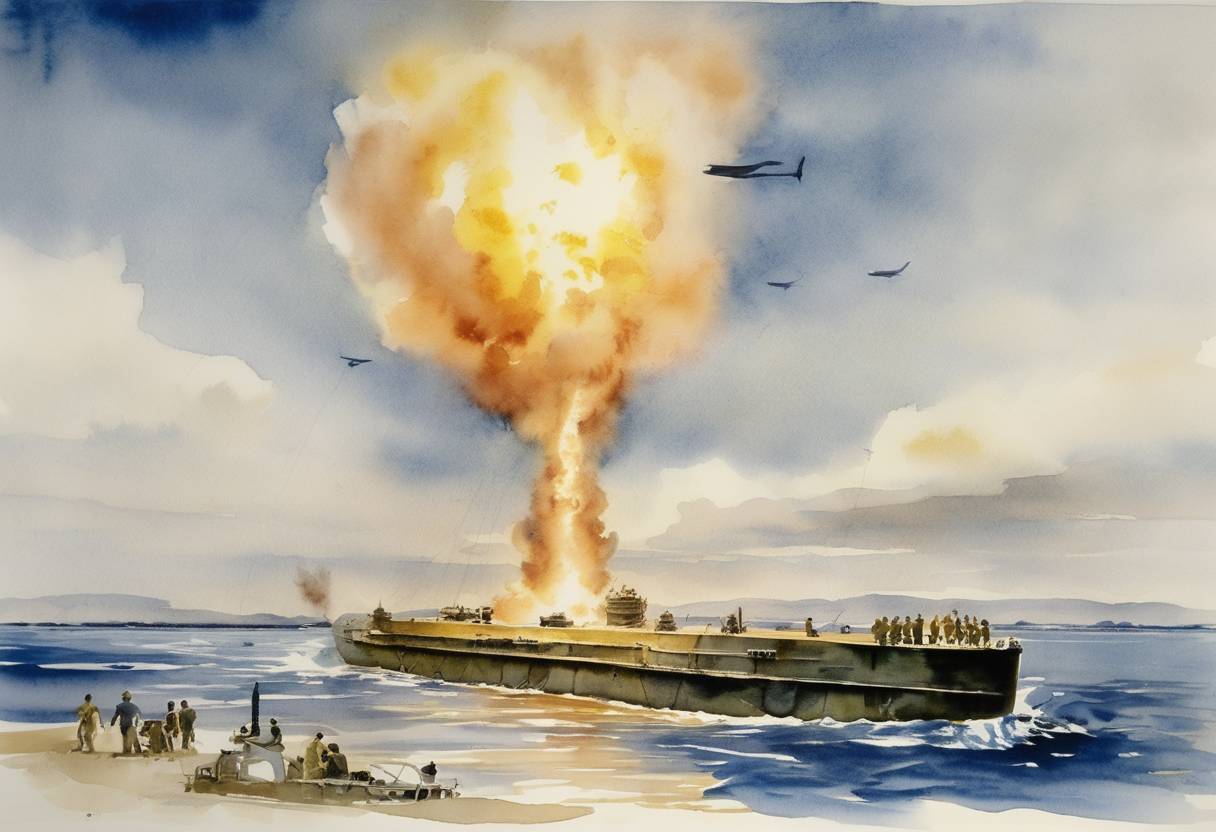
The device used in Test Baker was a plutonium implosion-type bomb, similar in design to the Fat Man bomb dropped on Nagasaki. The bomb, codenamed “Helen of Bikini,” was suspended 90 feet below a barge anchored in the lagoon. Surrounding the barge were more than 70 assorted naval vessels, both obsolete and contemporary, representing a mock fleet to study the impact of the explosion.
The blast had a yield of approximately 23 kilotons, and the underwater detonation created a massive water column over a mile high, accompanied by a base surge that spread radioactive water and debris across the immediate area. The explosion obliterated several ships and severely damaged others.
Outcomes and Impact
The results of Test Baker underscored the unprecedented and largely misunderstood effects of nuclear explosions in aquatic environments. Despite the visual majesty of the water column, the underwater detonation produced unexpectedly high levels of radioactive contamination in the lagoon, rendering many target ships unsalvageable due to lingering radioactivity.
Subsequent analyses and observations from Test Baker raised concerns and initiated discussions regarding the radiological hazards posed by nuclear weapons fallout, particularly regarding environmental and human impacts. It contributed to the growing complexity of handling nuclear materials in military operations and instigated further research into decontamination and radiation exposure’s long-term effects.
Broader Significance
Test Baker marked a pivotal point in nuclear testing history, showcasing the destructive potential of nuclear weapons in maritime settings. The test provided crucial data for military strategy and highlighted the potential environmental effects of nuclear detonations. Operation Crossroads, including Test Baker, emphasized the global implications of nuclear power, influencing public, political, and scientific discourse in the early years of the nuclear age.
Test Baker’s legacy, along with the other tests conducted in the Pacific and later globally, raised international awareness about nuclear proliferation and the urgent need for comprehensive nuclear policies and disarmament discussions in subsequent decades.