Swiss Government Moves Capital to Bern - July 8, 1891
1891 · Bern, Switzerland
The Swiss government decides to move the capital of Switzerland to Bern.
December 7, 1895
Adolf Wölfli, a Swiss native who later became famous as an outsider artist, was committed to a psychiatric hospital where he would spend the rest of his life creating art.
Bern, Switzerland | Waldau Clinic
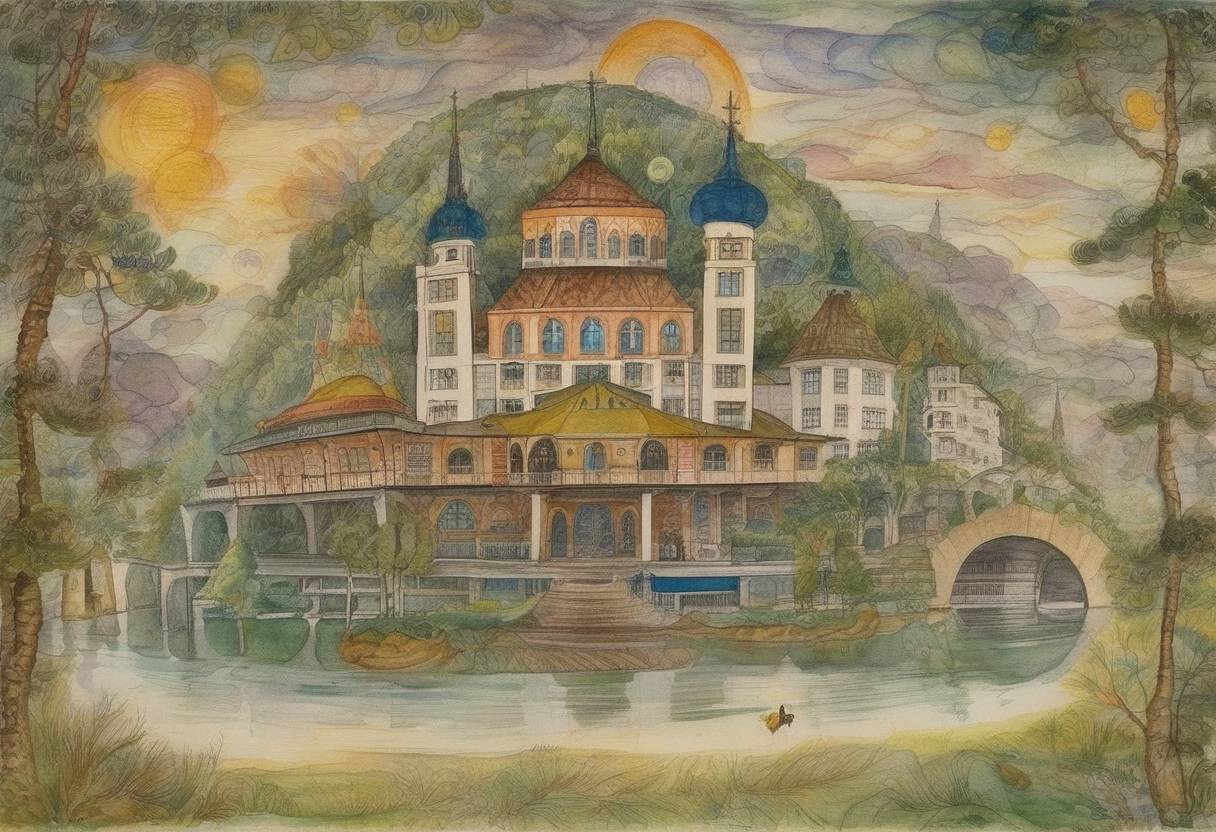
On December 7, 1895, Adolf Wölfli, a Swiss artist who later became renowned for his contributions to outsider art, was committed to the Waldau Psychiatric Clinic in Bern, Switzerland. This marked the beginning of a new chapter in his life, as Wölfli would spend the rest of his life at this institution, where he began to create his unique and prolific body of work.
Adolf Wölfli was born on February 29, 1864, in Bowil, in the canton of Bern, Switzerland. His early life was marked by poverty and hardship, a tumultuous upbringing that included the death of his father and various foster homes. Prior to his confinement, Wölfli had faced numerous personal challenges and socio-economic difficulties that contributed to his unstable mental health.
Once at the Waldau Clinic, Wölfli’s artistic journey began under circumstances where he was seeking both personal solace and creative expression. The institutional environment seemingly provided the stability required for his creative pursuits, despite his challenging mental health condition.
Wölfli started creating art in 1899, four years after his arrival. His work was characterized by a vast array of drawings and writings that combined fantastical imagery with complex visual narratives. Over his decades in the clinic, he produced an extensive oeuvre that includes thousands of drawings and several volumes of illustrated narratives.
Wölfli’s intricate artwork, rich in symbolic detail, was categorized as outsider art—a term denoting art created outside the boundaries of official culture. His creations were often filled with vibrant colors, geometric patterns, and an imaginative amalgamation of text and image. Many of his works tell sprawling epic tales of his own invented universe.
The recognition of his work began during his lifetime, largely due to the advocacy of the clinic’s psychiatrists, particularly Walter Morgenthaler, who published a monograph about Wölfli in 1921, propelling him into the limelight within art circles.
Adolf Wölfli’s influence on outsider art is profound. The Adolf Wölfli Foundation manages his artworks, which continue to inspire contemporary artists and are showcased in exhibitions worldwide. Today, he is celebrated not only for his artistic ingenuity but also as a pioneering figure who transformed personal struggles into visionary art.
Source: www.outsiderartfair.com