1563 · Trent, Holy Roman Empire
The final session of the Council of Trent commenced, an important part of the Counter-Reformation efforts by the Catholic Church, addressing issues raised by the Protestant Reformation.
December 3, 1563
The Council of Trent, initiated by the Catholic Church as part of the Counter-Reformation, was reconvened by Pope Pius IV after a suspension of nearly ten years. The council was originally convened in 1545 to address issues raised by the Protestant Reformation and was one of the Church's most important ecumenical councils.
Trent, Holy Roman Empire | Catholic Church
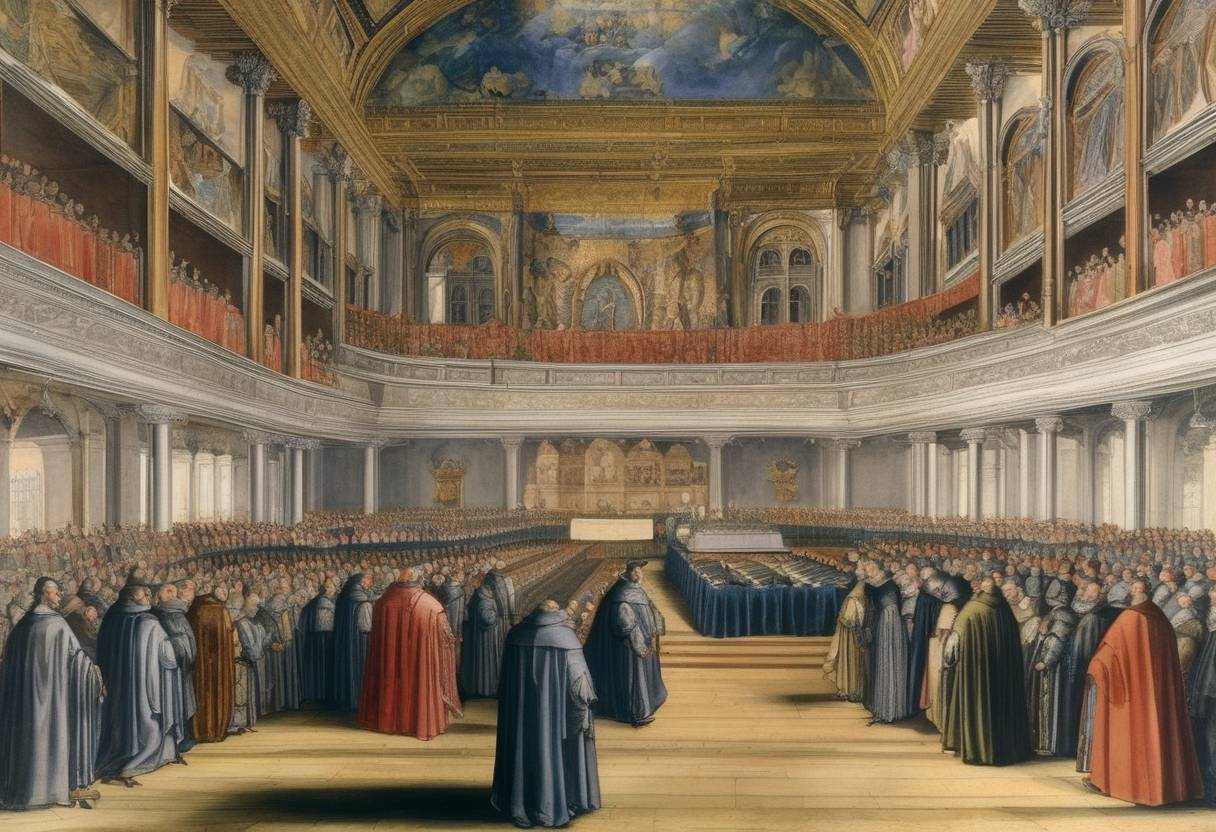
The Council of Trent, one of the most significant ecumenical councils in the history of the Catholic Church, was reconvened on December 3, 1563, by Pope Pius IV after a nearly ten-year suspension. This critical meeting aimed to address the challenges posed by the Protestant Reformation and to clarify Church doctrine.
The Council of Trent originally convened in 1545 under Pope Paul III. Its primary mission was to counter the growth of Protestantism and respond to the theological disputes and ecclesiastical challenges initiated by the Reformation. Over the years, the council met intermittently, divided into three major sessions due to interruptions caused by political pressures and intermittent hostilities within Europe, including the outbreak of wars and shifting alliances.
By the time of its third session reconvened under Pope Pius IV in 1562, the council saw participation largely from Italian prelates with reduced numbers from other regions. Nonetheless, by December 3, 1563, significant progress and contributions led to important decrees that would shape the Catholic counter-reformative strategies.
The December 3 session was marked by continuing Council discussions that ultimately culminated in significant doctrinal clarifications and definitive statements on key issues, including the nature of Original Sin, the role of the sacraments, the justification by faith and works, and the Canon of Scripture.
The Council of Trent concluded later the same month, on December 4, 1563. The resolutions from the council had profound and lasting impacts on the Catholic Church, delineating clear theological boundaries between Protestant and Catholic positions. The decrees made at the Council of Trent revitalized the Catholic Church’s role in Europe, institutionalized reforms, and addressed various abuses in Church practices, effectively solidifying the Counter-Reformation’s principles.
Through its far-reaching decrees, the Council of Trent played a key role in revitalizing the Catholic Church’s influence during a time of crisis, becoming a cornerstone of Catholic reformation efforts and counter-movements against Protestantism that would define much of the religious landscape in Europe for centuries.
Source: en.wikipedia.org