Liberation of Czechoslovakia Begins: October 18, 1944
1944 · Dukla Pass, Czechoslovakia
Soviet forces began the liberation of Czechoslovakia from Nazi occupation during World War II, marking a significant phase in the Eastern Front.
June 22, 1944
The Soviet Union launched Operation Bagration, a massive offensive against the German Army Group Centre, which resulted in a significant Soviet victory and the liberation of much of Belarus.
, Soviet Union | Soviet Union
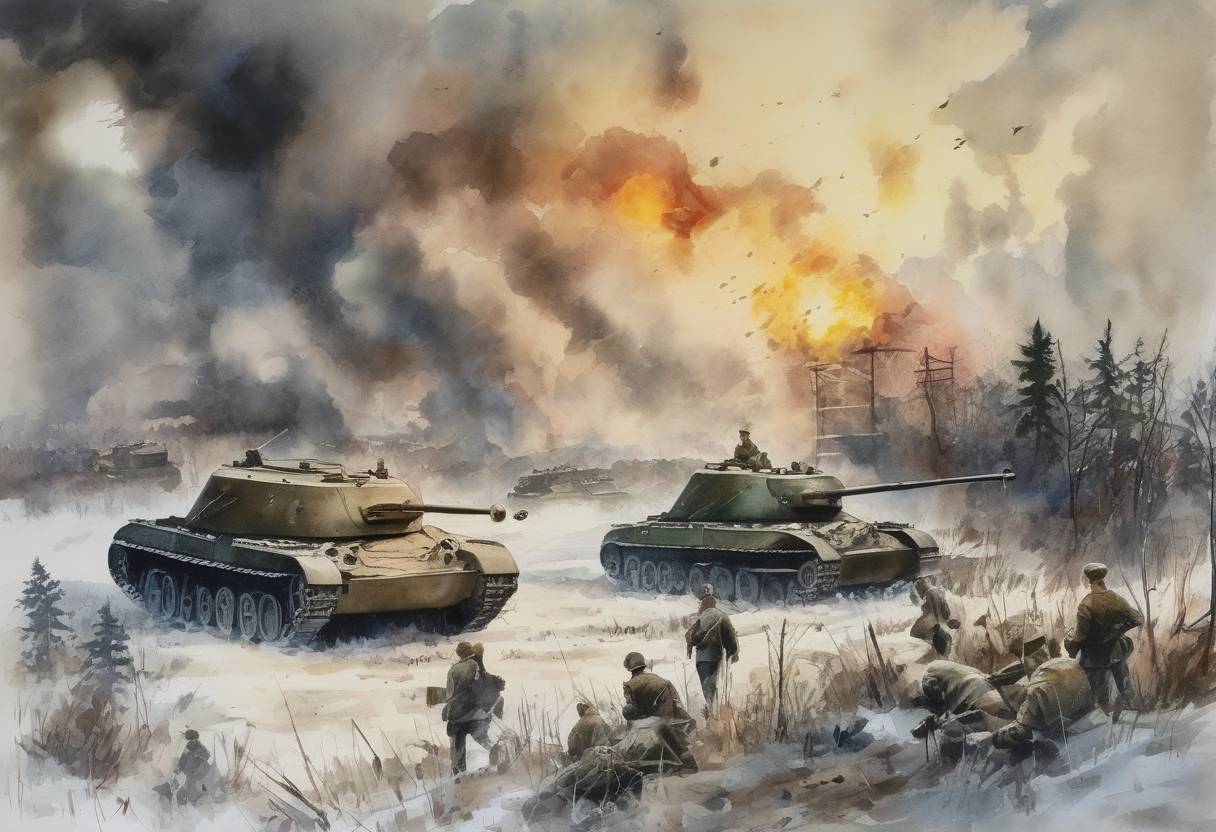
On June 22, 1944, the Soviet Union launched Operation Bagration, a massive military offensive against the German Army Group Centre during World War II. This operation marked a pivotal moment on the Eastern Front, leading to a significant Soviet victory and the liberation of much of Belarus.
Strategic Importance: Operation Bagration was named after the Georgian Prince Pyotr Bagration, a general of the Russian Empire. The operation was strategically timed to coincide with the Allied landings in Normandy (D-Day) earlier in June 1944, aiming to stretch German resources across multiple fronts.
German Army Group Centre: At the time, Army Group Centre was a critical component of the German defense on the Eastern Front, holding a large portion of occupied Soviet territory, including Belarus.
Soviet Preparations: The Soviet Union meticulously planned the operation, amassing approximately 2.3 million troops, 4,000 tanks, and 24,000 artillery pieces. The Red Army aimed to encircle and destroy the German forces, thereby liberating occupied territories and advancing towards Poland.
Initial Assault: The operation commenced with a massive artillery barrage, followed by coordinated attacks by Soviet infantry and armored divisions. The offensive was characterized by its depth and speed, overwhelming the German defenses.
Encirclement and Breakthrough: Soviet forces executed a series of encirclements, cutting off German units and capturing key cities such as Vitebsk, Orsha, and Mogilev. The rapid advance created chaos within the German ranks, leading to significant losses.
Liberation of Minsk: By July 3, 1944, Soviet forces had liberated Minsk, the capital of Belarus, effectively destroying the German 4th Army and capturing tens of thousands of German soldiers.
German Losses: Operation Bagration resulted in one of the most devastating defeats for the Wehrmacht, with estimates of German casualties ranging from 300,000 to 400,000, including killed, wounded, and captured.
Soviet Advances: The success of the operation allowed the Soviet Union to reclaim much of Belarus and advance into Eastern Europe, setting the stage for further offensives into Poland and the Baltic states.
Impact on the War: The operation significantly weakened German military capabilities on the Eastern Front and contributed to the eventual collapse of Nazi Germany. It also demonstrated the growing strength and strategic acumen of the Soviet military.
Operation Bagration was a testament to the Soviet Union’s ability to conduct large-scale, coordinated military operations. It highlighted the importance of strategic planning and the effective use of combined arms tactics. The operation not only liberated vast territories but also shifted the balance of power on the Eastern Front, accelerating the downfall of Nazi Germany and contributing to the eventual Allied victory in Europe.
Source: en.wikipedia.org