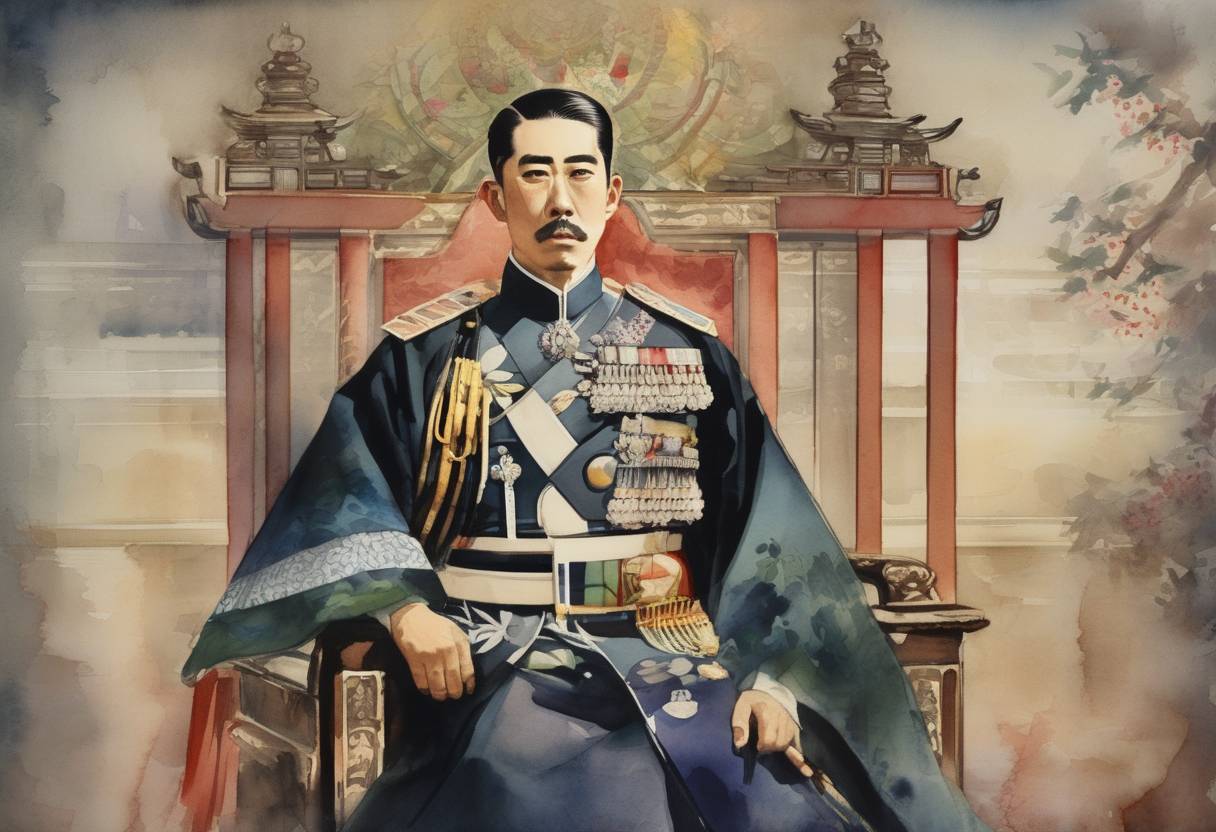
Enthronement of Emperor Hirohito and the Beginning of the Shōwa Era
On November 10, 1928, Hirohito was formally enthroned as the Emperor of Japan, marking the official commencement of the Shōwa era. This event was a significant moment in Japanese history, symbolizing both continuity and change within the nation’s imperial tradition.
Background
Hirohito, born on April 29, 1901, was the eldest son of Emperor Taishō. He became the regent of Japan in 1921 due to his father’s declining health and officially ascended to the throne following Emperor Taishō’s death on December 25, 1926. However, the formal enthronement ceremony took place nearly two years later, in 1928, following traditional practices.
The Enthronement Ceremony
The enthronement ceremony was a grand and elaborate event held in Kyoto, the ancient capital of Japan. It was steeped in tradition, reflecting the deep cultural and historical roots of the Japanese imperial system. The ceremony involved various Shinto rituals, emphasizing the divine status of the emperor as a descendant of the sun goddess Amaterasu.
Key elements of the ceremony included:
- The Daijōsai Ritual: A sacred Shinto rite where the emperor offers newly harvested rice to the deities and prays for the nation’s prosperity.
- The Enthronement Proclamation: Hirohito formally declared his ascension to the throne, pledging to uphold the duties of the emperor.
Significance of the Shōwa Era
The Shōwa era, which translates to “Enlightened Peace,” was a period of profound transformation for Japan. It spanned from 1926 to 1989 and witnessed significant events, including:
- Pre-World War II Militarization: The early years of Hirohito’s reign saw Japan’s increasing militarization and expansionist policies, leading to conflicts in Asia.
- World War II: Japan’s involvement in World War II and the subsequent defeat in 1945 had a lasting impact on the nation and the emperor’s role.
- Post-War Reconstruction: The latter part of the Shōwa era was marked by Japan’s remarkable economic recovery and transformation into a global economic power.
Aftermath and Legacy
Emperor Hirohito’s reign was one of the longest in Japanese history, lasting until his death in 1989. His role during World War II remains a subject of historical debate, but his post-war efforts to promote peace and stability helped redefine the Japanese monarchy in the modern era.
The Shōwa era’s legacy is complex, encompassing both the challenges of war and the achievements of peace and prosperity. Hirohito’s enthronement in 1928 set the stage for these transformative decades in Japan’s history.