German Federal Election of September 22, 2013
2013 · Berlin, Germany
Angela Merkel's Christian Democratic Union (CDU) won the German federal election, securing her a third term as Chancellor of Germany.
October 10, 2005
Angela Merkel's Christian Democratic Union (CDU) and the Social Democratic Party (SPD) reach an agreement to form a grand coalition government in Germany, paving the way for Merkel to become the first female Chancellor of Germany.
Berlin, Germany | Christian Democratic Union
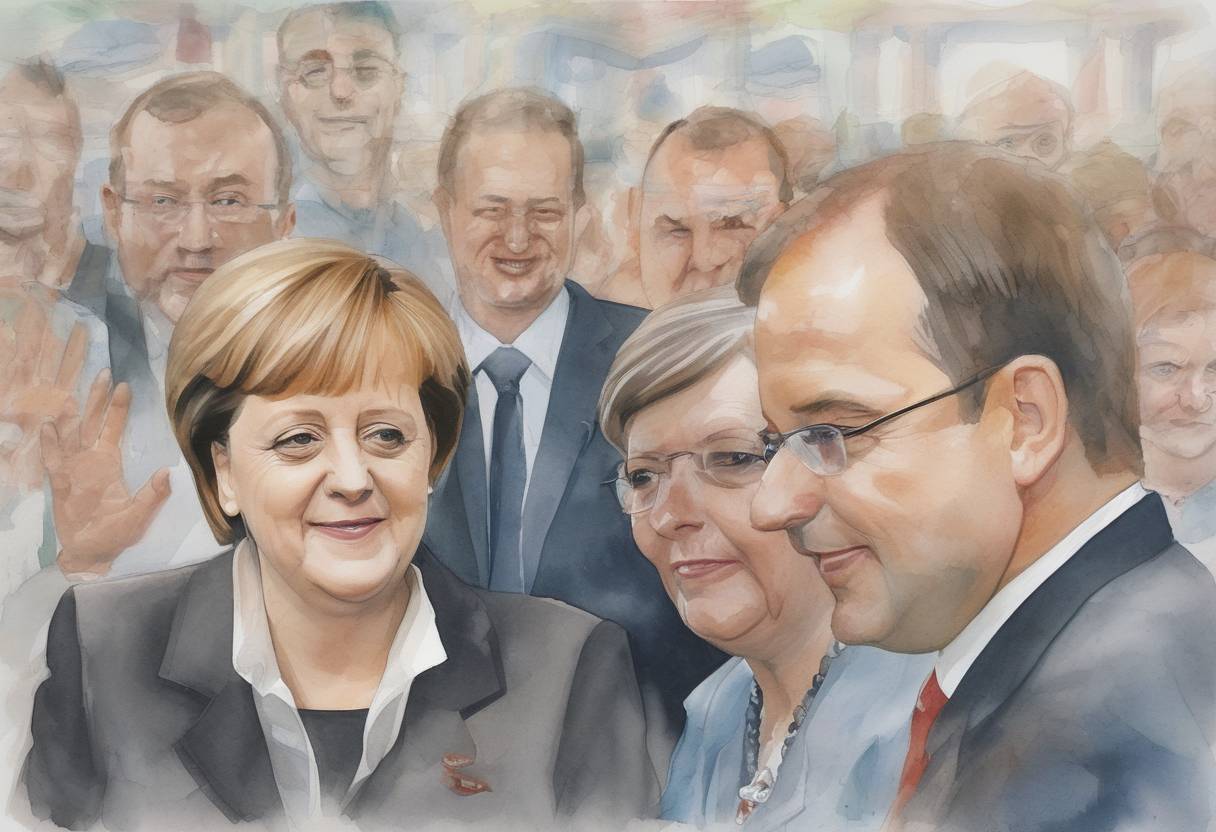
On October 10, 2005, a significant political development occurred in Germany as the Christian Democratic Union (CDU), led by Angela Merkel, and the Social Democratic Party (SPD) reached an agreement to form a grand coalition government. This agreement was pivotal in paving the way for Angela Merkel to become the first female Chancellor of Germany.
Federal Elections of 2005: The German federal elections held on September 18, 2005, resulted in an inconclusive outcome. The CDU/CSU (Christian Social Union) alliance, led by Angela Merkel, won a narrow plurality of the seats but fell short of an outright majority. The SPD, led by incumbent Chancellor Gerhard Schröder, also secured a significant number of seats, leading to a political stalemate.
Negotiations: In the weeks following the election, intense negotiations took place between the CDU/CSU and the SPD to form a stable government. Both parties recognized the need for a grand coalition due to the fragmented nature of the election results and the necessity of ensuring political stability in Germany.
Terms of the Coalition: The agreement reached on October 10, 2005, outlined the terms under which the CDU/CSU and SPD would share power. Key ministerial positions were divided between the two parties, with the SPD securing significant portfolios such as Foreign Affairs and Finance.
Angela Merkel’s Leadership: As part of the coalition agreement, Angela Merkel was set to become the Chancellor of Germany. This marked a historic moment as she would be the first woman to hold this position in the country’s history.
Merkel’s Chancellorship: Angela Merkel officially assumed office on November 22, 2005. Her leadership style, characterized by pragmatism and a focus on consensus-building, would come to define her tenure as Chancellor.
Impact on German Politics: The grand coalition allowed for a period of political stability in Germany, enabling the government to address significant issues such as economic reforms and social policies. It also set a precedent for future coalition governments in Germany.
Merkel’s Legacy: Angela Merkel’s rise to the Chancellorship marked the beginning of a long and influential political career. She would go on to serve as Chancellor for 16 years, becoming one of the most prominent and respected leaders in Europe and the world.
The formation of the grand coalition in 2005 was a crucial moment in German politics, not only for its immediate impact but also for its long-term implications on the country’s political landscape and Merkel’s enduring legacy.
Source: www.dw.com