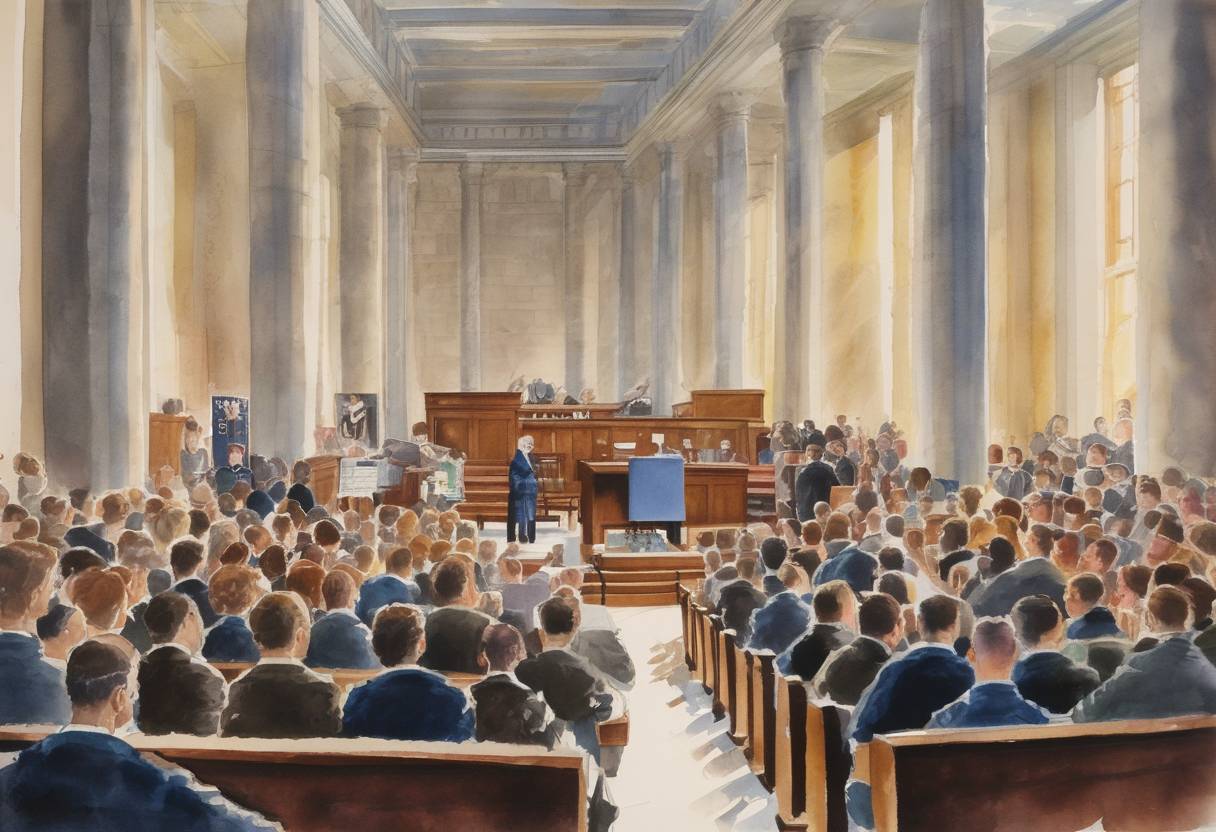
Abington School District v. Schempp: Supreme Court Ruling on June 17, 1963
On June 17, 1963, the United States Supreme Court delivered a landmark decision in the case of Abington School District v. Schempp, ruling that school-sponsored Bible reading in public schools is unconstitutional. This decision was pivotal in shaping the interpretation of the First Amendment’s Establishment Clause, which prohibits the government from establishing an official religion or unduly favoring one religion over another.
Background
The case originated in Pennsylvania, where a state law required public schools to start each day with readings from the Bible and the recitation of the Lord’s Prayer. The Schempp family, who were Unitarians, challenged this practice, arguing that it violated their religious freedoms and the Establishment Clause of the First Amendment.
The case was consolidated with Murray v. Curlett, a similar case from Maryland, where Madalyn Murray O’Hair, an atheist, challenged mandatory Bible readings in Baltimore public schools.
Supreme Court Decision
The Supreme Court, in an 8-1 decision, ruled that mandatory Bible readings in public schools were unconstitutional. Justice Tom C. Clark delivered the majority opinion, emphasizing that the practice violated the Establishment Clause. The Court held that:
- Neutrality in Religion: The government must maintain a position of neutrality in religious matters, neither advancing nor inhibiting religion.
- Coercion and Indoctrination: School-sponsored Bible readings could be seen as coercive and an endorsement of a particular religious practice, thus infringing on individual religious freedoms.
Significance
The ruling in Abington School District v. Schempp reinforced the principle of separation of church and state, particularly in the context of public education. It underscored the importance of religious neutrality in public institutions and set a precedent for future cases involving religious activities in schools.
Aftermath
The decision was met with mixed reactions. Advocates for religious freedom and civil liberties hailed it as a victory for the protection of individual rights and the upholding of constitutional principles. Conversely, some religious groups and individuals viewed it as an attack on traditional values and religious expression in public life.
The ruling has continued to influence debates and legal battles over the role of religion in public schools and government institutions, serving as a foundational case in the ongoing dialogue about religious freedom and the interpretation of the First Amendment.
In summary, the Abington School District v. Schempp decision was a critical moment in American legal history, reinforcing the constitutional mandate for the separation of church and state and shaping the landscape of religious expression in public education.