The Louisiana Purchase Treaty Ratification
1803 · Washington, D.C., United States
The United States Senate ratified a treaty with France for the purchase of the Louisiana Territory, greatly expanding the size of the nation.
October 20, 1803
The United States Senate ratified the Louisiana Purchase Treaty, effectively doubling the size of the United States.
Washington, D.C., United States | United States Senate
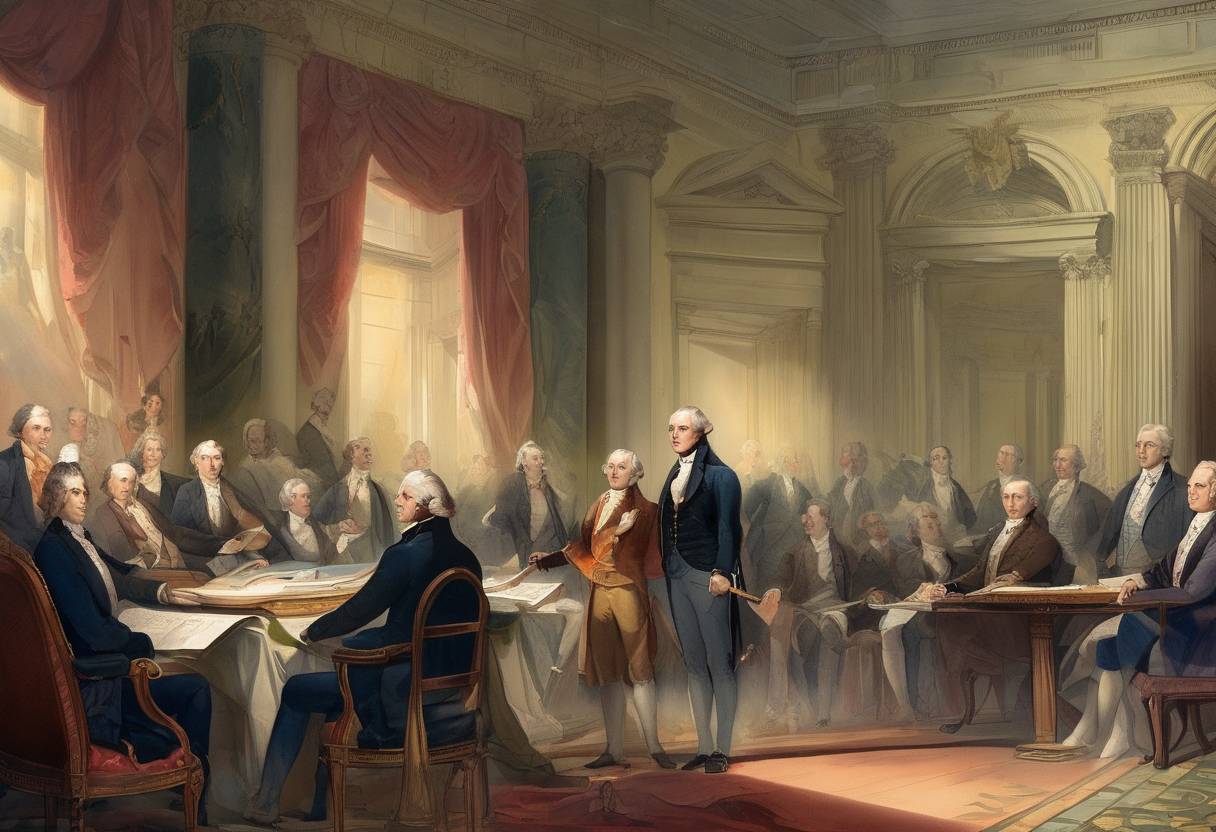
On October 20, 1803, the United States Senate ratified the Louisiana Purchase Treaty, a landmark event that effectively doubled the size of the United States and had profound implications for the nation’s future.
The Louisiana Purchase was a monumental land acquisition that involved the United States purchasing approximately 828,000 square miles of territory from France. This vast expanse of land stretched from the Mississippi River to the Rocky Mountains and from the Gulf of Mexico to the Canadian border.
Napoleonic Wars: France, under the leadership of Napoleon Bonaparte, was embroiled in the Napoleonic Wars. The financial strain of these conflicts made the sale of the Louisiana Territory an attractive option for France.
American Expansion: The United States, led by President Thomas Jefferson, was eager to secure land for expansion and to ensure control over the Mississippi River, which was vital for trade and transportation.
Negotiations: Initially, the U.S. sought to purchase only New Orleans and its immediate surroundings. However, French negotiator François Barbé-Marbois offered the entire Louisiana Territory for $15 million, a deal that was quickly accepted by American envoys Robert Livingston and James Monroe.
Senate Approval: The treaty was signed on April 30, 1803, and sent to the U.S. Senate for ratification. On October 20, 1803, the Senate ratified the treaty with a vote of 24 to 7, thus formalizing the acquisition.
Constitutional Concerns: The purchase raised constitutional questions, as the U.S. Constitution did not explicitly grant the federal government the power to acquire new territory. However, Jefferson justified the purchase as a treaty-making power.
Doubling the Nation’s Size: The acquisition effectively doubled the size of the United States, providing vast tracts of land for settlement and exploration.
Economic and Strategic Benefits: Control over the Mississippi River and the port of New Orleans was crucial for American trade. The purchase also removed France as a colonial presence in North America, reducing European influence in the region.
Impact on Native American Tribes: The expansion into the Louisiana Territory had significant consequences for Native American tribes, leading to displacement and conflicts as settlers moved westward.
Foundation for Future Growth: The Louisiana Purchase set a precedent for future territorial expansion and was a critical step in the United States’ emergence as a continental power.
In summary, the ratification of the Louisiana Purchase Treaty on October 20, 1803, was a pivotal moment in American history, marking a significant expansion of U.S. territory and influence. It laid the groundwork for the nation’s growth and development in the 19th century.
Source: en.wikipedia.org