Venezuelan Declaration of Independence - July 5, 1811
1811 · Caracas, Venezuela
Venezuela declared independence from Spain, marking the beginning of the Venezuelan War of Independence.
January 1, 1804
Haiti gains independence from France, becoming the first independent nation of Latin America and the Caribbean, and the first post-colonial independent black-led nation in the world.
Port-au-Prince, Haiti | Haitian Revolution
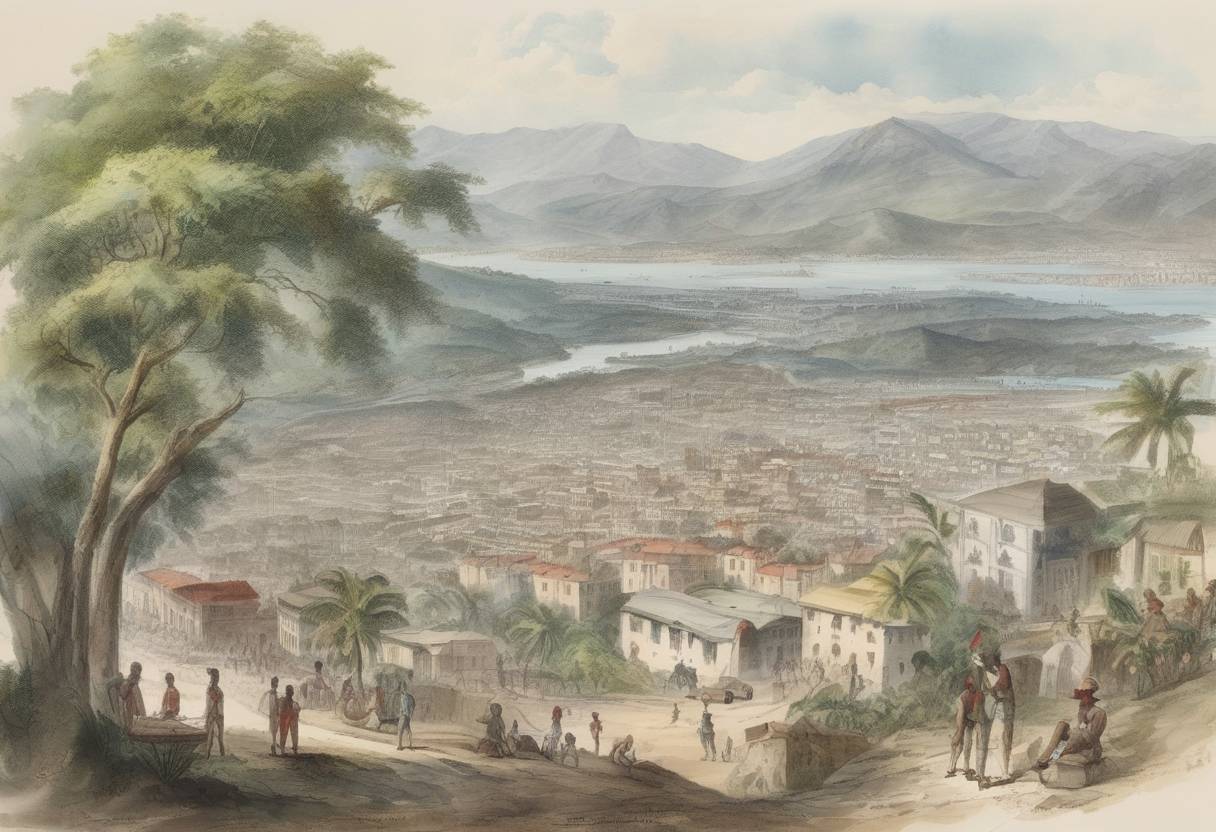
On January 1, 1804, Haiti declared its independence from France, marking a significant milestone in world history. This event not only established Haiti as the first independent nation in Latin America and the Caribbean but also as the first post-colonial independent black-led nation in the world. The Haitian Revolution, which led to this momentous occasion, was a complex and transformative struggle that reshaped the global landscape.
The roots of Haiti’s independence can be traced back to the brutal conditions of slavery on the island of Saint-Domingue, a French colony that was one of the wealthiest due to its sugar and coffee plantations. The enslaved African population, who vastly outnumbered the European colonists, endured severe oppression and exploitation.
The French Revolution of 1789, with its ideals of liberty, equality, and fraternity, inspired hope among the enslaved and free people of color in Saint-Domingue. However, the application of these principles was inconsistent, leading to tensions and uprisings.
The Haitian Revolution began in 1791, sparked by a massive slave revolt. Key figures such as Toussaint Louverture emerged as leaders in the fight against colonial rule. Louverture, a former slave, proved to be a brilliant military strategist and statesman, leading the revolutionaries to several victories.
Despite initial successes, the path to independence was fraught with challenges. France, under Napoleon Bonaparte, sought to reassert control over the colony. In 1802, Napoleon sent a large expeditionary force to Saint-Domingue, leading to a brutal conflict. Toussaint Louverture was captured and deported to France, where he died in 1803.
Leadership of the revolution then passed to Jean-Jacques Dessalines, a former lieutenant of Louverture. Under Dessalines, the revolutionary forces continued to resist French attempts to reclaim the colony. On November 18, 1803, the decisive Battle of Vertières was fought, resulting in a significant defeat for the French forces.
On January 1, 1804, Dessalines declared the independence of Haiti, renaming the territory from Saint-Domingue to its indigenous name, Haiti. This declaration was a profound assertion of freedom and autonomy, rejecting the colonial past and establishing a new nation led by formerly enslaved people.
Haiti’s independence had far-reaching consequences. It inspired enslaved and colonized peoples worldwide, demonstrating that liberation was possible. However, the new nation faced immediate challenges, including diplomatic isolation and economic sanctions, particularly from France and the United States, which were wary of the implications of a successful slave revolt.
In 1825, under threat of invasion, Haiti agreed to pay a substantial indemnity to France in exchange for recognition of its independence, a debt that burdened the nation for decades.
Despite these challenges, Haiti’s independence remains a powerful symbol of resistance and resilience. It stands as a testament to the enduring struggle for freedom and equality, influencing movements for liberation and civil rights across the globe.
Source: en.wikipedia.org