The Execution of Bishop John Hooper: February 9, 1555
1555 · Gloucester, England
Bishop of Gloucester, John Hooper, was burned at the stake for heresy during the Marian Persecutions in England.
October 6, 1536
William Tyndale, an English scholar and leading figure in the Protestant Reformation, was executed for heresy. He is well-known for his translation of the Bible into English, which was a significant step in making religious texts accessible to the general public.
Vilvoorde, Belgium | Catholic Church
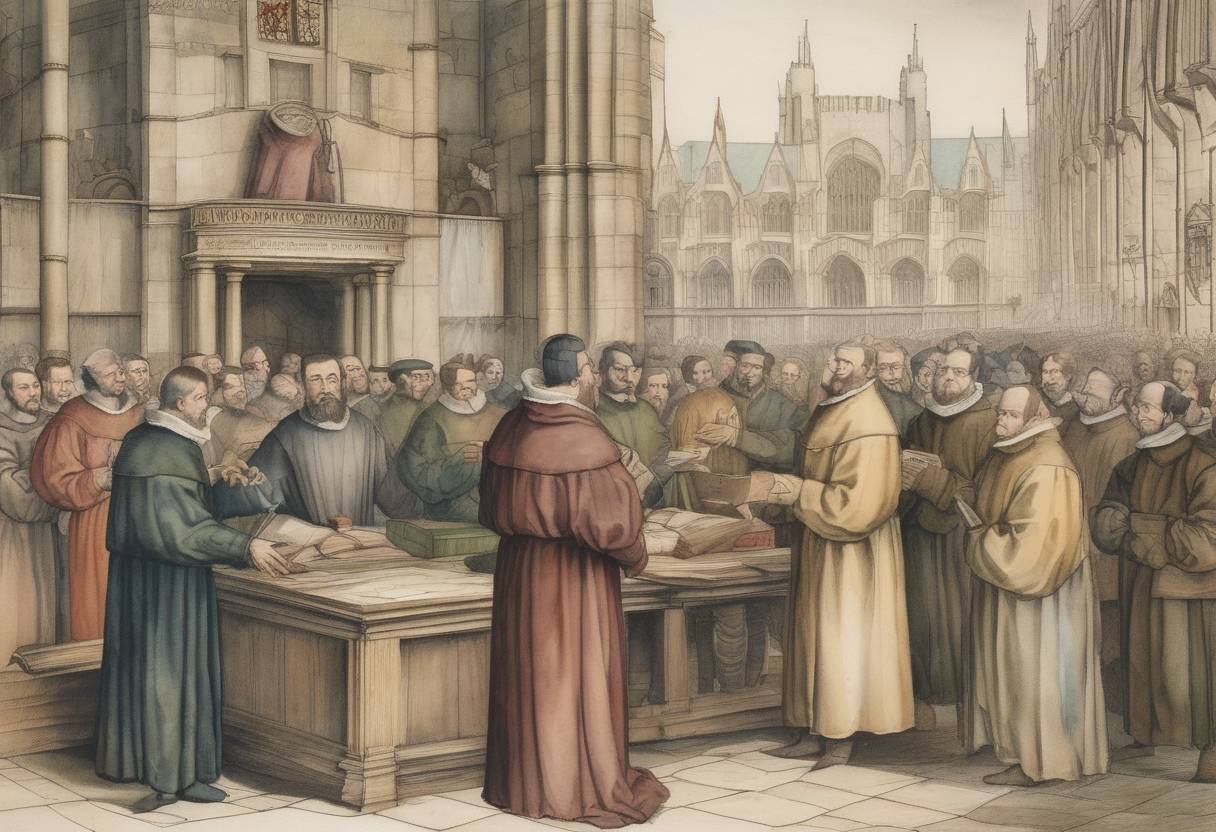
On October 6, 1536, William Tyndale, an English scholar and a pivotal figure in the Protestant Reformation, was executed for heresy. His work in translating the Bible into English was a monumental step in making religious texts accessible to the general public, challenging the Catholic Church’s control over religious knowledge.
Early Life and Education: William Tyndale was born around 1494 in Gloucestershire, England. He studied at Magdalen Hall, Oxford, and later at the University of Cambridge, where he was influenced by the ideas of the Reformation.
Translation of the Bible: Tyndale’s most significant contribution was his translation of the Bible into English. At the time, the Bible was primarily available in Latin, a language not understood by the common people. Tyndale believed that everyone should have access to the scriptures in their native language.
Opposition and Exile: Tyndale’s translation efforts were met with strong opposition from the Catholic Church and the English authorities. In 1524, he fled to the continent to continue his work, eventually settling in the Lutheran city of Worms, Germany.
Printing and Distribution: In 1526, Tyndale’s New Testament was printed and smuggled into England. Despite efforts to suppress it, the translation gained popularity among those seeking reform.
Capture and Trial: Tyndale was betrayed by Henry Phillips and arrested in Antwerp in 1535. He was imprisoned in the castle of Vilvoorde near Brussels for over a year. In 1536, he was tried for heresy and condemned to death.
Execution: On October 6, 1536, Tyndale was strangled and then burned at the stake. His final words reportedly were, “Lord, open the King of England’s eyes.”
Impact on English Christianity: Tyndale’s translation laid the groundwork for future English translations of the Bible, including the King James Version of 1611, which borrowed heavily from his work.
Cultural and Religious Significance: Tyndale’s efforts democratized religious knowledge, contributing to the spread of Protestantism and the Reformation in England. His work emphasized the importance of scripture in the vernacular, influencing religious thought and practice for centuries.
Tyndale’s life and work remain a testament to the power of language and the enduring quest for religious reform and freedom. His translation of the Bible not only transformed English Christianity but also had a lasting impact on the English language itself.
Source: en.wikipedia.org