John F. Kennedy's First Live Televised Presidential News Conference
1961 · Washington, D.C., United States
John F. Kennedy holds the first live televised presidential news conference.
September 26, 1960
The first televised presidential debate in U.S. history takes place between John F. Kennedy and Richard Nixon.
Chicago, United States | CBS
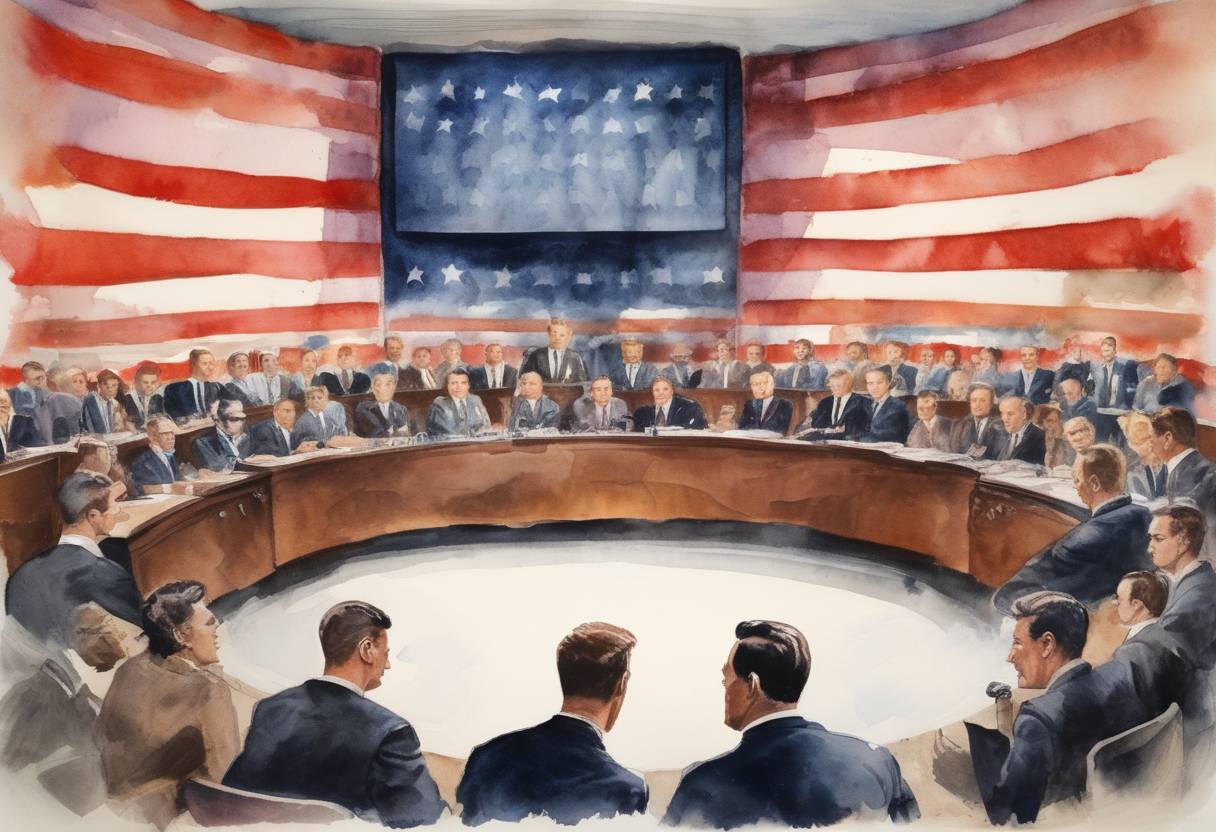
On September 26, 1960, a pivotal moment in American political history unfolded as the first-ever televised presidential debate took place between Senator John F. Kennedy, the Democratic candidate, and Vice President Richard Nixon, the Republican candidate. This event marked a significant turning point in how political campaigns were conducted and how candidates communicated with the electorate.
The Candidates: John F. Kennedy was a young, charismatic senator from Massachusetts, while Richard Nixon was the sitting Vice President under President Dwight D. Eisenhower. The 1960 election was highly competitive, with both candidates having distinct political backgrounds and visions for the country.
Television’s Role: By 1960, television had become a dominant medium in American households, with over 88% of homes owning a TV set. This debate was the first opportunity for a large segment of the American public to see the candidates side by side, influencing perceptions based on both content and appearance.
Location and Format: The debate was held at the CBS studios in Chicago, Illinois. It was the first of four debates and focused primarily on domestic issues. The format allowed for opening statements, followed by a series of questions from a panel of journalists, and concluded with closing statements.
Kennedy’s Performance: Kennedy appeared confident, composed, and telegenic. His calm demeanor and direct engagement with the camera helped him connect with the television audience. He wore a dark suit that contrasted well on black-and-white television, enhancing his visual appeal.
Nixon’s Performance: Nixon, recovering from a recent hospital stay, looked pale and underweight. He refused makeup, which resulted in a haggard appearance under the studio lights. His light-colored suit blended into the background, and his visible discomfort detracted from his verbal arguments.
Public Perception: The debate had a profound impact on public perception. Those who listened on the radio believed Nixon had won based on his arguments, while the television audience overwhelmingly favored Kennedy, highlighting the power of visual media in shaping opinions.
Election Outcome: The debates are credited with helping Kennedy gain a narrow victory in the 1960 presidential election. They demonstrated the importance of image and media strategy in modern politics.
Legacy: The Kennedy-Nixon debates set a precedent for future presidential campaigns, emphasizing the need for candidates to be media-savvy and visually appealing. They underscored the growing influence of television in political communication and the importance of adapting to new technologies.
In conclusion, the first televised presidential debate between Kennedy and Nixon was a landmark event that transformed the landscape of American political campaigns, illustrating the critical role of television in shaping public opinion and electoral outcomes.
Source: www.britannica.com