Newfoundland Joins the Canadian Confederation
1949 · Ottawa, Canada
Newfoundland officially joined the Canadian Confederation as Canada's tenth province.
September 1, 1905
Alberta and Saskatchewan become provinces of Canada, expanding the country's confederation and shaping its western frontier.
Ottawa, Canada | Canadian government
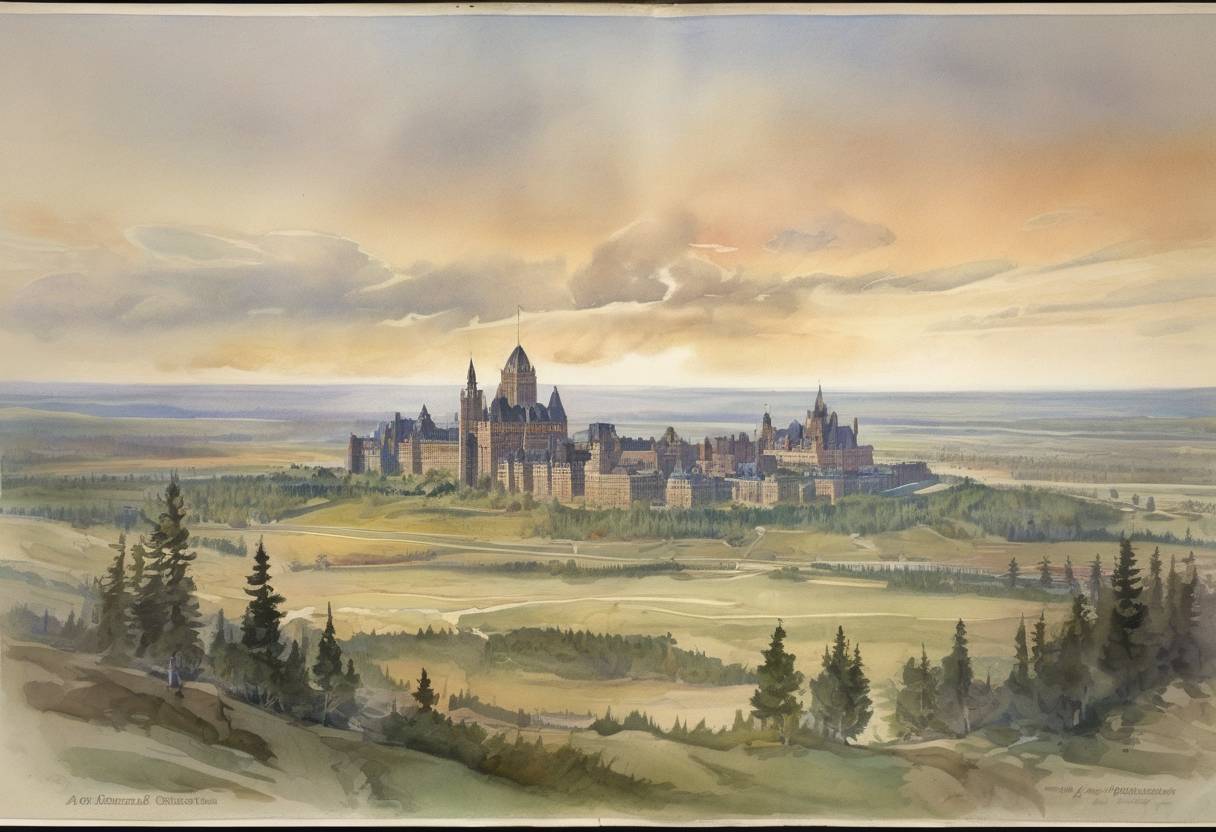
On September 1, 1905, two new provinces, Alberta and Saskatchewan, were officially established, marking a significant expansion of Canada’s confederation and shaping the development of its western frontier. This event was a pivotal moment in Canadian history, reflecting the country’s growth and the increasing importance of the western territories.
The late 19th and early 20th centuries were a period of rapid expansion and development for Canada. The Canadian Pacific Railway, completed in 1885, had opened up the western territories to increased settlement and economic opportunities. The fertile lands of the prairies attracted many settlers, including immigrants from Europe and the United States, eager to take advantage of the homesteading opportunities offered by the Canadian government.
The territories that would become Alberta and Saskatchewan were originally part of the North-West Territories, a vast region acquired by Canada from the Hudson’s Bay Company in 1870. As the population in these areas grew, there was increasing demand for local governance and representation within the federal structure of Canada.
The creation of Alberta and Saskatchewan as provinces was facilitated by the Autonomy Acts, passed by the Canadian Parliament in 1905. These acts provided for the establishment of provincial governments and the allocation of federal funds to support their development. The decision to create two separate provinces, rather than one large province, was influenced by considerations of regional identity and the desire to ensure balanced representation in the federal government.
The establishment of Alberta and Saskatchewan as provinces had several important consequences:
Economic Development: The new provinces experienced rapid economic growth, driven by agriculture, resource extraction, and infrastructure development. This growth contributed significantly to Canada’s overall economic expansion in the early 20th century.
Cultural Diversity: The influx of settlers from diverse backgrounds enriched the cultural landscape of the provinces, laying the foundation for the multicultural society that characterizes Canada today.
Political Representation: The addition of Alberta and Saskatchewan increased the number of seats in the House of Commons, ensuring that the interests of western Canadians were better represented in federal decision-making.
Indigenous Relations: The creation of the provinces also had implications for Indigenous peoples, as it led to changes in governance and land management. The impact on Indigenous communities was complex and often challenging, as they navigated new political and economic realities.
The admission of Alberta and Saskatchewan into the Canadian Confederation on September 1, 1905, was a landmark event that shaped the nation’s development. It reflected the dynamic changes occurring in Canada at the time and set the stage for the continued growth and diversification of the country. The legacy of this expansion is evident in the vibrant and prosperous provinces that Alberta and Saskatchewan have become today.
Source: en.wikipedia.org