George Washington Resigns as Commander-in-Chief
1783 · Annapolis, United States
George Washington resigned as commander-in-chief of the Continental Army, marking the end of his military service in the American Revolutionary War.
November 3, 1783
The American Continental Army is disbanded after the Treaty of Paris ends the American Revolutionary War.
Princeton, United States | Continental Congress
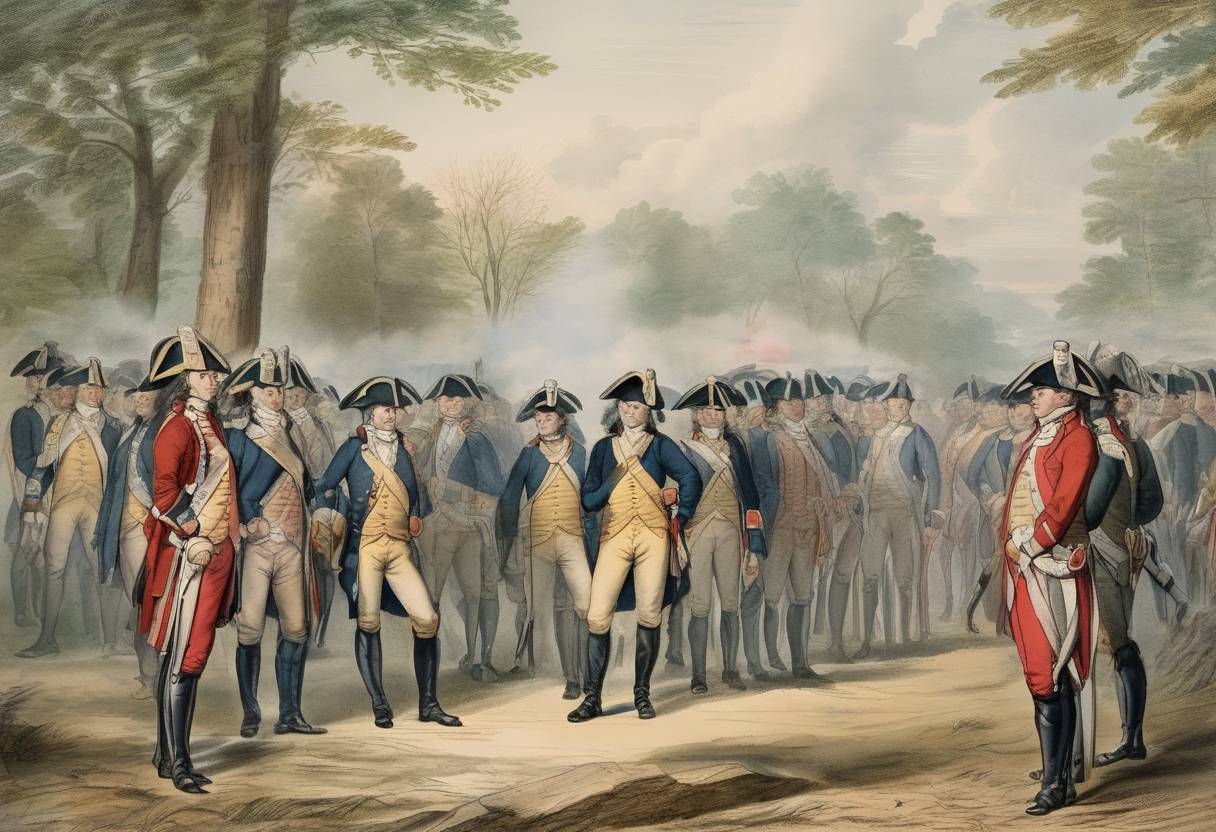
On November 3, 1783, the American Continental Army was officially disbanded following the conclusion of the American Revolutionary War. This significant event marked the end of a pivotal chapter in American history, as the army had played a crucial role in securing independence from British rule.
The American Revolutionary War (1775-1783): The conflict began as a struggle between the Thirteen American Colonies and Great Britain. The colonies sought independence, driven by issues such as taxation without representation and the desire for self-governance.
Formation of the Continental Army: Established by the Second Continental Congress in June 1775, the Continental Army was created to coordinate the military efforts of the colonies. George Washington was appointed as its commanding general.
Treaty of Paris (1783): The Treaty of Paris was signed on September 3, 1783, officially ending the war. It recognized the sovereignty of the United States and established borders between the U.S. and British North America.
Victory at Yorktown (1781): The decisive victory at the Siege of Yorktown effectively ended major combat operations. British General Cornwallis’s surrender to Washington’s forces marked a turning point, leading to peace negotiations.
Peace Negotiations: The preliminary articles of peace were signed in November 1782, and the final treaty was ratified in September 1783. These negotiations paved the way for the disbandment of the army.
Congressional Resolution: On October 18, 1783, the Continental Congress passed a resolution to disband the army, effective November 3, 1783. This decision was influenced by the need to transition to peacetime and reduce military expenditures.
Washington’s Farewell: General George Washington delivered his farewell address to his officers at Fraunces Tavern in New York City on December 4, 1783. He expressed gratitude for their service and dedication.
Transition to Peace: The disbandment signaled a shift from wartime to peacetime governance. The United States faced the challenge of establishing a stable government and economy.
Legacy of the Continental Army: The army’s success in achieving independence laid the foundation for the United States military tradition. It demonstrated the effectiveness of a citizen-soldier force committed to the principles of liberty and democracy.
Washington’s Leadership: George Washington’s leadership during the war and his voluntary resignation of power set a precedent for civilian control of the military and the peaceful transfer of power, influencing the future of American democracy.
The disbandment of the Continental Army was a crucial step in the young nation’s journey towards establishing a lasting peace and a functional government, setting the stage for the development of the United States as an independent nation.
Source: en.wikipedia.org