The Landing of the Mayflower Pilgrims at Plymouth Rock
1620 · Plymouth, United States
The Mayflower Pilgrims landed at Plymouth Rock in present-day Massachusetts, marking a significant event in the early colonization of North America.
September 16, 1620
The Mayflower set sail from Plymouth, England, carrying Pilgrims to the New World.
Plymouth, England | Pilgrims
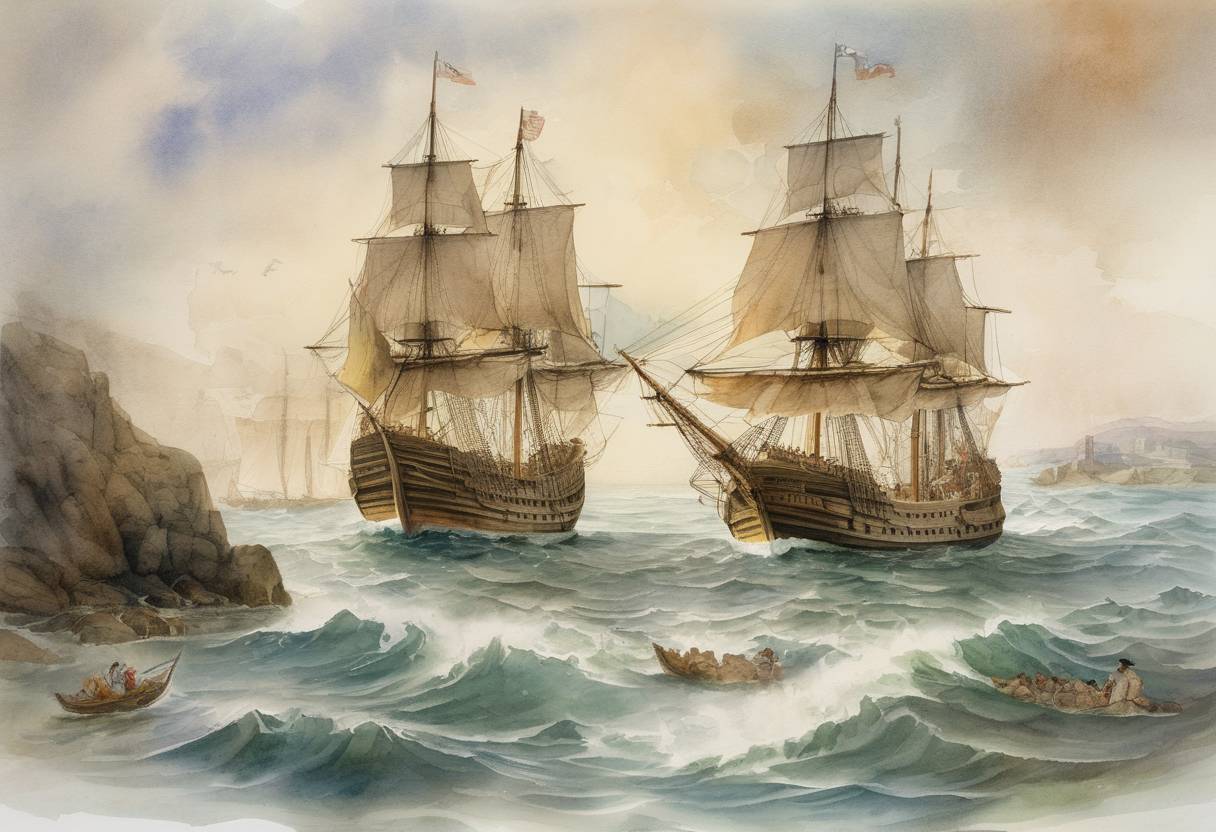
On September 16, 1620, the Mayflower, a 17th-century English ship, embarked on a historic voyage from Plymouth, England, carrying a group of passengers who would become known as the Pilgrims. This journey marked a significant moment in early American history, as it led to the establishment of one of the first permanent European settlements in North America.
The Pilgrims were a group of English Separatists who sought religious freedom. Dissatisfied with the Church of England, they initially fled to the Netherlands to escape persecution. However, seeking to preserve their English identity and gain economic opportunities, they decided to establish a new colony in the New World.
The Ship: The Mayflower was a merchant ship, approximately 100 feet long, typically used for transporting goods such as wine and wool. It was not originally intended for passenger travel, making the journey challenging for those on board.
Passengers: The ship carried 102 passengers, including men, women, and children. Among them were the Pilgrims, as well as other settlers known as “Strangers,” who were recruited to help establish the colony.
Departure: The Mayflower departed from Plymouth after several delays and a failed attempt to sail with a second ship, the Speedwell, which proved unseaworthy.
The transatlantic crossing was arduous, lasting 66 days. The passengers faced cramped conditions, rough seas, and limited provisions. Despite these hardships, the Mayflower reached the New World, anchoring at Cape Cod on November 11, 1620.
The Mayflower Compact: Before disembarking, the Pilgrims drafted and signed the Mayflower Compact, a pioneering document establishing self-governance and majority rule. This agreement laid the foundation for democratic governance in the colony.
Plymouth Colony: The settlers established Plymouth Colony, enduring a harsh first winter that claimed many lives. With the help of Native Americans, particularly the Wampanoag people, they learned to cultivate the land and eventually prospered.
Legacy: The Mayflower’s voyage and the establishment of Plymouth Colony are often seen as a symbol of perseverance and the quest for religious and personal freedom. The Pilgrims’ story has become an integral part of American cultural heritage.
The Mayflower’s journey and the subsequent founding of Plymouth Colony played a crucial role in the early colonization of North America, influencing the development of democratic principles and shaping the future United States.
Source: en.wikipedia.org