Excommunication of Martin Luther by Pope Leo X
1521 · Rome, Papal States
Pope Leo X excommunicated Martin Luther with the papal bull Decet Romanum Pontificem.
December 10, 1520
Martin Luther publicly burned the papal bull Exsurge Domine, which threatened him with excommunication unless he recanted his views. This act was a significant moment in the Protestant Reformation.
Wittenberg, Holy Roman Empire | Roman Catholic Church
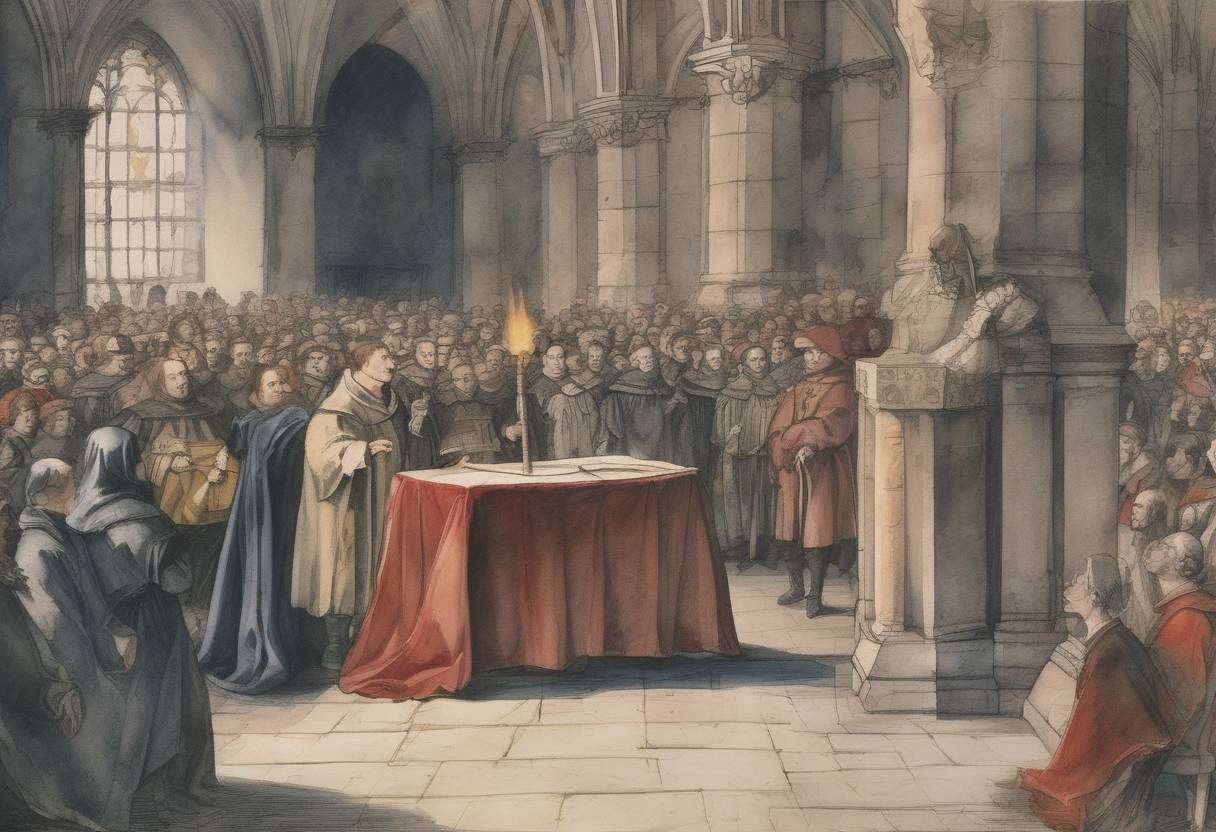
On December 10, 1520, Martin Luther, a German monk and theologian, took a bold and defiant step that would become a pivotal moment in the Protestant Reformation. On this day, Luther publicly burned the papal bull Exsurge Domine in Wittenberg, Germany. This act symbolized his rejection of the authority of the Pope and the Catholic Church, setting the stage for the further development of Protestantism.
The Ninety-Five Theses (1517): Martin Luther’s journey toward this moment began on October 31, 1517, when he nailed his Ninety-Five Theses to the door of the Wittenberg Castle Church. These theses criticized the Catholic Church’s sale of indulgences and questioned the authority of the Pope.
Escalating Tensions: Luther’s writings quickly spread across Europe, thanks to the printing press, and garnered both support and condemnation. His ideas challenged the core doctrines of the Catholic Church, leading to increasing tensions between Luther and church authorities.
Papal Bull Exsurge Domine (1520): In response to Luther’s growing influence, Pope Leo X issued the papal bull Exsurge Domine on June 15, 1520. This document condemned 41 of Luther’s propositions and threatened him with excommunication unless he recanted his views within 60 days.
Public Defiance: On December 10, 1520, Luther, in a dramatic act of defiance, burned the papal bull outside the Elster Gate in Wittenberg. This event was witnessed by a crowd of students and supporters, symbolizing a public rejection of papal authority.
Significance: By burning the bull, Luther made it clear that he would not submit to the Pope’s demands. This act was not only a personal statement but also a rallying cry for those who supported reform within the church.
Excommunication: As a result of his actions, Luther was formally excommunicated by Pope Leo X on January 3, 1521, through the bull Decet Romanum Pontificem.
Diet of Worms (1521): Luther was summoned to the Diet of Worms, an imperial council, where he was asked to recant his teachings. He famously refused, stating, “Here I stand, I can do no other.”
Spread of Protestantism: Luther’s defiance inspired others to question the Catholic Church’s practices and doctrines, leading to the spread of Protestantism across Europe. His actions laid the groundwork for the establishment of various Protestant denominations.
Luther’s burning of the papal bull was a catalyst for the Protestant Reformation, a movement that fundamentally changed the religious, political, and cultural landscape of Europe. It challenged the centralized power of the Catholic Church and promoted the idea of religious reform and individual interpretation of the scriptures. This event marked a significant shift towards religious pluralism and set the stage for future religious and social transformations.
Source: en.wikipedia.org