Indian Removal Act Vote on March 16, 1830
1830 · Washington, D.C., United States
The United States Congress voted to remove Native American nations from their Southeastern homelands, resulting in the Trail of Tears.
January 27, 1825
The U.S. Congress approves Indian Territory (present-day Oklahoma), clearing the way for the forced relocation of the Eastern Indian tribes via the Trail of Tears.
Washington, D.C., United States | U.S. Congress
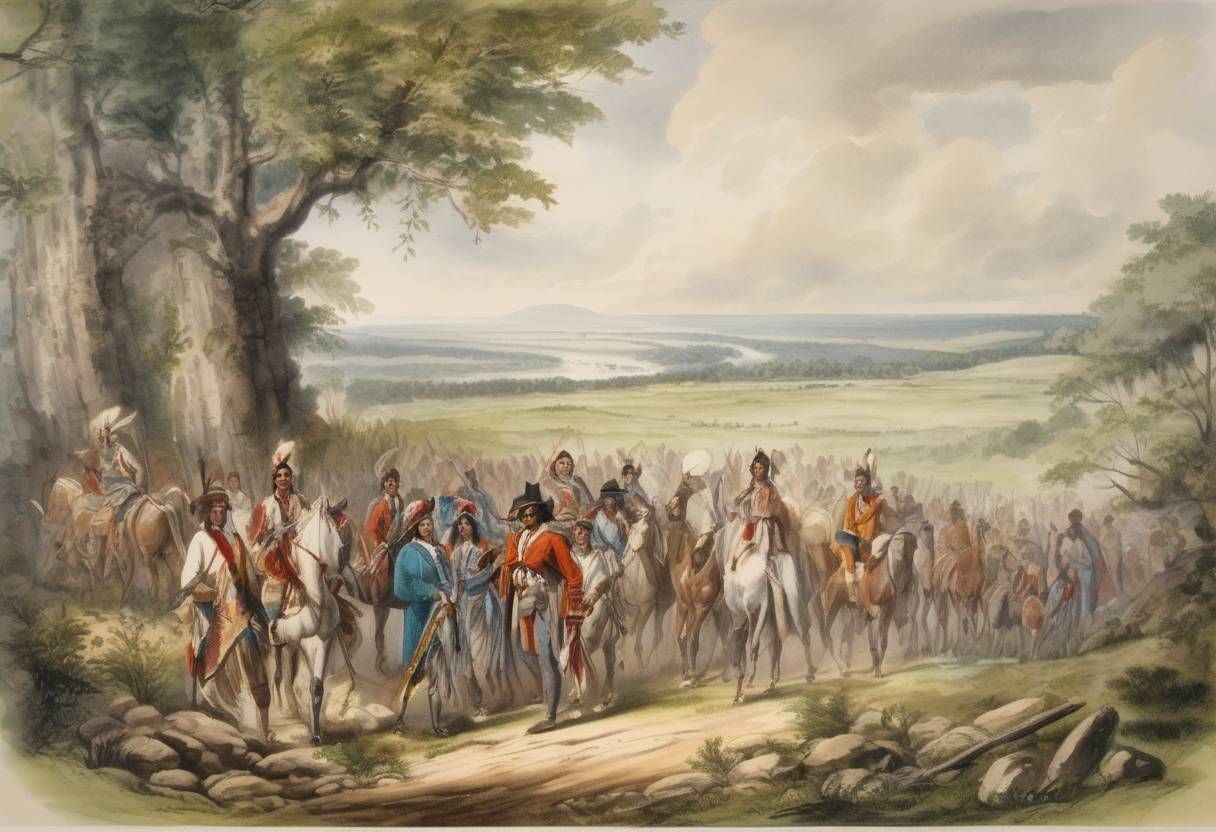
On January 27, 1825, the United States Congress took a significant step in the history of Native American relations by approving the establishment of Indian Territory, which is present-day Oklahoma. This decision laid the groundwork for the forced relocation of several Eastern Indian tribes, an event that would later be infamously known as the Trail of Tears.
The early 19th century was a period of rapid expansion for the United States, driven by the ideology of Manifest Destiny, which held that American settlers were destined to expand across North America. This expansionist mindset put increasing pressure on Native American lands, particularly in the southeastern United States, where tribes such as the Cherokee, Creek, Seminole, Chickasaw, and Choctaw resided.
The Indian Removal policy was championed by President Andrew Jackson, who argued that relocating Native American tribes to lands west of the Mississippi River would resolve conflicts between settlers and Native Americans. The policy was also seen as a way to open up more land for white settlers.
The approval of Indian Territory by Congress in 1825 was a crucial step in implementing the Indian Removal policy. The designated area, which would later become the state of Oklahoma, was intended to be a new home for the displaced tribes. This decision was formalized through a series of treaties and legislative acts, culminating in the Indian Removal Act of 1830, which authorized the President to negotiate land-exchange treaties with tribes living east of the Mississippi.
The forced relocation that followed is known as the Trail of Tears, a series of forced displacements of approximately 60,000 Native Americans between 1830 and 1850. The most notorious of these relocations occurred in 1838-1839, when the Cherokee Nation was forcibly moved from their ancestral lands in Georgia, Alabama, and Tennessee to Indian Territory. The journey was arduous and deadly, with thousands of Native Americans perishing due to disease, exposure, and starvation.
The Trail of Tears remains a poignant symbol of the harsh and often brutal policies enacted by the U.S. government against Native American tribes. It highlights the profound impact of American expansionism on indigenous populations and serves as a reminder of the struggles faced by Native Americans in maintaining their cultural identity and sovereignty.
The establishment of Indian Territory and the subsequent relocations had lasting effects on the Native American communities, leading to significant cultural and demographic changes. It also set a precedent for future U.S. policies regarding Native American lands and rights, many of which continued to marginalize indigenous peoples.
In summary, the approval of Indian Territory on January 27, 1825, was a pivotal moment in American history, marking the beginning of a tragic chapter for Native American tribes and shaping the future of U.S. government policy towards indigenous peoples.
Source: en.wikipedia.org