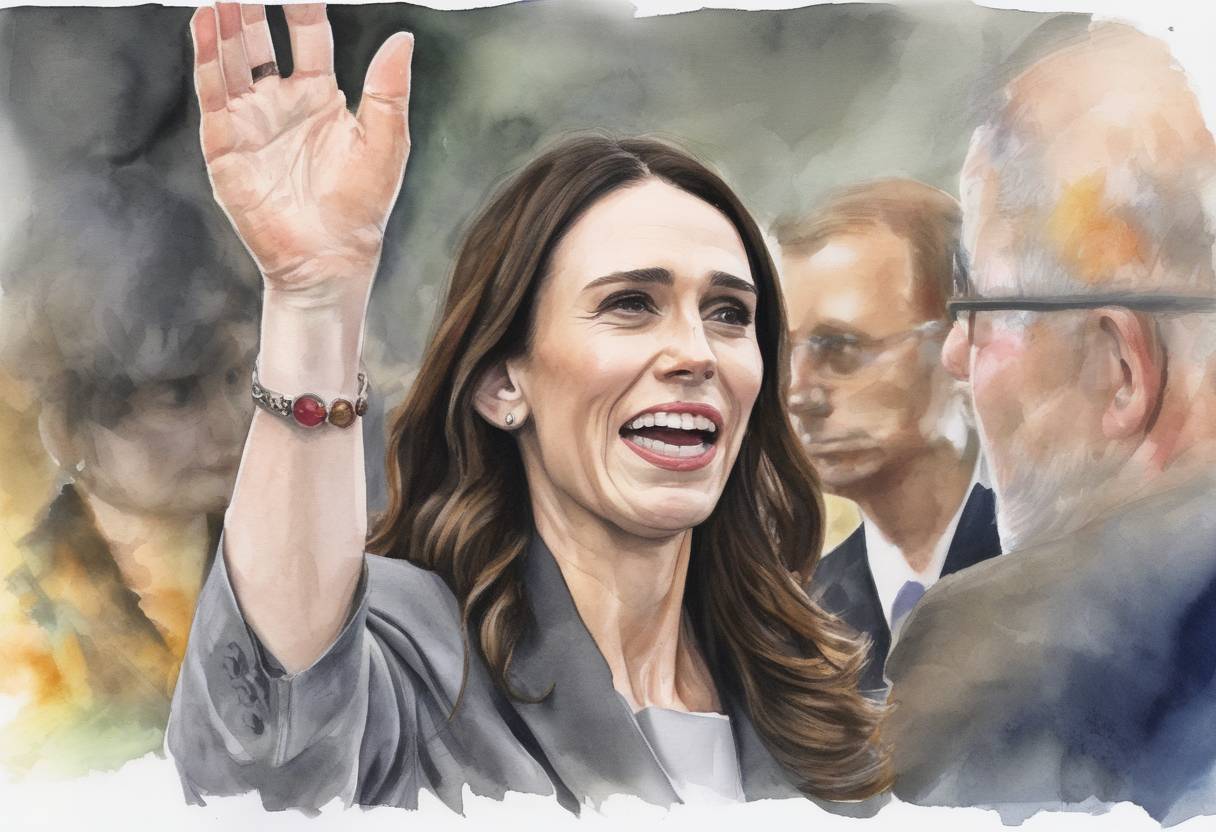
Jacinda Ardern Sworn in as Prime Minister of New Zealand
On October 25, 2017, Jacinda Ardern was sworn in as the 40th Prime Minister of New Zealand, marking a significant moment in the country’s political history. At the age of 37, she became the youngest female head of government in the world at that time, and the second-youngest leader in New Zealand’s history.
Background
Jacinda Ardern’s rise to the premiership was both rapid and remarkable. She became the leader of the New Zealand Labour Party on August 1, 2017, just seven weeks before the general election. Her leadership invigorated the party, leading to a surge in popularity known as “Jacindamania.” The election, held on September 23, 2017, resulted in a hung parliament, with no party winning an outright majority.
Following the election, negotiations ensued to form a coalition government. Ardern’s Labour Party, which had secured 46 seats, entered into a coalition with the New Zealand First party, led by Winston Peters, and gained support from the Green Party. This coalition agreement enabled Ardern to form a government, with Winston Peters serving as Deputy Prime Minister and Foreign Minister.
Swearing-In Ceremony
The swearing-in ceremony took place at Government House in Wellington, where Ardern officially assumed office. The event was attended by Governor-General Dame Patsy Reddy, who administered the oaths of office to Ardern and her cabinet ministers. The ceremony was a formal recognition of Ardern’s leadership and the new government’s mandate.
Significance
Jacinda Ardern’s appointment was significant for several reasons:
Youth and Gender: As the youngest female head of government at the time, Ardern’s leadership represented a shift towards younger, more diverse political representation.
Progressive Policies: Her government promised to address issues such as child poverty, housing affordability, and climate change, reflecting a progressive agenda that resonated with many New Zealanders.
International Attention: Ardern quickly gained international attention for her empathetic leadership style and her ability to connect with people, both domestically and globally.
Aftermath and Impact
Ardern’s tenure as Prime Minister has been marked by her handling of significant events, including the Christchurch mosque shootings in 2019, where her compassionate response was widely praised, and the COVID-19 pandemic, where her government’s swift actions were credited with minimizing the virus’s impact in New Zealand.
Her leadership style and policy focus have continued to influence New Zealand’s political landscape and have set a precedent for future leaders in the country and beyond.
In summary, Jacinda Ardern’s swearing-in as Prime Minister on October 25, 2017, was a pivotal moment in New Zealand’s history, characterized by her youth, progressive vision, and the coalition dynamics that brought her to power.