The Treaty of Versailles: June 28, 1919
1919 · Versailles, France
The Treaty of Versailles was signed, officially ending World War I and imposing heavy reparations and territorial losses on Germany.
December 4, 1918
U.S. President Woodrow Wilson sails for the World War I peace talks in Versailles, becoming the first U.S. president to travel to Europe while in office.
Versailles, France | United States Government
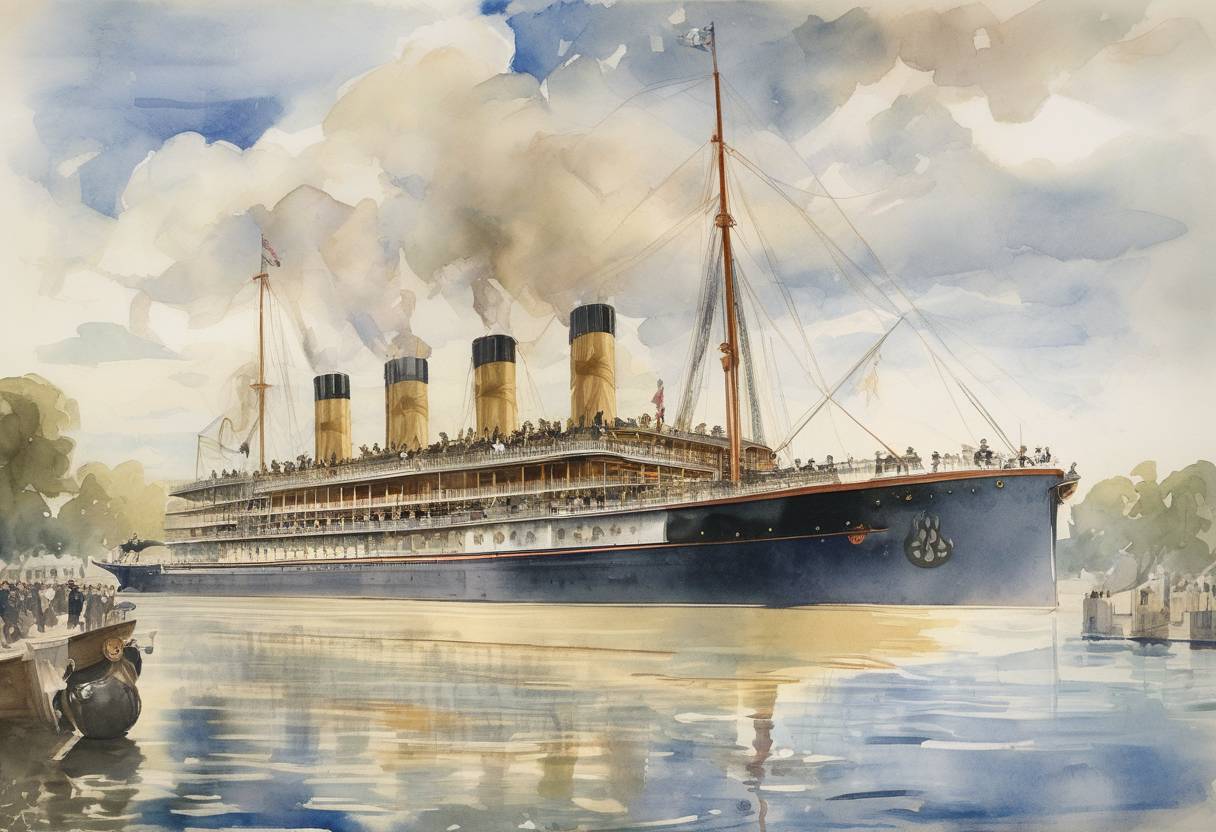
On December 4, 1918, President Woodrow Wilson embarked on a historic journey, becoming the first sitting U.S. president to travel to Europe. This significant event marked a pivotal moment in both American and world history, as Wilson set sail aboard the USS George Washington to attend the peace talks following the end of World War I.
World War I, also known as the Great War, had ravaged Europe from 1914 to 1918, involving many of the world’s great powers. The conflict ended with the signing of the Armistice on November 11, 1918. As the war concluded, the Allied Powers sought to negotiate the terms of peace and establish a new world order to prevent future conflicts. The peace talks were scheduled to take place in Versailles, France, and were to culminate in the Treaty of Versailles.
President Wilson was a staunch advocate for a fair and lasting peace. In January 1918, he had outlined his vision for the post-war world in a speech to Congress, famously known as the “Fourteen Points.” This proposal emphasized self-determination, free trade, disarmament, and the establishment of a League of Nations to ensure collective security and prevent future wars.
Wilson’s decision to personally attend the peace talks underscored his commitment to shaping the post-war order and promoting his vision on the global stage. His presence was intended to lend weight to his proposals and to ensure that the United States played a central role in the peace negotiations.
Wilson’s departure on December 4, 1918, was a momentous occasion. The USS George Washington, a former German ocean liner seized during the war, was repurposed to transport the president and his delegation across the Atlantic. Accompanying Wilson were key advisors and diplomats, including Secretary of State Robert Lansing and Colonel Edward M. House, Wilson’s close confidant.
The journey itself was symbolic of the United States’ emerging role as a global power and its willingness to engage in international diplomacy. Wilson’s presence in Europe was unprecedented and demonstrated a shift in American foreign policy from isolationism to active participation in global affairs.
The peace conference began in January 1919 and involved leaders from the Allied Powers, including British Prime Minister David Lloyd George, French Premier Georges Clemenceau, and Italian Prime Minister Vittorio Orlando. Wilson faced significant challenges in advocating for his Fourteen Points, as European leaders were primarily focused on punishing Germany and securing reparations.
Despite these challenges, Wilson succeeded in establishing the League of Nations, although the U.S. Senate ultimately refused to ratify the Treaty of Versailles, preventing American participation in the League. This decision had lasting implications for international relations and the future of global peacekeeping efforts.
Wilson’s journey to the Versailles Peace Talks was a landmark moment in U.S. history, reflecting a new era of American engagement in world affairs. Although the Treaty of Versailles faced criticism and the League of Nations struggled without U.S. involvement, Wilson’s efforts laid the groundwork for future international cooperation and the eventual establishment of the United Nations after World War II.
In summary, President Woodrow Wilson’s voyage to Europe in December 1918 was a bold and unprecedented step in American diplomacy, highlighting the nation’s evolving role on the world stage and its commitment to shaping a peaceful post-war order.
Source: en.wikipedia.org