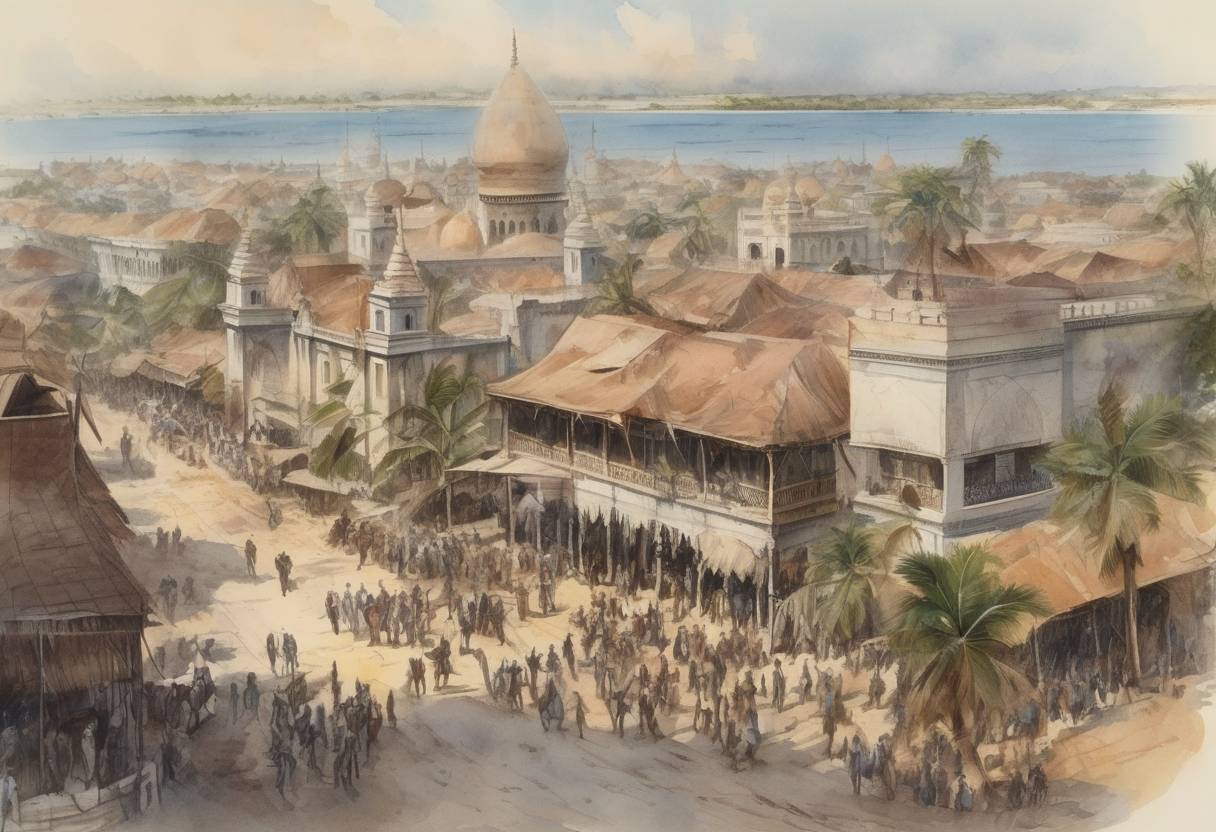
The Anglo-Zanzibar War: The Shortest War in History
Background
The Anglo-Zanzibar War, fought on August 27, 1896, is renowned as the shortest war in recorded history, lasting between 38 and 45 minutes. This brief but significant conflict occurred between the United Kingdom and the Sultanate of Zanzibar, a small island nation off the coast of East Africa.
Context Leading to the War
Zanzibar’s Strategic Importance: By the late 19th century, Zanzibar was a crucial hub for trade, particularly in spices and slaves. Its strategic location made it a focal point for colonial interests, especially for the British Empire, which sought to control the region to secure its trade routes and suppress the slave trade.
British Influence: In 1890, Zanzibar became a British protectorate, allowing the British to exert significant influence over its internal affairs. The British supported Sultan Hamad bin Thuwaini, who was cooperative with British interests.
Change in Leadership: On August 25, 1896, Sultan Hamad bin Thuwaini died suddenly. His cousin, Khalid bin Barghash, seized power, but he was not the British-preferred candidate. The British favored Hamoud bin Mohammed, who was more amenable to their influence.
The Conflict
Ultimatum and Preparations: The British issued an ultimatum to Khalid bin Barghash, demanding he step down and leave the palace by 9:00 AM on August 27, 1896. Khalid refused, instead fortifying the palace and assembling a small force of approximately 2,800 men, including palace guards and civilians.
British Military Response: The British had a significantly superior military presence, including three warships (HMS St George, HMS Philomel, and HMS Racoon), several hundred marines and sailors, and a contingent of Zanzibari troops loyal to the British.
The Battle: At precisely 9:02 AM, after Khalid ignored the ultimatum, the British commenced bombardment of the Sultan’s palace. The shelling quickly overwhelmed Khalid’s defenses, destroying the palace and disabling the Sultan’s artillery.
Casualties and Surrender: The conflict resulted in approximately 500 casualties on the Zanzibari side, while the British suffered only one sailor wounded. By 9:40 AM, the bombardment ceased, and Khalid fled to the German consulate, seeking asylum.
Aftermath
Installation of a Pro-British Sultan: Following the swift victory, the British installed Hamoud bin Mohammed as the Sultan of Zanzibar. His rule marked a period of increased British control over the island’s affairs.
Long-term Impact: The war underscored the extent of British imperial power and its willingness to use military force to maintain influence. It also highlighted the geopolitical importance of Zanzibar in the context of European colonial ambitions in Africa.
Historical Significance: The Anglo-Zanzibar War remains a notable example of the era’s imperial conflicts, illustrating the dynamics of power, diplomacy, and military might during the height of the British Empire.
In conclusion, the Anglo-Zanzibar War, despite its brevity, had lasting implications for the region and serves as a poignant reminder of the complexities of colonial history.