Ratification of the Articles of Confederation
1781 · Annapolis, United States
The Articles of Confederation were ratified after Maryland became the last state to sign them, establishing the United States' first constitution.
November 15, 1777
The Continental Congress approves the Articles of Confederation, the first constitution of the United States.
York, United States | Continental Congress
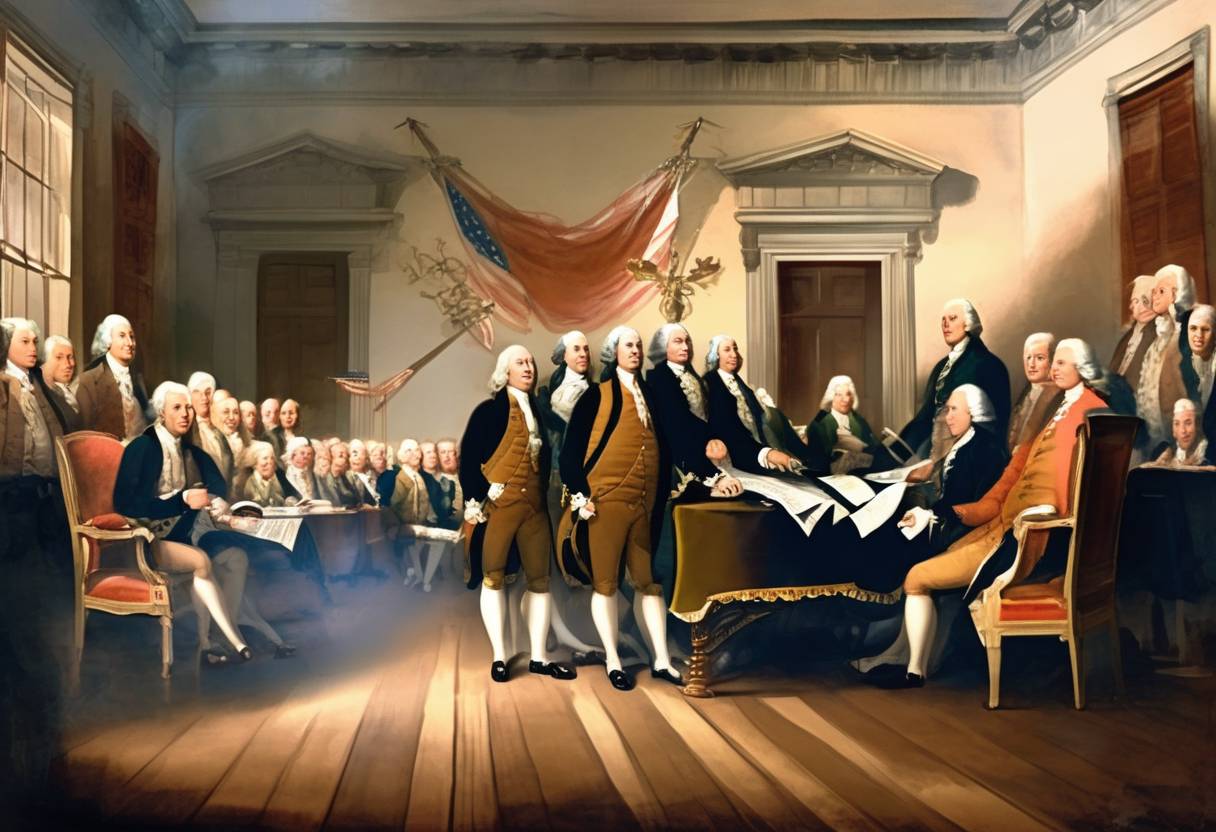
On November 15, 1777, the Continental Congress approved the Articles of Confederation, marking a significant milestone in the formation of the United States’ government. This event laid the groundwork for the nation’s first constitution, which would guide the fledgling country through the Revolutionary War and the early years of independence.
The need for a unified national government became evident as the American colonies sought independence from British rule. The Continental Congress, which had been convening since 1774, recognized the necessity of establishing a formal framework to govern the collective interests of the thirteen colonies.
The drafting of the Articles of Confederation began in 1776, spearheaded by a committee led by John Dickinson of Pennsylvania. The process was marked by debates over the balance of power between the central government and the states, reflecting the colonies’ wariness of centralized authority due to their experiences under British rule.
The Articles of Confederation established a confederation of sovereign states with a weak central government. Some of the key features included:
Although the Articles were approved by the Continental Congress in 1777, they required ratification by all thirteen states. This process was not completed until March 1, 1781, when Maryland became the last state to ratify the document. The delay was primarily due to disputes over western land claims.
The Articles of Confederation served as the United States’ first constitution and provided a framework for governance during the latter part of the Revolutionary War. However, its limitations soon became apparent:
These weaknesses prompted calls for a stronger federal government, ultimately leading to the Constitutional Convention of 1787. The result was the drafting of the United States Constitution, which replaced the Articles of Confederation and established a more robust federal system.
In conclusion, the approval of the Articles of Confederation on November 15, 1777, was a crucial step in the development of the United States’ governmental structure. While it provided a necessary framework during a critical period, its shortcomings highlighted the need for a more effective national government, paving the way for the Constitution that governs the United States today.
Source: www.archives.gov