James Callaghan Becomes Prime Minister of the United Kingdom
1976 · London, United Kingdom
James Callaghan became Prime Minister of the United Kingdom, succeeding Harold Wilson.
April 5, 1955
Winston Churchill resigned as Prime Minister of the United Kingdom due to ill health, marking the end of his political career.
London, United Kingdom | British Government
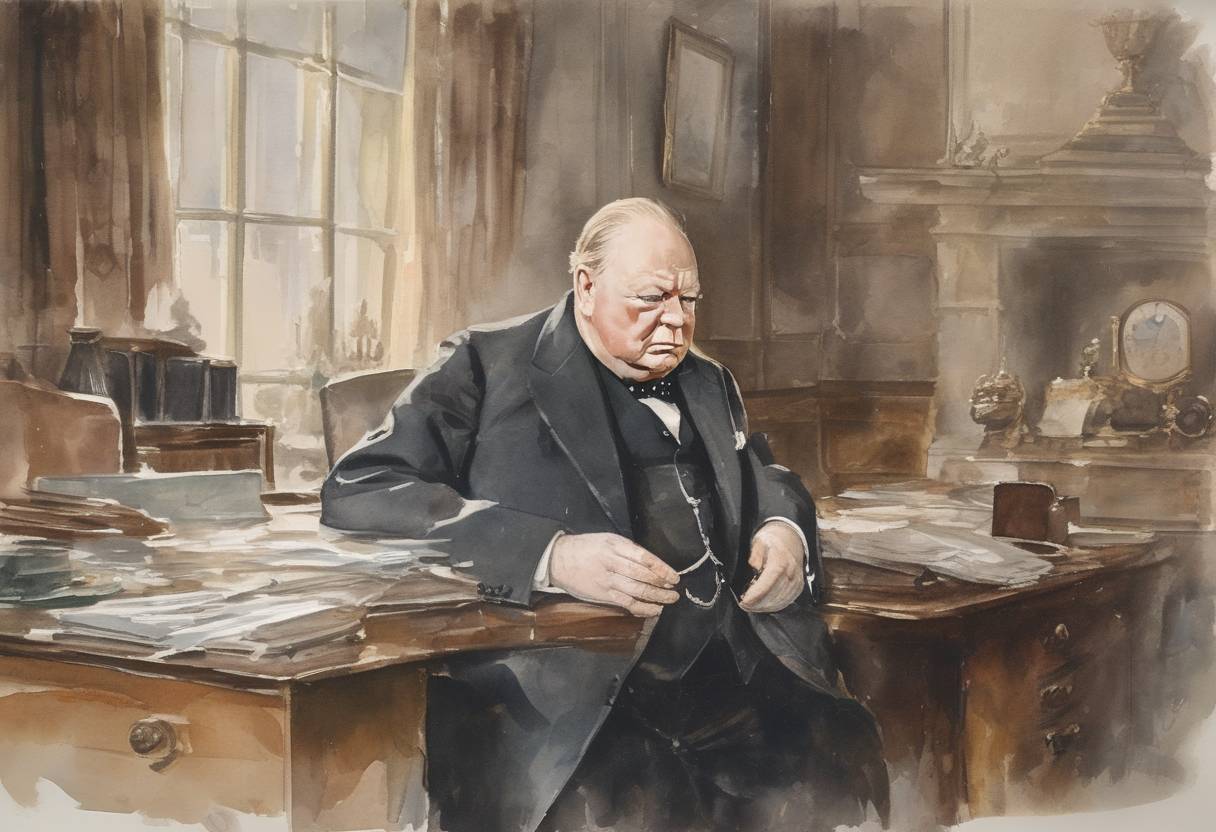
On April 5, 1955, Sir Winston Churchill resigned as Prime Minister of the United Kingdom, marking the end of his illustrious political career. This decision was primarily due to his declining health, which had been a concern for several years.
Winston Churchill’s Leadership: Churchill is best known for his leadership during World War II. He first became Prime Minister in 1940, leading Britain through the war with his indomitable spirit and stirring oratory. After the war, he was defeated in the 1945 general election but returned to power in 1951.
Health Issues: By the early 1950s, Churchill’s health was deteriorating. He suffered a series of strokes, the most significant of which occurred in 1953. Despite his health challenges, he continued to serve as Prime Minister, driven by his sense of duty and commitment to public service.
Decision to Resign: Churchill’s decision to resign was influenced by his health and the recognition that he could no longer effectively fulfill the demanding role of Prime Minister. His resignation was a reluctant acknowledgment of his physical limitations.
Succession: Upon his resignation, Churchill was succeeded by Anthony Eden, his long-time colleague and Foreign Secretary. Eden was seen as a natural successor and had been waiting in the wings for several years.
End of an Era: Churchill’s resignation marked the end of an era in British politics. His career spanned over six decades, during which he held numerous key positions, including First Lord of the Admiralty, Chancellor of the Exchequer, and Home Secretary.
Legacy: Churchill’s legacy as a wartime leader and statesman remains profound. He is remembered for his steadfast leadership during one of the most challenging periods in British history and his contributions to the post-war world order.
Retirement: After stepping down, Churchill remained a Member of Parliament until 1964. He spent his retirement years writing and painting, continuing to influence public life through his speeches and writings.
Churchill’s resignation was a significant moment in 20th-century history, symbolizing the transition from wartime leadership to a new era of post-war governance. His impact on British and global history continues to be studied and revered.
Source: en.wikipedia.org