1888 · New York City, United States
The Great Blizzard of 1888 began along the eastern United States, eventually becoming one of the most severe recorded blizzards in U.S. history.
July 4, 1911
West Virginia experienced one of its most damaging floods of the 20th century, distinctly remembered for its impact on the state.
Multiple cities, United States | State of West Virginia
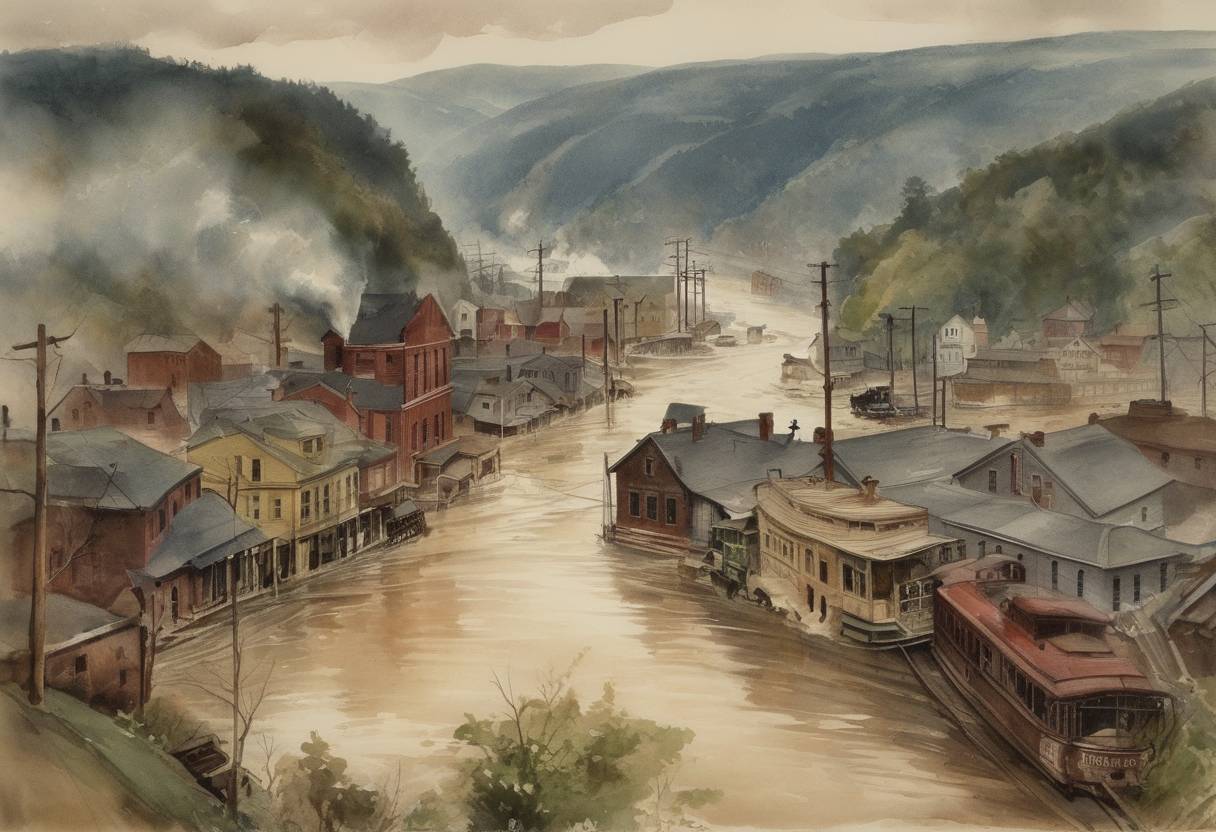
On July 4, 1911, West Virginia experienced one of its most catastrophic natural disasters when torrential rains led to severe flooding across the state. This event is particularly memorable due to its widespread destruction and lasting impact on the communities and infrastructure of the region.
The early 20th century in West Virginia was marked by a burgeoning coal industry and growing infrastructure, with many small towns and communities relying heavily on the state’s rivers and streams for economic and daily life. However, the geography of West Virginia, characterized by its rugged terrain and numerous rivers, made it particularly susceptible to flash flooding during periods of heavy rainfall.
On that fateful Independence Day in 1911, an intense storm system brought extraordinary amounts of rain over parts of the state. The excessive precipitation overwhelmed riverbanks and drainage systems, leading to catastrophic flooding in numerous counties. Notably affected were the Greenbrier and Kanawha river basins, regions heavily reliant on their rivers for transportation and industry.
The flooding of July 4 swept through towns, washing away homes, bridges, railroad tracks, and other critical infrastructure. The inundation disrupted lives, leaving many residents homeless and resulting in significant economic losses from damaged properties and crippled industries. The floodwaters also had a destructive impact on agricultural lands, washing away crops and fertile soil, compounding the economic challenges for the local population.
Casualty estimates suggest that while the precise number of deaths remains uncertain, multiple fatalities were reported due to the floodwaters and related accidents. The devastation necessitated a massive humanitarian and rebuilding effort coordinated by local governments and communities.
In the aftermath, state authorities and residents worked tirelessly to rebuild and recover from the disaster. The flood underscored the vulnerability of West Virginia’s infrastructure to natural disasters, catalyzing discussions around improved flood protection and management strategies. Over subsequent decades, this event contributed to the development of more robust flood control measures and infrastructure improvements to mitigate the impact of future floods.
The flood of 1911 remains a significant historical event for West Virginia, not only for its immediate devastation but also as an impetus for change in flood management and infrastructural resilience. It serves as a poignant reminder of the power of natural forces and the importance of preparedness in reducing disaster-related risks.
Today, it is remembered through various local histories and commemorations as a crucial moment in the state’s environmental and social history.
Source: www.wvencyclopedia.org