1744 · Toulon, France
The British blockade the French port of Toulon, an event that is among the numerous naval engagements of the War of the Austrian Succession.
February 4, 1810
After a long series of failed negotiations with Britain to resolve trade and territorial disputes, Admiral Sir James Saumarez published orders announcing the blockade of Guadeloupe and Martinique for violating British trade restrictions.
Portsmouth, United Kingdom | Royal Navy
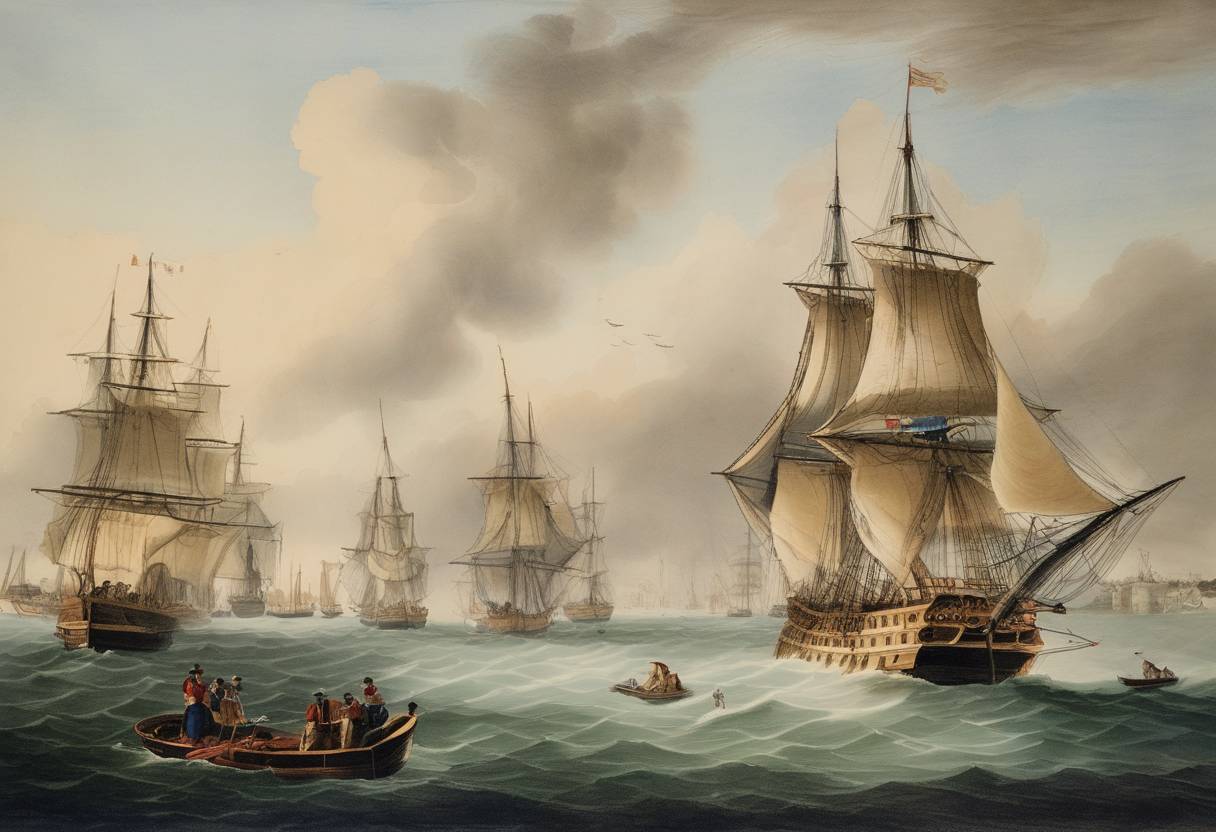
On February 4, 1810, Admiral Sir James Saumarez, commanding the British naval forces in the Caribbean, made a decisive proclamation announcing the blockade of the French-controlled islands of Guadeloupe and Martinique. This move was rooted in ongoing Anglo-French hostilities and a series of failed negotiations aimed at addressing trade and territorial disputes that had escalated during the Napoleonic Wars.
The early 19th century was marked by extensive conflict between the British Empire and Napoleonic France. The struggle extended beyond the European continent, carrying into global colonial theatres, notably in the Caribbean. The region’s islands were pivotal for strategic and economic reasons, offering valuable resources like sugar and serving as key naval bases.
Prior to the blockade’s announcement, Britain had imposed trade restrictions known as the Orders in Council, aimed at crippling French trade by restricting neutral commerce with French territories. Napoleon countered with his Continental System, seeking to block British goods across Europe. Guadeloupe and Martinique, as French possessions, became focal points in this economic warfare.
Admiral Saumarez’s declaration on February 4, 1810, was a strategic effort to enforce British maritime dominance and cut off supplies to French territories in the Caribbean. By implementing a blockade, Britain aimed to weaken French capacity in the region, diminish their international trade, and reduce the resources available to support Napoleon’s military aspirations.
The blockade of Guadeloupe and Martinique intensified British efforts to control the Caribbean, a struggle that would eventually see both islands falling under British control. Guadeloupe was seized in 1810, and Martinique followed in 1815, although the latter was returned to France following the Treaty of Paris.
This blockade not only exemplified Britain’s naval strength but also highlighted the interconnectedness of global trade and the lengths to which both empires would go to secure economic and military advantages. Ultimately, the sustained pressures from blockades and battles significantly contributed to the erosion of French colonial power in the Caribbean by the end of the Napoleonic Wars.
Source: www.napoleon-series.org