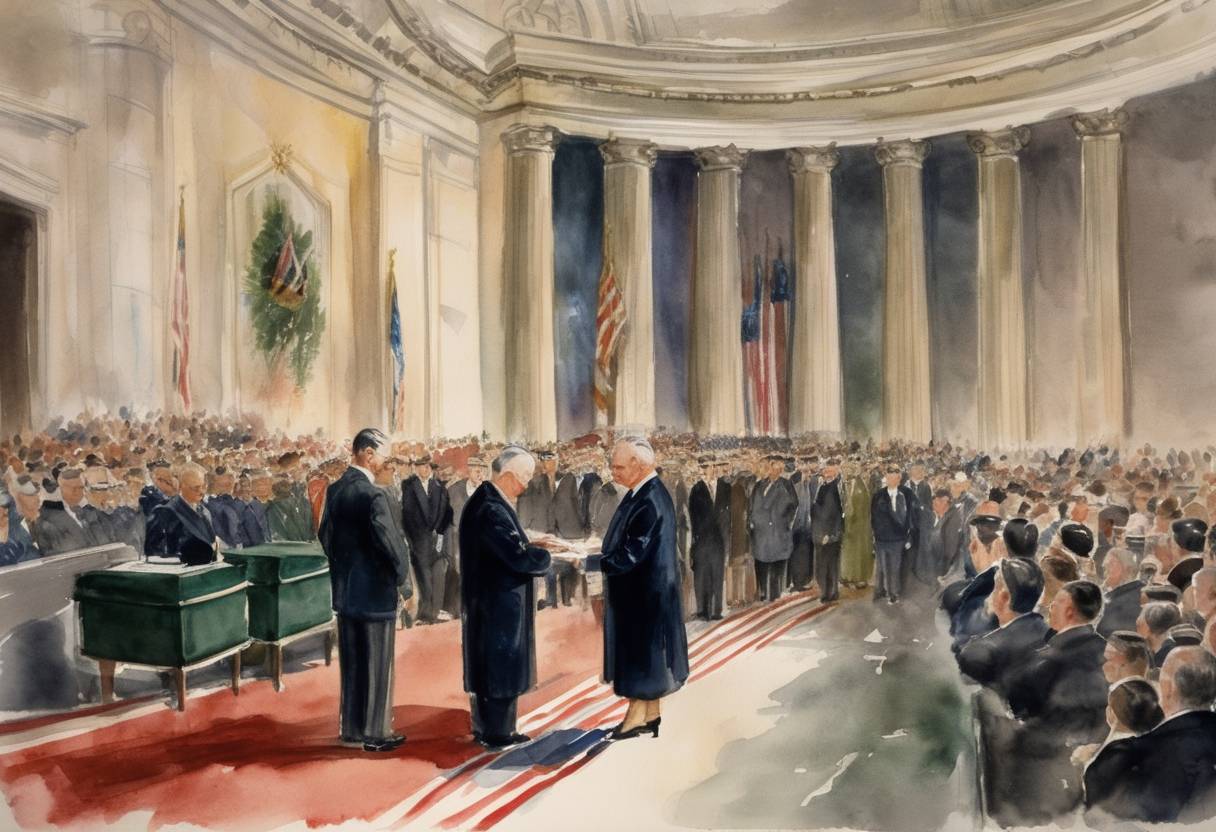
Harry S. Truman’s Inauguration - January 20, 1949
On January 20, 1949, Harry S. Truman was inaugurated as the 33rd President of the United States, marking the start of his first full term in office. This inauguration was significant as it followed his unexpected ascension to the presidency after the death of President Franklin D. Roosevelt in 1945.
Context Leading to the Inauguration
- Background: Harry S. Truman became Vice President in January 1945 and assumed the presidency on April 12, 1945, after Roosevelt’s sudden death. His initial tenure included overseeing the final stages of World War II and managing post-war recovery.
- 1948 Election: Truman’s 1948 election campaign was against significant odds. Facing a split Democratic Party, he ran against Republican Thomas E. Dewey, whom many expected to win. Truman conducted a vigorous whistle-stop tour and famously held up a newspaper with the erroneous headline “Dewey Defeats Truman” after securing a surprise victory.
Key Aspects of the Inauguration
- Inaugural Ceremony: Truman’s inauguration was the first to be televised nationally, allowing millions of Americans to witness the event from their homes. Chief Justice Fred M. Vinson administered the oath of office on the steps of the U.S. Capitol.
- Inaugural Address: Truman’s speech outlined his ambitious Fair Deal domestic agenda, building on the New Deal legacy. He emphasized civil rights, national health insurance, and federal aid to education, highlighting his commitment to liberal domestic reforms.
Aftermath and Historical Significance
- Domestic Policy: Truman’s Fair Deal faced opposition from a conservative Congress, yet it set the foundation for future policy discussions on civil rights and social welfare.
- Foreign Policy: Truman continued to shape U.S. foreign policy amid the early Cold War tensions. His administration’s significant strategies included the Marshall Plan for European recovery and the establishment of NATO, solidifying his legacy in international relations.
- Legacy: Truman’s presidency is noted for navigating the transition from wartime to peacetime economy, implementing anti-communism strategies, and promoting civil rights, which influenced later movements.
Truman’s inauguration in 1949 marked a pivotal moment in U.S. history, as it was not only a commencement of a full presidential term for him but also a time of significant transition both domestically and internationally, setting the stage for substantial socio-economic and geopolitical developments in the mid-20th century.