1779 · Cape St. Vincent, Portugal
The naval Battle of Cape St. Vincent begins, wherein a British fleet under Admiral George Rodney defeats a Spanish squadron.
August 18, 1759
The battle of Lagos occurs during the Seven Years' War, where the British fleet under Admiral Boscawen defeats a French fleet off the coast of Portugal.
off the coast of Lagos, Portugal | Royal Navy
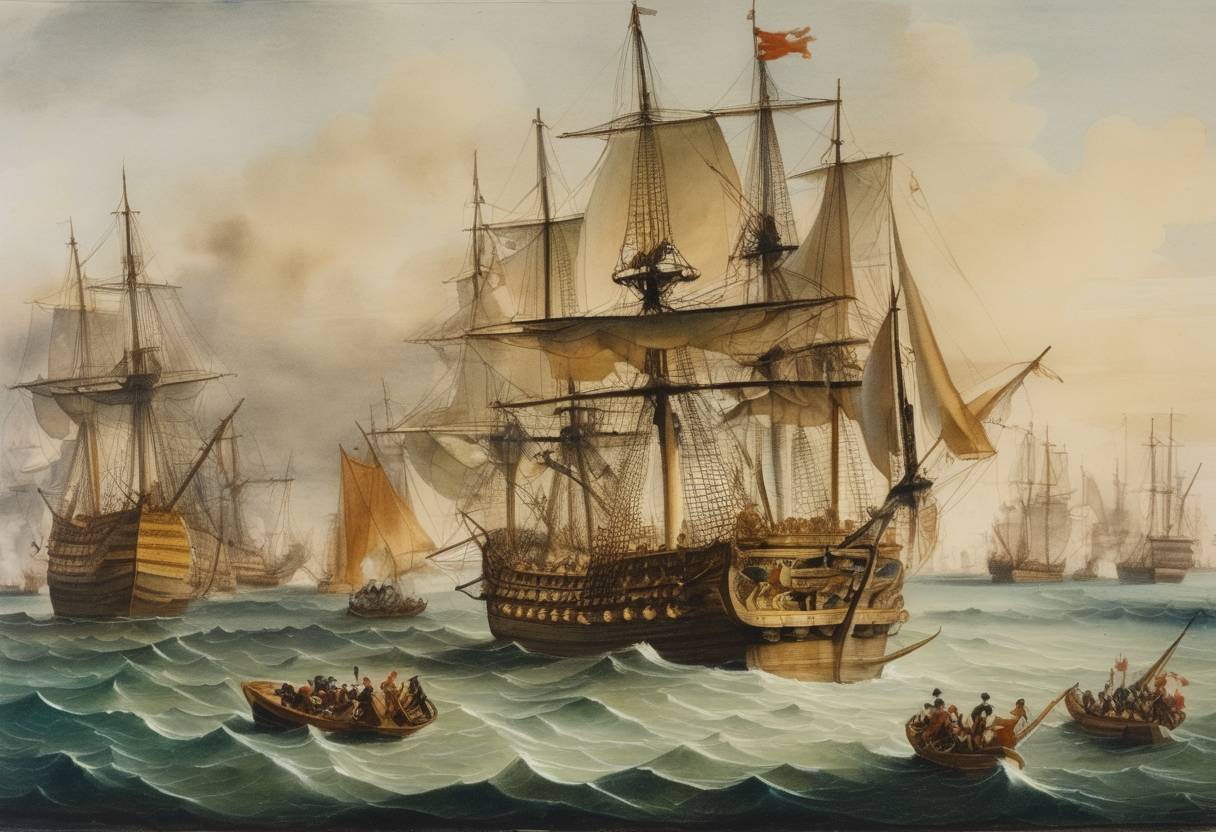
The Battle of Lagos was a significant naval confrontation during the Seven Years’ War, taking place on August 18, 1759. This battle saw the British Royal Navy, led by Admiral Edward Boscawen, securing a pivotal victory against the French fleet off the coast of Lagos, Portugal.
The Seven Years’ War (1756-1763) was a global conflict involving most of the great powers of the time. The British and French empires were engaged in a fierce struggle for supremacy on the high seas and across their colonial possessions.
In 1759, the French aimed to challenge Britain’s naval dominance and possibly invade Great Britain by amassing their fleets in prepared positions. Admiral Boscawen’s mission was to intercept and prevent these French movements.
Admiral Boscawen, commanding a squadron from the British Mediterranean fleet, encountered the French fleet under Commodore Jean-François de La Clue-Sabran. The French were attempting to sail from Toulon to the Atlantic, a strategic move to join the Brest fleet in preparation for an invasion attempt.
Engagement: Following a protracted chase over several days, Boscawen’s fleet caught up with the French. The battle commenced on the morning of August 18.
British Tactics: Boscawen effectively utilized superior British naval tactics and ship handling to engage the French in small, decisive actions. His ships were well-positioned to counter any French maneuvers.
Outcome: The British decisively defeated the French fleet. Several French ships were captured or destroyed, including the flagship Océan, which was scuttled by the French to prevent capture.
Strategic Impact: The Battle of Lagos was instrumental in ensuring British control of the seas, contributing significantly to the overall British success in the Seven Years’ War. It prevented the French from merging their fleets and mounting an invasion of Britain.
Moral Boost: This victory was part of what became known as the Annus Mirabilis of 1759, a year marked by major British victories worldwide, boosting British morale and solidifying naval power.
Naval Supremacy: The win reinforced the Royal Navy’s dominance, severely crippling French naval capabilities, and further isolating French overseas territories.
The Battle of Lagos remains a noteworthy example of naval strategy and the effective use of sea power in shaping the outcomes of larger conflicts.
Source: www.britannica.com