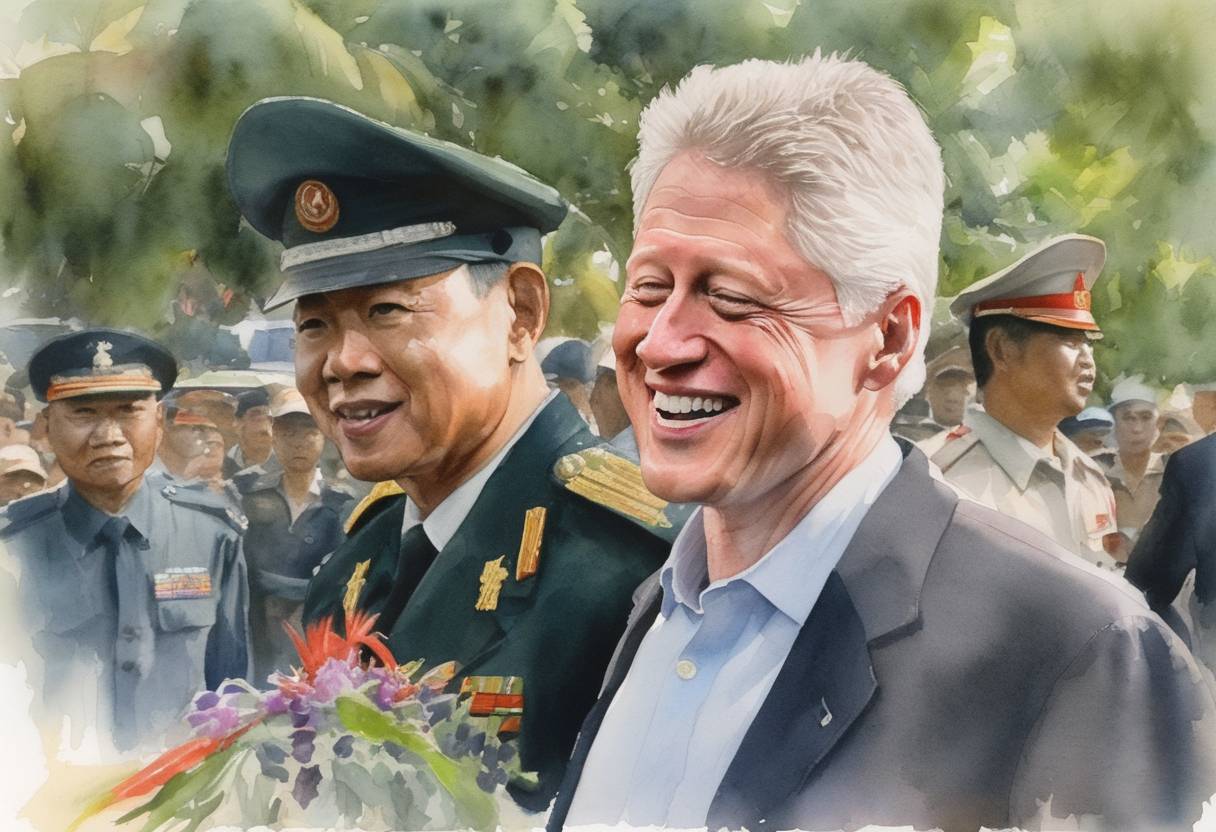
Bill Clinton’s Historic Visit to Vietnam - November 13, 2000
On November 13, 2000, Bill Clinton made history as the first sitting U.S. President to visit Vietnam since the conclusion of the Vietnam War in 1975. This milestone visit symbolized a significant step in the normalization of relations between the United States and Vietnam, which had begun five years earlier when the two countries established formal diplomatic ties in 1995.
Context and Background
Vietnam War Aftermath: The Vietnam War, which ended in 1975 with the fall of Saigon, left profound scars and a lingering sense of animosity between the United States and Vietnam. Diplomatic relations were severed, and it took several decades for any moves towards reconciliation to begin in earnest.
Normalization of Relations: Efforts to normalize relations started in the early 1990s, focusing on humanitarian issues such as recovery of MIA (Missing in Action) personnel and addressing the legacy of the war, including the impacts of Agent Orange.
Improving Diplomatic Ties: The Clinton Administration was pivotal in reinvigorating the diplomatic relationships, ushering in an era of cooperation. This was underscored by the lifting of the trade embargo in 1994 and the establishment of formal diplomatic relations a year later.
Key Events of the Visit
Arrival in Hanoi: President Clinton arrived in Hanoi on November 13, 2000, marking a momentous occasion, both symbolically and diplomatically. The visit underscored the U.S. commitment to moving beyond past hostilities toward a future of cooperation.
Agenda Highlights: During his trip, Clinton focused on several key areas:
- Economic Ties: Discussions around trade and economic partnerships were central to the visit, including talks on a bilateral trade agreement that would eventually lead to increased economic exchanges.
- Humanitarian Efforts: President Clinton emphasized continued efforts on resolving issues related to war legacies, such as unexploded ordnances and Agent Orange contamination.
- Cultural and Educational Exchange: Promoting cultural exchange and educational ties was also a priority, highlighting the importance of people-to-people connections in healing and strengthening bilateral relations.
Public Engagements: Clinton engaged with various groups, including students and business leaders, furthering the message of reconciliation and mutual growth.
Aftermath and Significance
Strengthened Bilateral Relations: The visit significantly bolstered the U.S.-Vietnamese relationship. It paved the way for future cooperation across multiple sectors, from trade to education.
Legacy of Reconciliation: Clinton’s visit is often seen as a pivotal point in turning a once-contentious relationship into one marked by collaboration and increasing mutual respect.
The historic visit on November 13, 2000, stands as a testament to the power of diplomacy and reconciliation, helping to transform the trajectory of U.S.-Vietnam relations from former adversaries to emerging partners on the world stage.