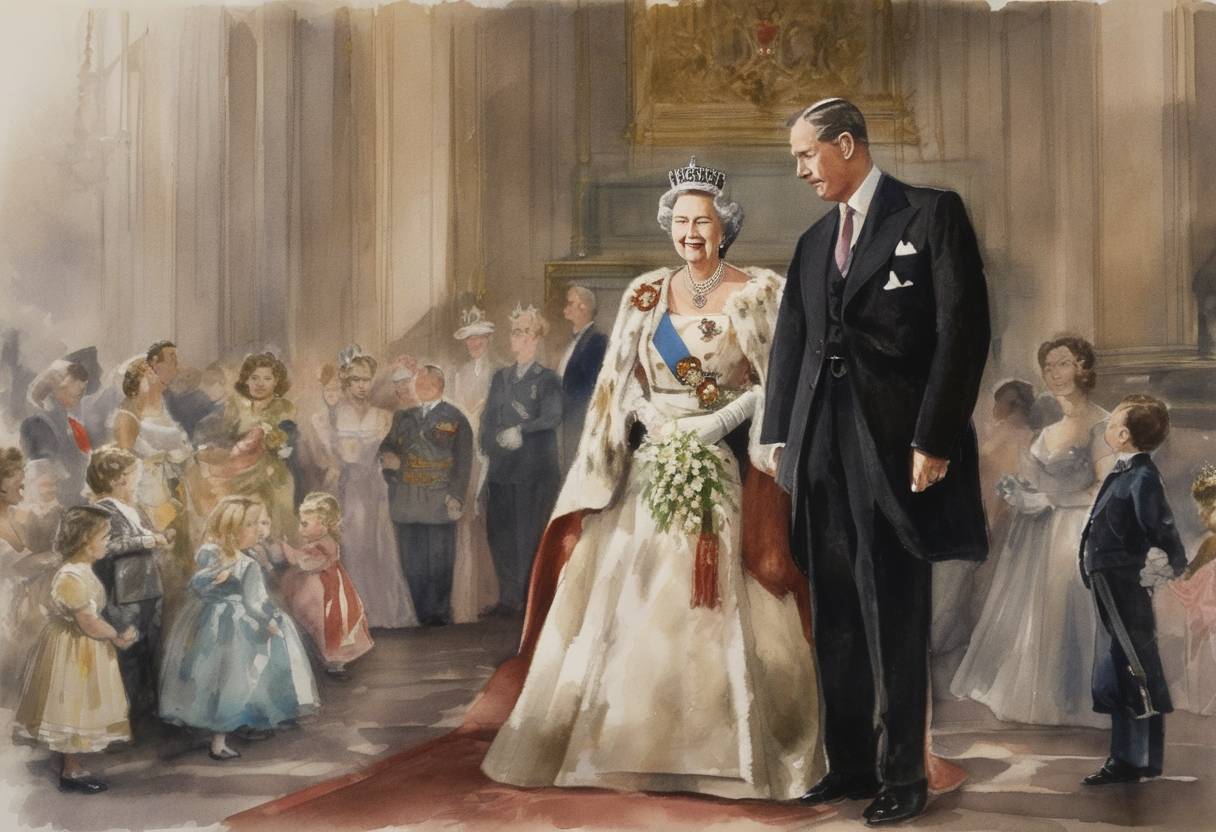
Elizabeth II Becomes Queen
On February 6, 1952, Princess Elizabeth ascended to the British throne following the death of her father, King George VI. This marked the beginning of Queen Elizabeth II’s illustrious reign over the United Kingdom and other Commonwealth realms. Her ascension represents a pivotal moment in British history, due to both its impact on the monarchy and the broader historical context in which it occurred.
Context Leading to the Accession
- King George VI’s Health: King George VI had been in declining health, suffering from ailments that curtailed his public engagements. He was diagnosed with lung cancer in September 1951 and underwent surgery for the removal of part of his lung. The King’s fragile health was a growing concern for the monarchy.
- Royal Tour to Australia and New Zealand: Princess Elizabeth and her husband, Prince Philip, Duke of Edinburgh, commenced a Commonwealth tour. They were staying at the Treetops Hotel in Kenya at the time of the King’s passing.
Key Events on February 6, 1952
- King George VI’s Death: King George VI died in his sleep at Sandringham House, Norfolk, at the age of 56. His death was a result of a coronary thrombosis.
- Ascension of Elizabeth II: Upon her father’s death, Princess Elizabeth, aged 25, was immediately proclaimed Queen, taking on the responsibility of the monarchy. The Council of Accession convened shortly thereafter to formalize the proclamation.
Aftermath and Historical Significance
- Queenship amidst Change: Queen Elizabeth II ascended the throne at a time of significant change. The post-war era saw the decline of the British Empire and the emergence of the Commonwealth as nations sought independence across the globe.
- Queen’s First Address: On February 7, upon returning to London from Kenya, Elizabeth pledged to dedicate her life to the service of her peoples, emphasizing continuity and stability within the monarchy.
- A Reign Begins: Queen Elizabeth II’s reign eventually became the longest in British history. Her tenure witnessed vast social changes and challenges, during which she maintained her role as a symbol of unity and continuity.
This succession initiated one of the most enduring and stable periods of leadership in the annals of British royalty, having profound effects on the Commonwealth and the global community.