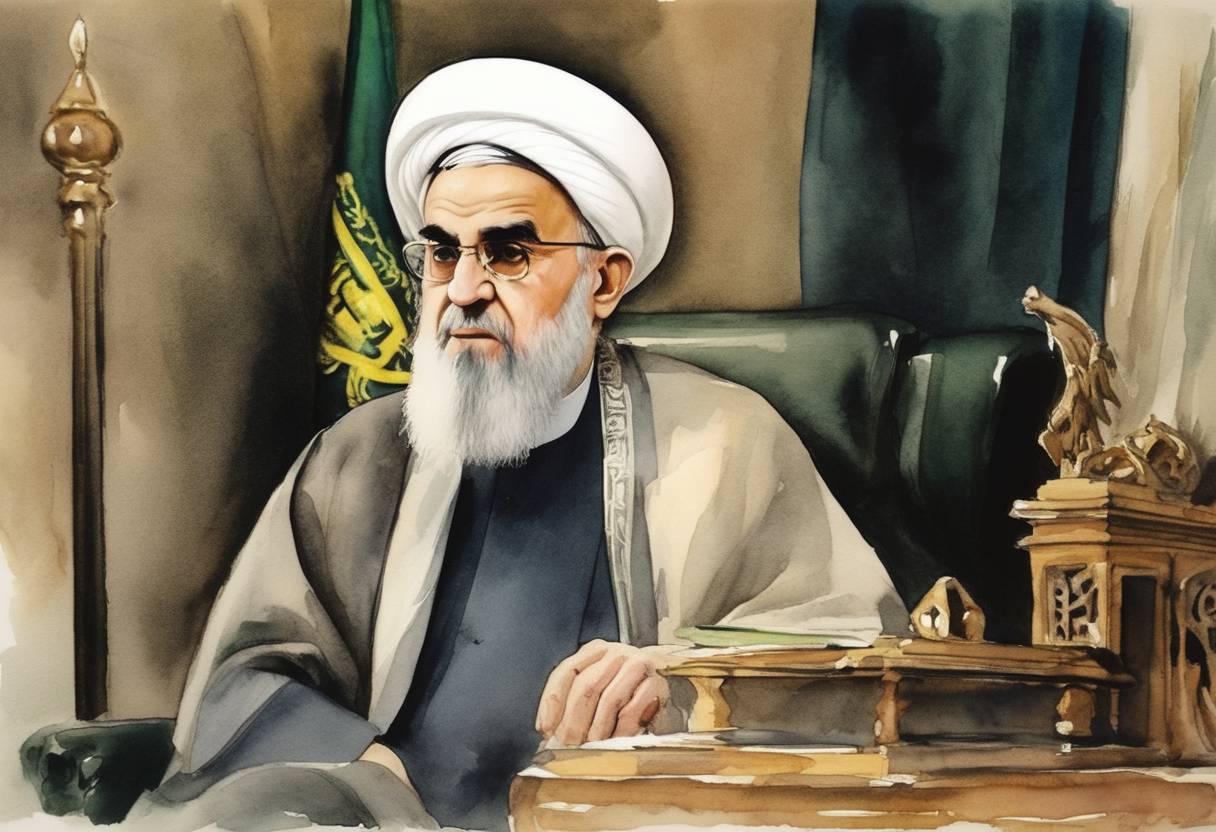
Ayatollah Khomeini’s Consolidation of Power on November 5, 1979
On November 5, 1979, Ayatollah Ruhollah Khomeini solidified his control over Iran following the Iranian Revolution, marking a pivotal moment in the establishment of the Islamic Republic. The revolution, which began in earnest in 1978, saw the overthrow of the Pahlavi monarchy, led by Shah Mohammad Reza Pahlavi, and the installation of an Islamic theocracy spearheaded by Khomeini.
Background to the Revolution
The Iranian Revolution was fuelled by widespread discontent with the Shah’s regime. Contributing factors included political repression, economic struggles, Westernization efforts that clashed with Islamic traditions, and the perception of the Shah’s regime as corrupt and heavily influenced by the United States. The unrest culminated in mass protests and civil resistance, drawing diverse support from various sectors of Iranian society, including secular and religious groups.
The Rise of Khomeini
Ayatollah Khomeini, a prominent Shiite cleric opposed to the Shah, emerged as the revolution’s leading figure. In exile since 1964, Khomeini used his writings and broadcasts to inspire and unite opposition forces. After the Shah fled Iran in January 1979, Khomeini returned to Tehran in February to a massive reception, quickly becoming the de facto leader of the newly forming state.
Establishing the Islamic Republic
Through a national referendum in March 1979, the monarchy was abolished, and Iran was declared an Islamic Republic. Khomeini’s vision for governance was exercised through the creation of new political structures that prioritized Islamic jurisprudence. By November 1979, Khomeini had established the apparatus of a theocratic rule, wherein clerical authority was cemented through the role of the Supreme Leader, a position he assumed, allowing for extensive control over political, economic, and social domains.
Implications and Aftermath
Khomeini’s consolidation of power led to significant changes in Iranian society and restructures in the political landscape. The new regime emphasized Islamic values, leading to widespread changes in legal and cultural life, including the implementation of Sharia law and a marked shift in foreign policy, especially concerning relations with Western powers. The revolution itself inspired Islamic movements globally and reshaped Middle Eastern geopolitics, often contributing to tensions within and beyond the region.
The consolidation of Khomeini’s power on November 5, 1979, signified the completion of this foundational shift, setting Iran on a path that continues to influence its domestic and international relations to this day.