The 2004 Summer Olympics in Athens
2004 · Athens, Greece
The Summer Olympics officially opened in Athens, Greece, marking the return of the Games to their birthplace after 108 years.
April 6, 1896
The first modern Olympic Games, the Games of the I Olympiad, opened in Athens, Greece. Organized by the International Olympic Committee, it marked the revival of the ancient Olympic tradition.
Athens, Greece | International Olympic Committee (IOC)
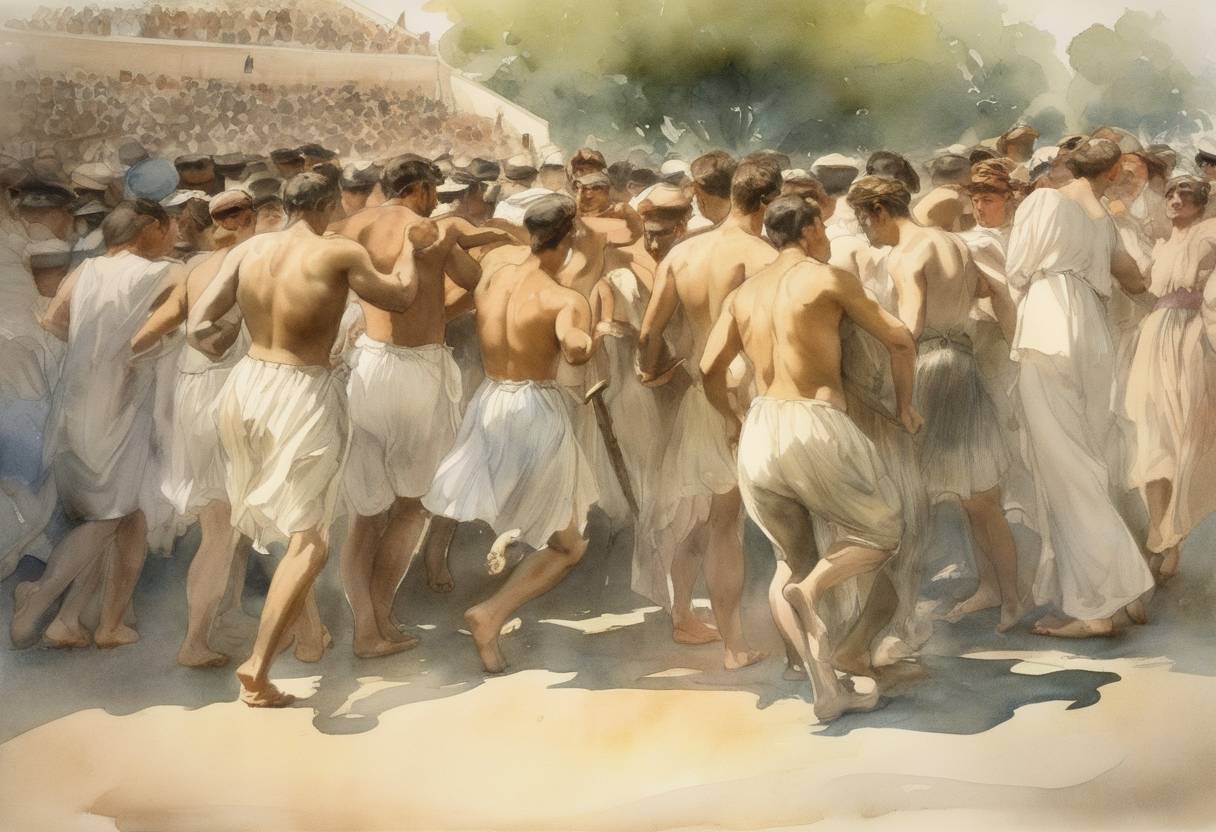
On April 6, 1896, the inaugural modern Olympic Games, known as the Games of the I Olympiad, officially commenced in Athens, Greece. This event marked a revolutionary revival of the ancient Olympic tradition, organized by the newly established International Olympic Committee (IOC).
The idea to reinstate the Olympic Games was spearheaded by French educator Baron Pierre de Coubertin, who aimed to foster peace and camaraderie among nations through sports. His vision led to the formation of the IOC in 1894, and Athens was selected as the host city to honor the roots of the ancient Games, which were held in Olympia, Greece.
King George I of Greece officially opened the Games in a grand ceremony held at the Panathenaic Stadium, a venue that had been renovated for the occasion. Approximately 80,000 spectators attended, providing a testament to the event’s significance and the enthusiasm it generated. Competitors from 14 countries participated, though most were Greek or came from nations with prominent expatriate communities in Athens.
These first modern Olympics featured 43 events across nine sports: athletics, cycling, fencing, gymnastics, shooting, swimming, tennis, weightlifting, and wrestling. Notably, the United States team, consisting largely of Boston athletes, excelled in track and field, culminating in a remarkable victory in multiple events. One of the most memorable events was the Marathon, which was inspired by the fabled run of ancient Greek messenger Pheidippides.
The 1896 Athens Games set a foundation for the international Olympic movement. Despite modern organizational challenges, it symbolized a unifying spirit and a commitment to international friendship and sportsmanship. The success of these Olympics encouraged the continuity of the event, leading it to become the global phenomenon it is today.
The revival of the Olympic Games in 1896 stands as a pivotal moment in sports history, bridging ancient traditions with modern ideals and laying the groundwork for over a century of international athletic competition.
Source: www.olympic.org