The End of the Siege of Paris: A Decisive Victory for Prussia
1871 · Paris, France
The Siege of Paris ends, marking a decisive victory for Prussia in the Franco-Prussian War.
October 23, 1870
Franco-Prussian War: The siege of Metz ended with the capture of the French garrison by Prussian forces, leading to a significant victory for the Prussian-led German states.
Metz, France | Prussian Army
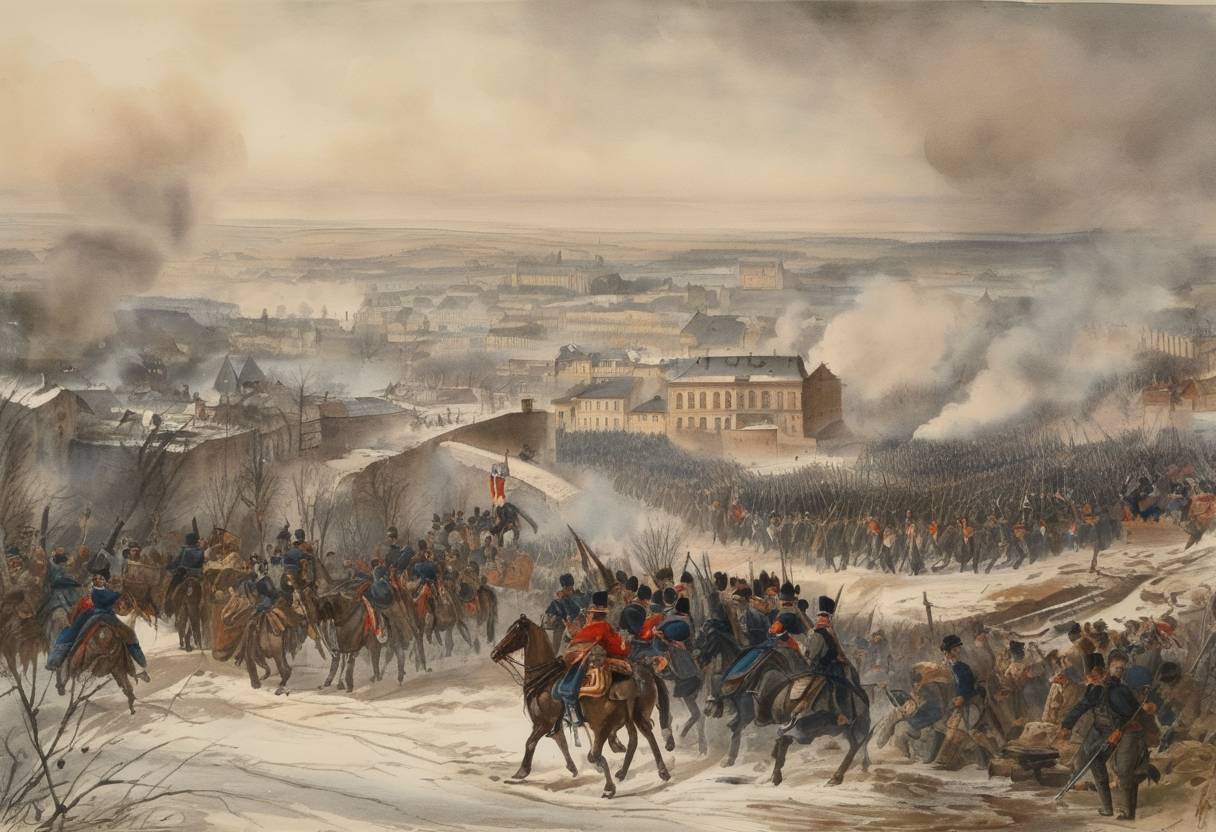
The Siege of Metz was a pivotal battle during the Franco-Prussian War, culminating in a critical victory for the Prussian-led German states on October 23, 1870. This siege significantly influenced the course of the war, showcasing the military might and strategic prowess of the Prussian forces.
The Franco-Prussian War, which began in July 1870, was rooted in deep-seated national tensions and ambitions for territorial expansion. The immediate cause was the diplomatic conflict over the Spanish throne, exacerbated by Otto von Bismarck’s famous Ems Dispatch. France, under Emperor Napoleon III, declared war on Prussia, unaware of the full extent of the military coalition against it, which included various German states united under Prussian leadership.
The city of Metz, located in northeastern France near the German border, held immense strategic value and was heavily fortified. It served as a stronghold for the French Army of the Rhine, commanded by Marshal François Achille Bazaine. Following early defeats at battles such as Sedan and Mars-la-Tour, French forces retreated to Metz, where they eventually became encircled by the advancing German army led by Prince Friedrich Karl of Prussia and General Eduard von Fransecky.
Initiated on August 19, 1870, the Siege of Metz lasted over two months, characterized by Prussian forces establishing a comprehensive blockade and bombardment around the fortified city. The German strategy focused on cutting off all supply lines and subjecting the encircled French forces to starvation and exhaustion. Despite several breakout attempts by the besieged French troops, the German forces maintained their strategic advantage, effectively utilizing superior artillery and coordination.
On October 23, 1870, the besieged French forces under Marshal Bazaine surrendered to the Prussian-led forces. This surrender led to the capture of approximately 173,000 French soldiers, a massive blow to the French military capacity. The loss of such a significant number of troops and resources severely undermined the French war effort.
The victory at Metz was a crucial turning point in the Franco-Prussian War, significantly boosting German morale and hastening the eventual downfall of the Second French Empire. The fall of Metz facilitated further German advances towards Paris and directly contributed to the eventual French defeat and the proclamation of the German Empire in January 1871.
The Siege of Metz demonstrated the efficacy of well-coordinated siege tactics and highlighted the industrial and organizational superiority of the Prussian military machine. It underscored the transformative shift in military strategy and technology during the 19th century, setting a precedent for future conflicts.
This decisive victory played a critical role in reshaping the European political landscape, laying the groundwork for German unification under Prussian leadership and consequently altering the balance of power in Europe. The outcomes of the Franco-Prussian War led to lasting geopolitical ramifications, influencing future Franco-German relations and contributing to the tensions that eventually erupted in World War I.
Source: www.britannica.com