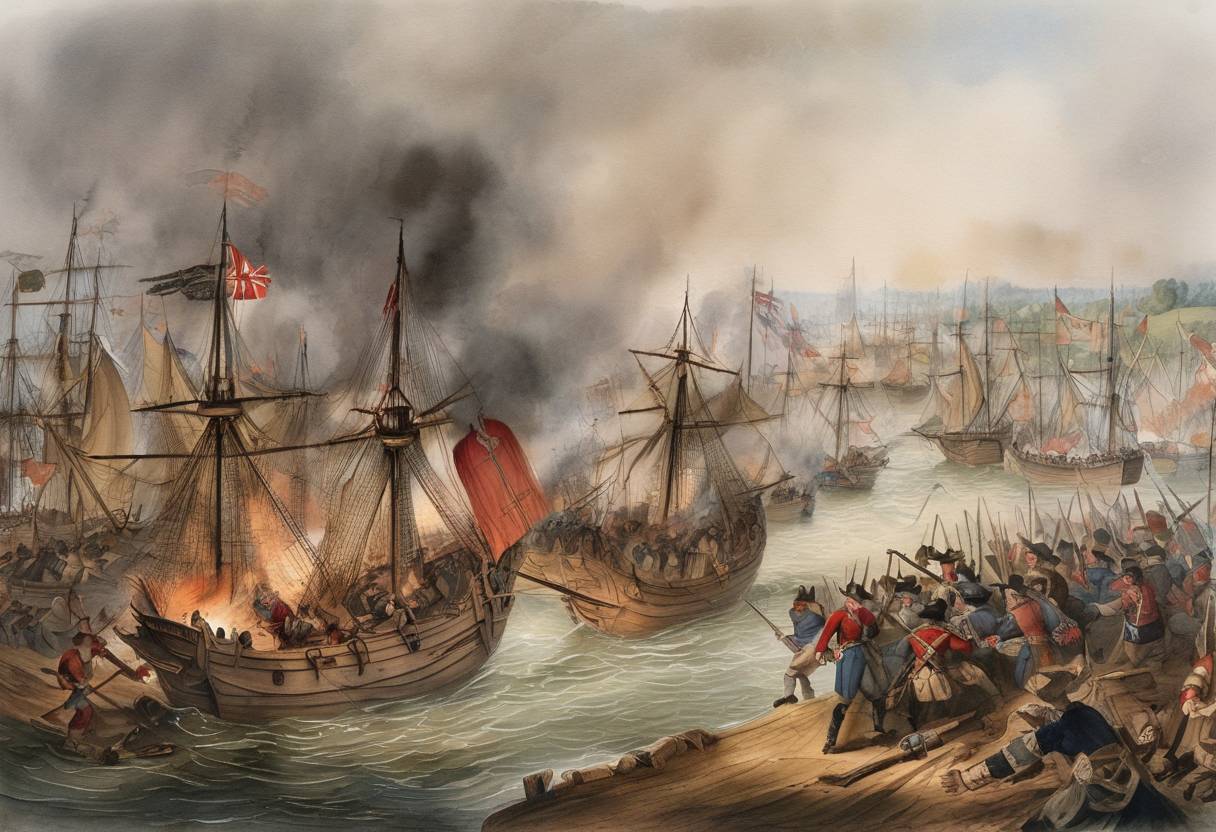
The Battle of the Severn does not correctly align with the given date of July 23, 1664. Instead, the Battle of the Severn occurred on March 25, 1655. Here is the detailed account of this historical event:
Battle of the Severn - March 25, 1655
Background
The Battle of the Severn took place in the English colony of Maryland and was a culmination of tensions between different religious and political factions within the colony. In the wake of the English Civil War (1642–1651), divisions between Royalists, who supported the monarchy, and Parliamentarians (also known as Puritans), who opposed it, had extended into the English colonies. Maryland, established by Lord Baltimore as a haven for English Catholics, found itself embroiled in these conflicts due to its religious diversity and competing claims to leadership.
Key Events
Puritan Settlement: A group of Puritans had settled in an area called Providence (modern-day Annapolis) on the Severn River. Unsatisfied with the Catholic influence in the colony, they found support amidst the broader anti-Catholic sentiment encouraged by the Parliamentarian government in England.
Conflict Leads to Battle: The conflict escalated when the Puritan settlers and their leader, Captain William Fuller, opposed the rule of the Maryland Proprietor, Lord Baltimore, and his governor, Josias Fendall, backed by the royalist forces.
The Battle: On March 25, 1655, the forces clashed near the mouth of the Severn River. Fuller’s forces, utilizing their superior numbers and tactical advantage, decisively defeated the loyalists under Governor Fendall.
Aftermath
Victory for the Puritans: The victory effectively ended Lord Baltimore’s proprietary rule temporarily and placed the colony under strict Puritan control, aligning it more closely with the Commonwealth governance in England.
Legal and Political Repercussions: The battle marked the last armed engagement of the English Civil War in America. It led to a brief Puritan regime in Maryland until the monarchy was restored in England in 1660, allowing Lord Baltimore to regain power.
Significance: The Battle of the Severn represented the religious and political volatility of the period, illustrating how the English Civil War’s issues extended into colonial territories and reflected broader disputes between Catholicism and Protestantism, as well as monarchical versus parliamentary governance.
The Battle of the Severn remains a crucial episode in understanding the complexity of colonial allegiances and the impact of European conflicts on the development of North American colonies.