United Kingdom General Election of December 12, 2019
2019 · London, United Kingdom
The United Kingdom held a general election in which the Conservative Party, led by Boris Johnson, won a significant majority, paving the way for Brexit.
September 25, 2019
The United Kingdom's Supreme Court rules that Prime Minister Boris Johnson's decision to prorogue Parliament was unlawful.
London, United Kingdom | Supreme Court of the United Kingdom
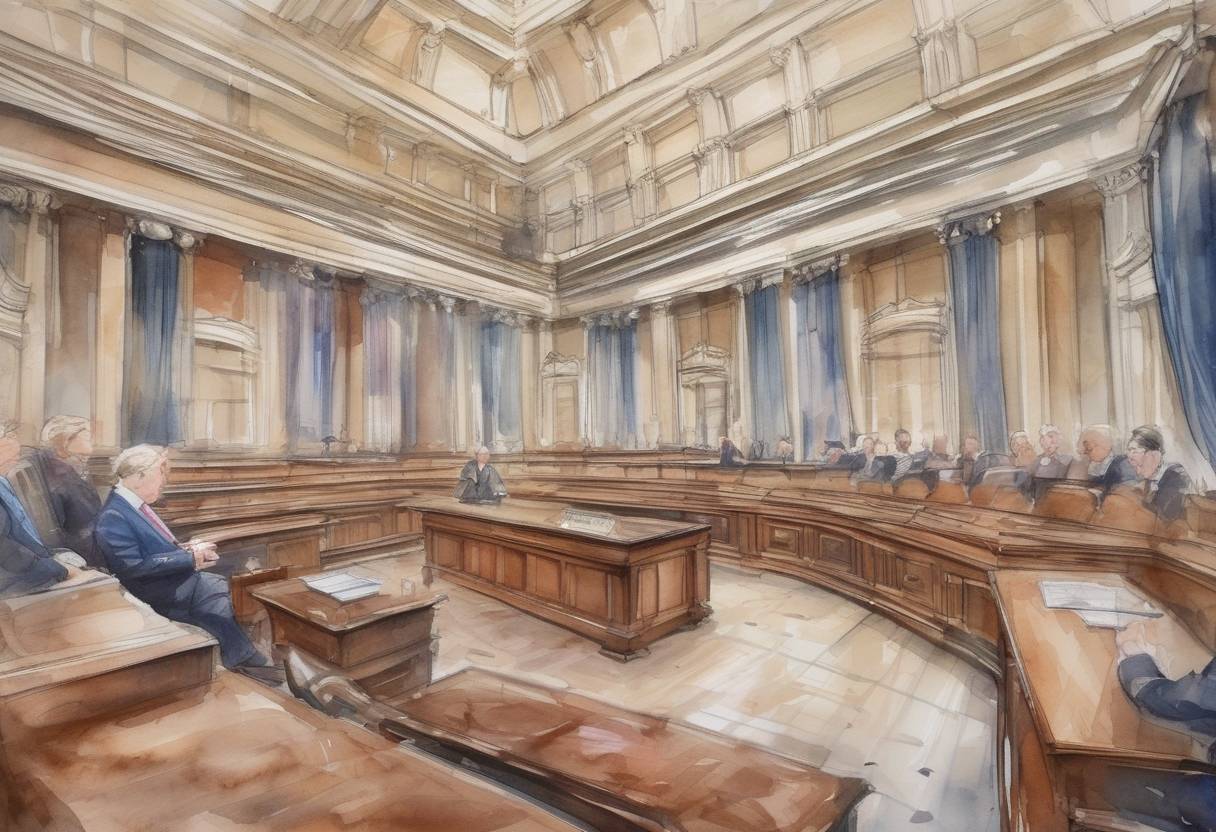
On September 25, 2019, the United Kingdom’s Supreme Court delivered a landmark ruling that Prime Minister Boris Johnson’s decision to prorogue Parliament was unlawful. This decision was a significant moment in the UK’s constitutional history and had profound implications for the relationship between the government and Parliament.
In the summer of 2019, the UK was embroiled in a political crisis over Brexit. Boris Johnson, who became Prime Minister in July 2019, was committed to delivering Brexit by October 31, 2019, with or without a deal. In this context, Johnson advised Queen Elizabeth II to prorogue Parliament, effectively suspending it from September 10 to October 14, 2019. The prorogation was seen by many as a strategic move to limit Parliament’s ability to debate and influence the Brexit process.
The decision to prorogue Parliament was met with immediate legal challenges. Two separate cases were brought forward: one in England by businesswoman Gina Miller and another in Scotland by a group of parliamentarians. The English High Court ruled that the matter was not justiciable, meaning it was not within the court’s power to rule on the issue. Conversely, the Scottish Court of Session found the prorogation unlawful, stating it was intended to stymie Parliament.
The Supreme Court, the highest judicial authority in the UK, was tasked with resolving these conflicting judgments. On September 24, 2019, the court unanimously ruled that the prorogation was unlawful. The court’s President, Lady Hale, stated that the prorogation had the effect of frustrating or preventing the ability of Parliament to carry out its constitutional functions without reasonable justification.
The Supreme Court’s decision had immediate political ramifications. Parliament resumed its sessions, and the ruling was seen as a significant check on executive power. It reinforced the principle that the government must be accountable to Parliament, especially during critical periods such as the Brexit negotiations.
The ruling also sparked discussions about the UK’s unwritten constitution and the balance of power between the branches of government. It highlighted the judiciary’s role in upholding constitutional principles and ensuring that no branch of government exceeds its authority.
In summary, the Supreme Court’s decision on September 25, 2019, was a pivotal moment in UK constitutional law, reaffirming the principles of parliamentary sovereignty and the rule of law.
Source: www.supremecourt.uk