Robert Fulton Patents the Steamboat - February 11, 1809
1809 · New York City, United States
Robert Fulton patents the steamboat.
March 23, 1849
The first use of an elevator in New York City was at the port of New York. It was employed for the loading and unloading of cargo.
New York City, United States | Port of New York
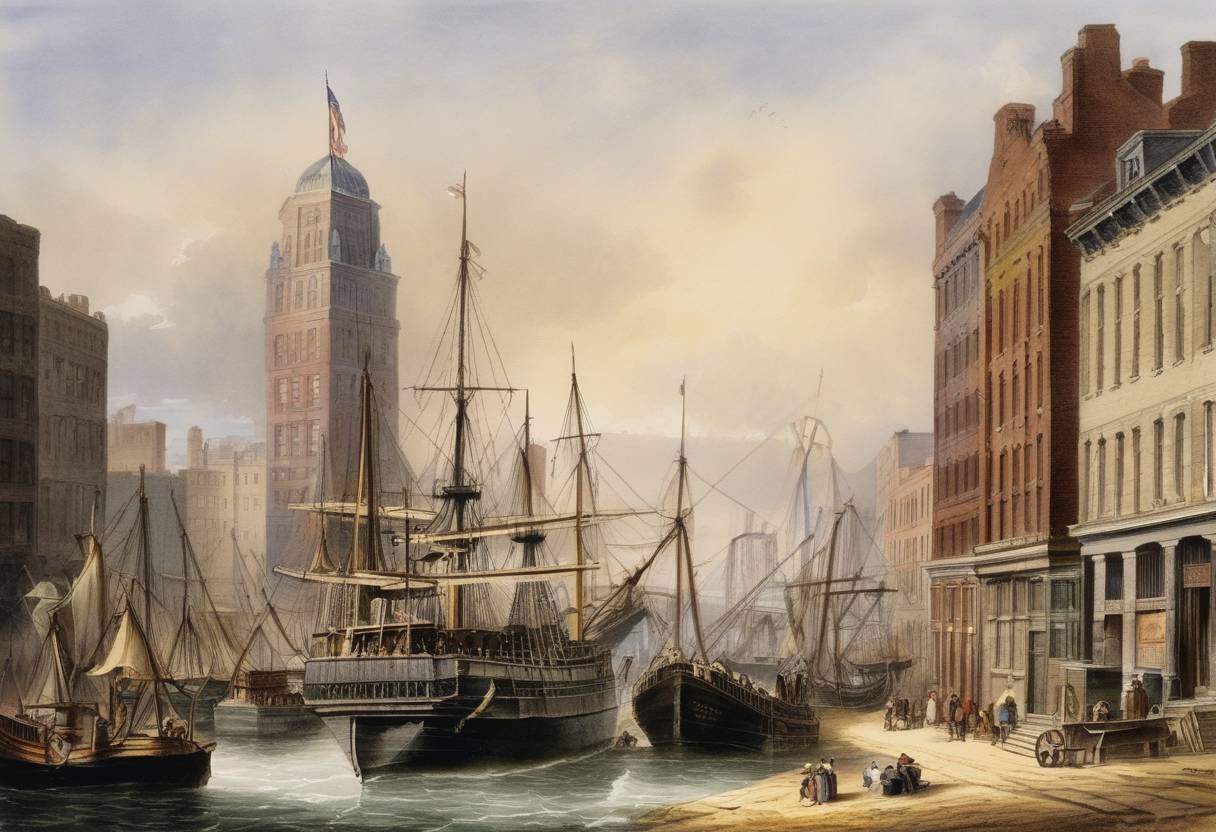
On March 23, 1849, New York City witnessed the historic debut of an innovative cargo elevator at the Port of New York. This marked a significant advancement in industrial operations and contributed to the burgeoning efficiency of cargo loading and unloading in this vital maritime hub.
During the mid-19th century, New York City was becoming a central trade and shipping center in the United States. To support its growing status and to increase operational efficiencies at its ports, technological innovations were necessary. Cargo handling at docks involved labor-intensive and time-consuming processes, which were bottlenecks in shipping operations. The invention of the cargo elevator was a direct response to these challenges.
This cargo elevator utilized a system of ropes and pulleys to lift and lower goods between ships and the dock. It was designed to streamline the logistics of moving heavy and bulky goods, which had previously been done manually or with minimal mechanical assistance. The technology enabled workers to manipulate larger volumes of cargo more swiftly and safely, improving turnaround times for ships at port.
The introduction of the elevator at the Port of New York was part of a broader trend toward mechanization and was indicative of the wider Industrial Revolution’s influence on maritime infrastructure. This innovation improved efficiencies dramatically, lowered the cost of labor, and enabled the port to handle an increased volume of trade. Consequently, New York City was able to solidify its status as a leading port in the nation and a gateway for international commerce.
The success of the first elevator system prompted further developments and refinements in elevator technology, both for cargo and passenger use. It laid the groundwork for future innovations in vertical transportation, influencing the eventual introduction of elevators in buildings, which would help transform city skylines around the world. Notably, the use of elevators would later pave the way for the construction of skyscrapers, fundamentally altering urban landscapes.
The installation of the first cargo elevator at the Port of New York on March 23, 1849, was a pivotal moment in the history of industrial innovation. It exemplified the capacity of technological advancements to meet the challenges of modern trade and commerce, heralding a new era in logistical and architectural possibilities.
Source: www.history.com