Syria Withdraws Troops from Lebanon: April 29, 2005
2005 · Beirut, Lebanon
Syria withdrew the last of its troops from Lebanon, ending a 29-year military presence that had further strained relations between the two countries.
May 25, 2000
Liberation Day was celebrated for the first time in Lebanon, marking the withdrawal of the Israeli army from the southern region of Lebanon, ending the Israeli occupation since 1982.
Beirut, Lebanon | Lebanese Government
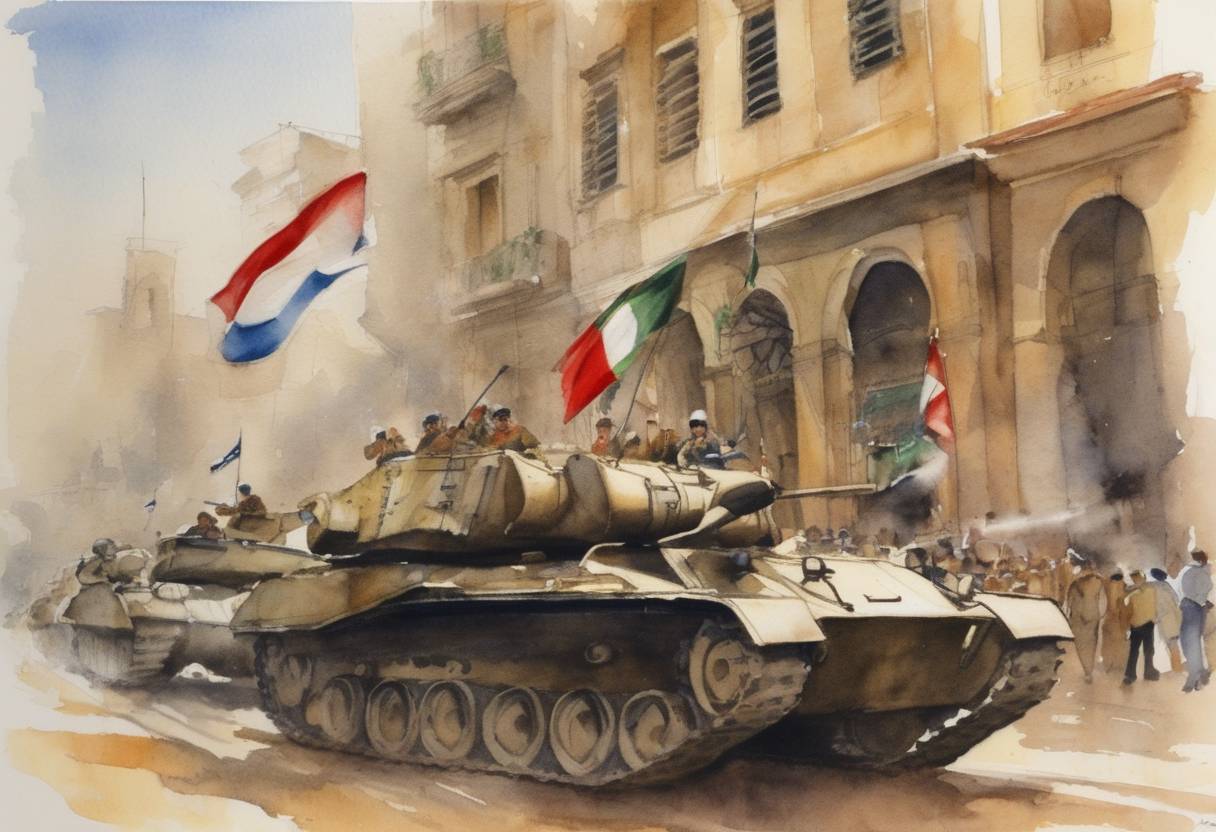
The Israeli occupation of Southern Lebanon began during the Lebanese Civil War with the 1982 Lebanon War, which saw Israeli forces invade Lebanon in response to attacks by the Palestine Liberation Organization (PLO) from Lebanese territory. In 1985, Israel partially withdrew but maintained a security zone in Southern Lebanon in cooperation with the South Lebanon Army (SLA), a local militia.
On May 25, 2000, Israeli Defense Forces (IDF) completed a full withdrawal from Southern Lebanon, marking the end of an 18-year occupation. The withdrawal took place after years of persistent military resistance by Hezbollah, alongside local and international pressure on Israel. The move was part of a decision by the Israeli government under Prime Minister Ehud Barak to comply with United Nations Security Council Resolution 425, which called for Israel to withdraw its forces from Lebanon.
Liberation Day, first celebrated on May 25, 2000, commemorates the end of the Israeli occupation. The event was marked by widespread celebrations throughout Lebanon, particularly in the liberated areas of the southern region. Thousands of Lebanese citizens filled the streets, expressing joy and national pride at the departure of Israeli forces. The day has since become a public holiday in Lebanon, observed annually.
The withdrawal and subsequent celebrations marked a significant turning point in Lebanese history. It was viewed as a victory for Lebanese sovereignty and a triumph of resistance, particularly for Hezbollah, bolstering its influence in the region. The event also shifted the local and regional political landscape, impacting Israeli-Lebanese relations. Despite the jubilation associated with the withdrawal, tensions in the region have persisted, occasionally flaring into conflict in subsequent years. The events of May 25, 2000, remain a pivotal moment in the complex geopolitical dynamics of the Middle East.
Source: www.britannica.com