Mary, Queen of Scots, Abdication - July 24, 1567
1567 · Edinburgh, Scotland
Mary, Queen of Scots, is forced to abdicate in favor of her one-year-old son, James VI.
February 10, 1567
Henry Stuart, Lord Darnley, the second husband of Mary, Queen of Scots, was found murdered at Kirk o' Field in Edinburgh under mysterious circumstances.
Edinburgh, Scotland
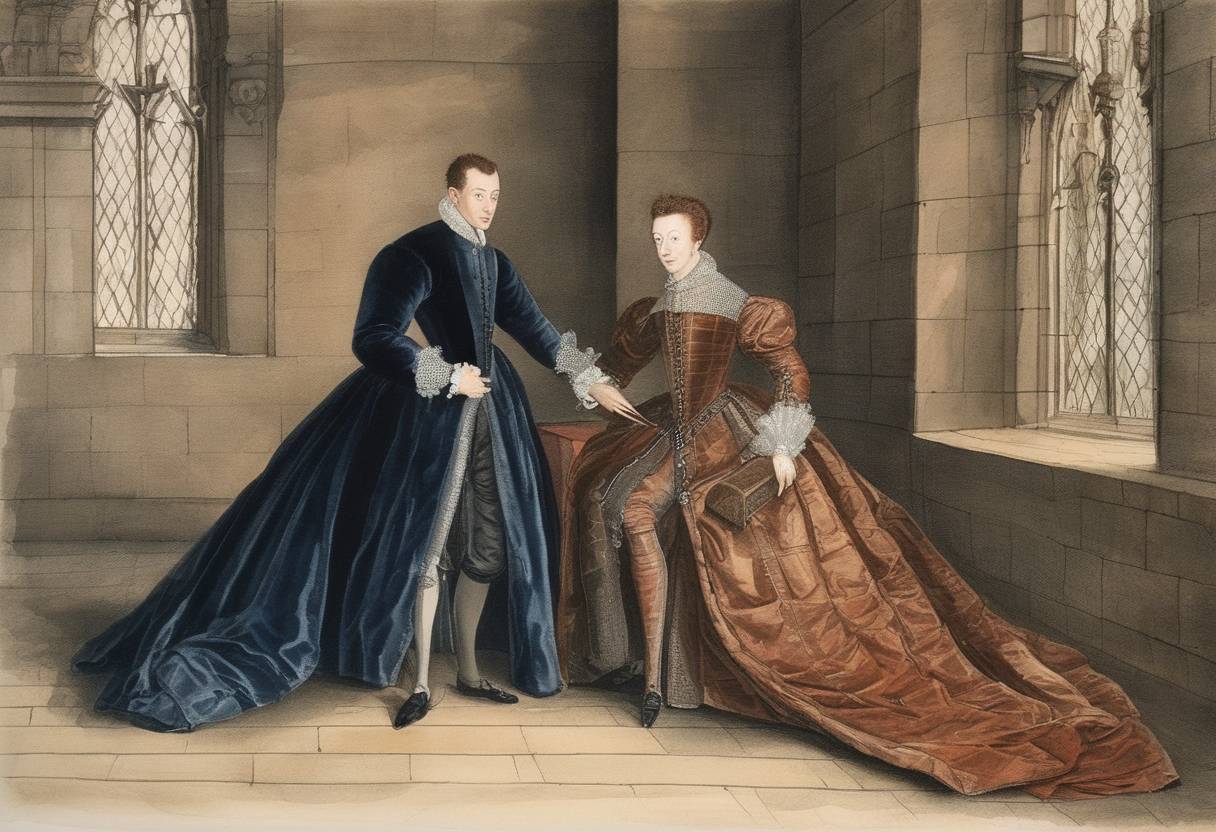
Henry Stuart, Lord Darnley, the second husband of Mary, Queen of Scots, was found dead on February 10, 1567, at Kirk o’ Field in Edinburgh. His mysterious murder remains one of the most enigmatic events of the 16th century, entwined with political intrigue and personal vendettas.
Henry Stuart was born in December 1545 into the influential Stuart family. He was the son of Matthew Stuart, 4th Earl of Lennox, and Lady Margaret Douglas, niece of King Henry VIII of England. Darnley married Mary, Queen of Scots, in 1565, a union that initially seemed politically advantageous but soon became strained due to personal and political discord.
By 1567, the marriage between Mary and Darnley had deteriorated. Darnley’s arrogance, ambition, and involvement in political conspiracies, such as the murder of Mary’s secretary David Rizzio, contributed to the discord. His behaviour alienated many at the Scottish court, leading to widespread enmity towards him.
In early 1567, Darnley fell ill with smallpox—or perhaps syphilis, as some speculated—and took residence at Kirk o’ Field, near Edinburgh, to recuperate. During this time, Mary visited him, demonstrating a possible reconciliation attempt.
On the night of February 9-10, 1567, an explosion destroyed the house where Darnley was recuperating. The next morning, Darnley’s body was discovered in the garden, along with those of his servant, outside the remains of the building, apparently unscathed by the blast. Initial observations suggested he might have been strangled or suffocated, leading to suspicions of a staged murder.
The murder sent shockwaves through Scotland and escalated political tensions. Suspicion fell upon several members of the nobility, including James Hepburn, 4th Earl of Bothwell, whom Mary would controversially marry later that year.
The murder of Lord Darnley remains a subject of historical debate, with various theories about the involvement of Mary or other Scottish nobility. The incident diminished Mary’s political standing, contributing to her eventual abdication and imprisonment. It also intensified the destabilization of the Scottish state, embroiling it in further conflicts and contributing to the eventual union of England and Scotland under James VI and I.
This event highlighted the complex intertwining of personal and political motivations, illustrating the fragility of alliances in a period marked by shifting power dynamics and intrigue.
Source: en.wikipedia.org