The Freedom's Journal: A Pioneering Publication
1827 · New York City, United States
The Freedom's Journal, the first African American-owned and operated newspaper in the United States, was published in New York City.
July 28, 1835
The first part of the Great Moon Hoax was published in the New York Sun.
New York City, United States | New York Sun
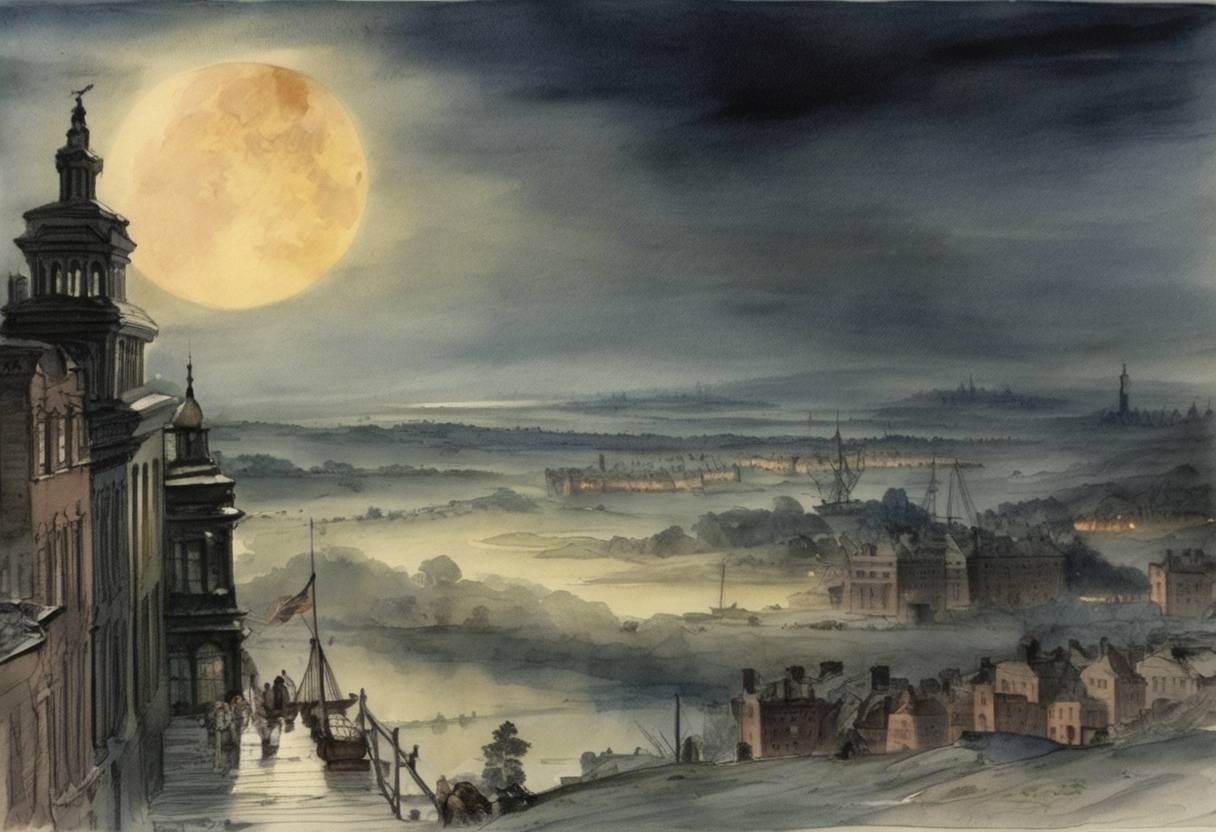
On August 25, 1835, the New York Sun initiated a series of articles that would become known as the “Great Moon Hoax.” The first of these installments was released on this date, captivating the paper’s readers with claims of astronomical discoveries of life on the Moon.
During the early 19th century, the New York Sun was a small, penny paper competing in a burgeoning market of inexpensive newspapers. At the time, scientific curiosity about the Moon and advances in telescopic technology were captivating public imagination, which the Sun sought to tap into for increased readership.
The series was purportedly based on the research of Dr. Andrew Grant, a fictional assistant to the real British astronomer Sir John Herschel, one of the most renowned astronomers of that time. The first article laid the groundwork for subsequent, more fantastical claims, hinting at remarkable findings made possible by an advanced telescope.
The articles detailed discoveries that included animals on the Moon, such as bison, goats, unicorns, and even humanoid bat-like creatures called “Vespertilio-homo.” The narrative was richly described, with vivid imagery of lunar landscapes and civilizations.
The hoax was a major sensation, significantly boosting the Sun’s sales and capturing the public discourse. It wasn’t until weeks later that the stories were revealed to be a fabrication, but by then, the Sun had secured its place as a leading newspaper. The incident has since been studied as an early example of media sensationalism and public gullibility.
Source: www.britannica.com