Robert II Becomes King of Scotland: The Beginning of the Stuart Dynasty
1371 · Scone, Scotland
Robert II became King of Scotland, marking the beginning of the Stuart dynasty.
August 14, 1040
King Duncan I of Scotland was killed in battle by his cousin Macbeth, who then succeeded him as King of Scotland.
Pitgaveny, Scotland
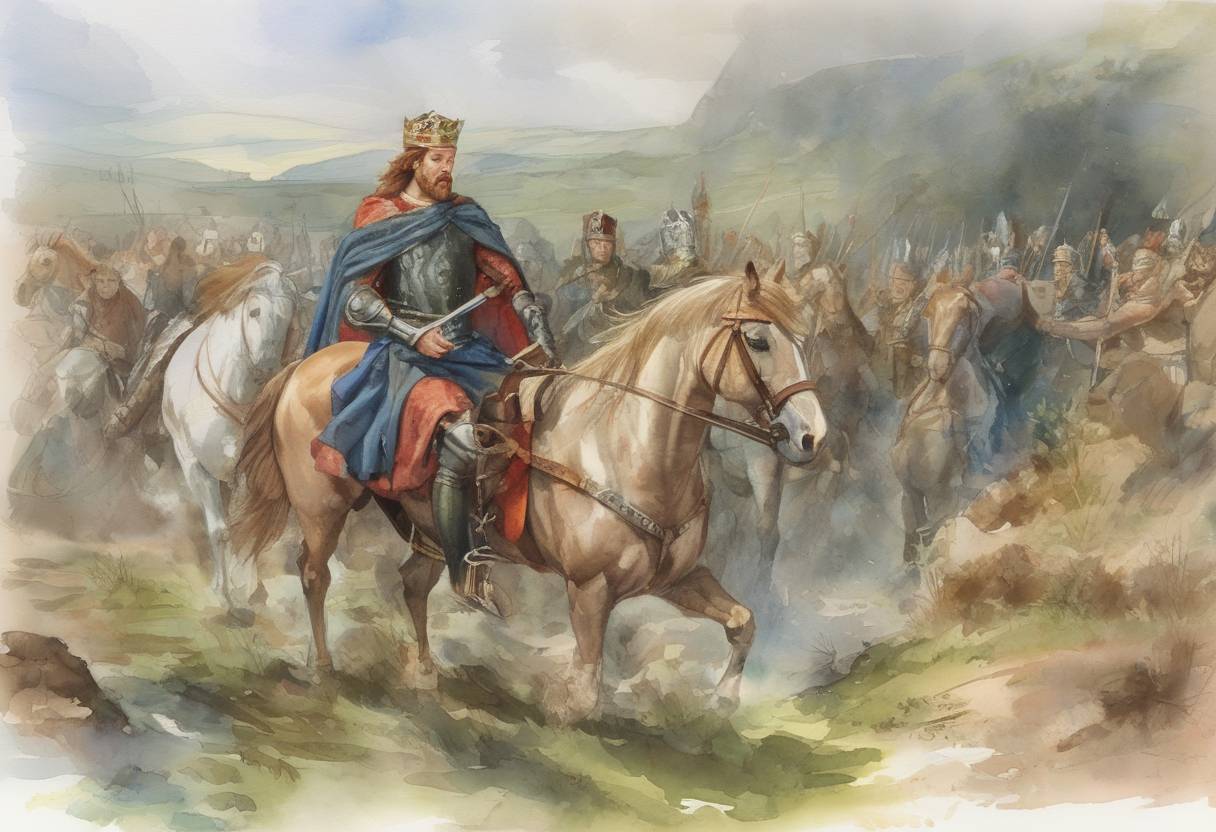
On August 14, 1040, a pivotal event in Scottish history unfolded with the death of King Duncan I. This event marked a significant turning point, as it led to the ascension of Macbeth, Duncan’s cousin, to the Scottish throne.
King Duncan I, born around 1001, was the grandson of King Malcolm II. He ascended to the throne of Scotland in 1034, following Malcolm’s death. Duncan’s reign was characterized by attempts to consolidate power and expand his influence, but he faced numerous challenges, including internal strife and external threats.
The conflict between Duncan and Macbeth was rooted in familial rivalry and political ambition. Macbeth, the Mormaer (or regional ruler) of Moray, was a powerful noble with a legitimate claim to the throne through his mother’s lineage. Tensions between the two escalated, culminating in a confrontation near Elgin, in what is now Moray, Scotland.
On August 14, 1040, Duncan was killed in battle by Macbeth’s forces. The exact details of the battle are sparse, but it is believed that Macbeth’s victory was decisive, allowing him to claim the throne.
Following Duncan’s death, Macbeth was crowned King of Scotland. His reign, which lasted until 1057, was marked by relative stability and prosperity. Contrary to the portrayal in Shakespeare’s famous play, historical records suggest that Macbeth was an effective ruler. He is noted for his efforts to strengthen the kingdom and for his pilgrimage to Rome in 1050, which demonstrated his commitment to both religious and diplomatic endeavors.
The death of Duncan I and the rise of Macbeth had lasting implications for Scottish history. Duncan’s sons, Malcolm and Donald, fled to safety, with Malcolm eventually seeking refuge in England. This set the stage for future conflicts over the Scottish throne.
Macbeth’s rule ended in 1057 when he was defeated by Duncan’s son, Malcolm Canmore, who became Malcolm III. This marked the beginning of a new era in Scottish history, with Malcolm III’s reign leading to significant changes in the kingdom’s structure and its relations with England.
In summary, the events of August 14, 1040, were crucial in shaping the medieval history of Scotland, illustrating the complex interplay of power, kinship, and ambition that characterized the era.
Source: www.britannica.com