President Dwight D. Eisenhower's Farewell Address
1961 · Washington, D.C., United States
President Dwight D. Eisenhower delivers his farewell address to the nation, warning of the dangers of the military-industrial complex.
June 29, 1956
The Federal-Aid Highway Act of 1956 was signed into law by President Dwight D. Eisenhower, creating the Interstate Highway System in the United States.
Washington, D.C., United States | U.S. Federal Government
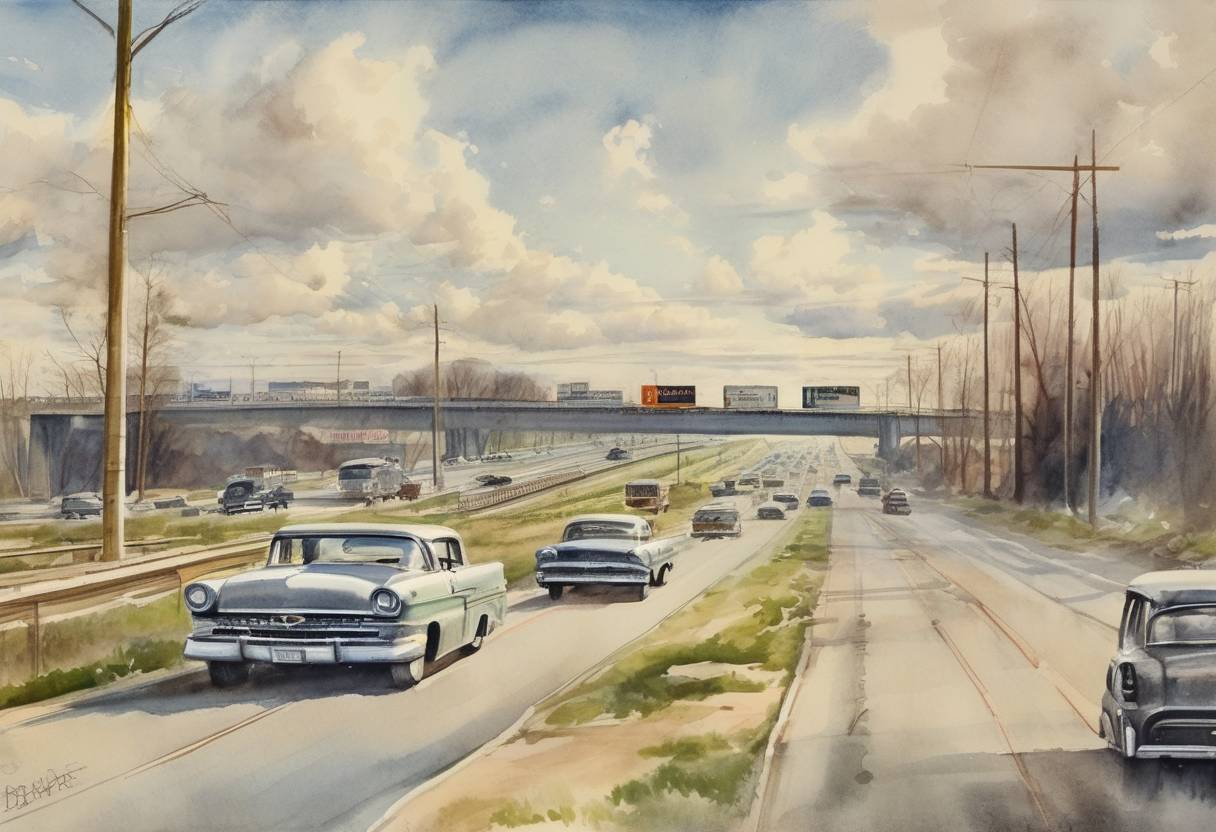
On June 29, 1956, President Dwight D. Eisenhower signed the Federal-Aid Highway Act into law, marking a pivotal moment in American infrastructure development. This legislation led to the creation of the Interstate Highway System, a transformative network of roads that reshaped the nation’s landscape, economy, and society.
The concept of a national highway system had been discussed for decades prior to the 1956 Act. The need for improved roads became apparent during World War I, when the military struggled with inadequate infrastructure. President Franklin D. Roosevelt also envisioned a network of highways, but it wasn’t until Eisenhower’s presidency that the idea gained significant momentum.
Eisenhower’s experience with the U.S. Army’s 1919 Transcontinental Motor Convoy, which highlighted the poor state of American roads, and his observations of the German autobahn network during World War II, influenced his advocacy for a comprehensive highway system.
The completion of the Interstate Highway System took several decades, with the final segments finished in the 1990s. The system now spans over 48,000 miles, connecting major cities and regions across the United States. While it has been praised for its economic and strategic benefits, the system also faced criticism for its environmental impact and the displacement of communities during its construction.
The Federal-Aid Highway Act of 1956 remains a landmark in U.S. history, exemplifying the transformative power of infrastructure investment and its lasting influence on American life.
Source: en.wikipedia.org