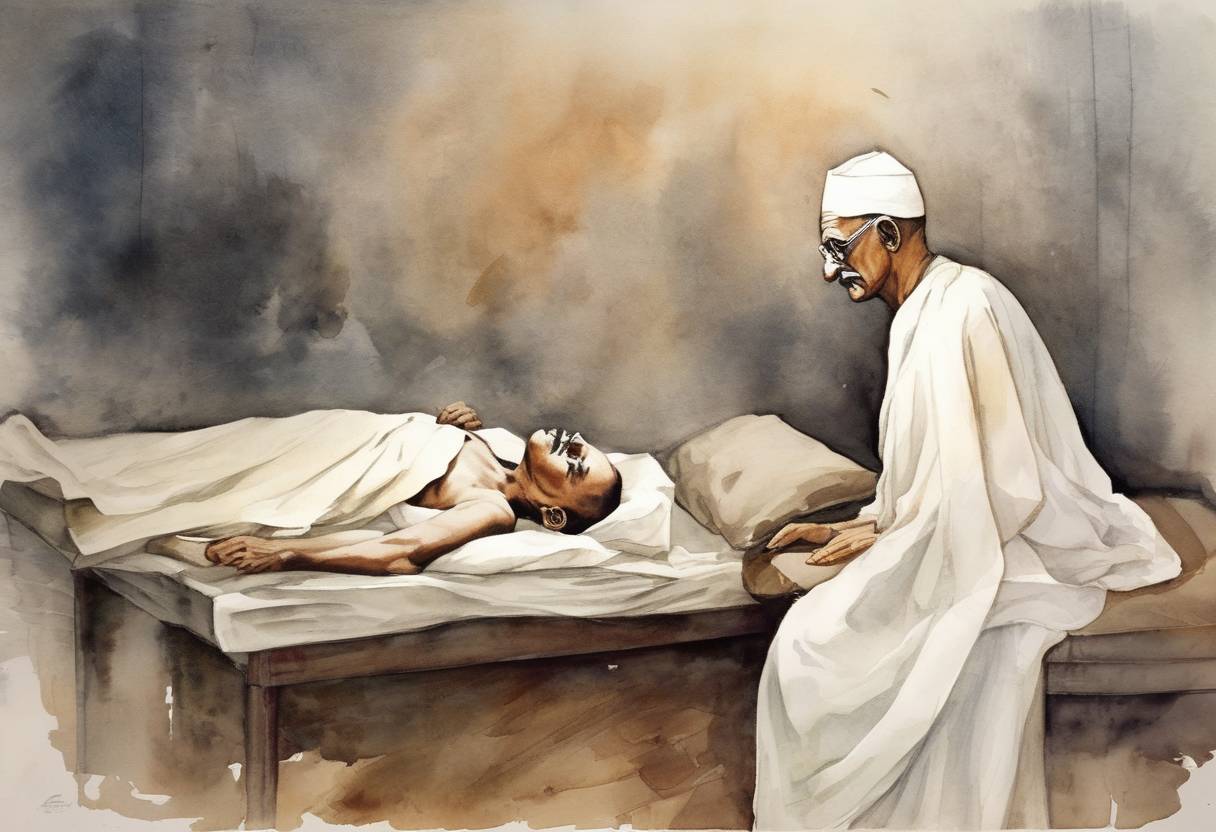
Assassination of Mahatma Gandhi
Date and Location
- Date: January 30, 1948
- Location: Birla House, New Delhi, India
- Mahatma Gandhi: Leader of the Indian independence movement against British rule, renowned for his philosophy of non-violence and civil disobedience.
- Nathuram Godse: A Hindu nationalist and member of the extremist group Hindu Mahasabha, who opposed Gandhi’s views on partition and his perceived appeasement of Muslims.
Context Leading to the Assassination
- Partition of India (1947): The subcontinent was divided into two independent dominions, India and Pakistan, leading to widespread communal violence and displacement.
- Gandhi’s Peace Efforts: Gandhi was actively working to promote peace and communal harmony between Hindus and Muslims, which included fasting to end violence and advocating for the fair treatment of Muslims in India.
- Opposition: Some Hindu nationalists, including Godse, believed Gandhi’s efforts undermined Hindu interests and were detrimental to the newly formed Indian state.
The Assassination
- Event: On the evening of January 30, 1948, Gandhi was attending a prayer meeting at Birla House. As he walked towards the dais, Nathuram Godse approached him and fired three bullets at close range, resulting in Gandhi’s death.
- Aftermath: Gandhi’s assassination shocked the world and led to widespread mourning. His death underscored the deep-seated communal tensions in India.
Consequences
- Immediate Reaction: The assassination led to a crackdown on Hindu extremist groups, including the arrest and trial of Godse and his accomplices.
- Trial and Execution: Nathuram Godse and his co-conspirator Narayan Apte were tried and convicted for the murder. They were executed on November 15, 1949.
- Legacy: Gandhi’s assassination highlighted the challenges of post-independence India in achieving communal harmony. It also reinforced his legacy as a martyr for peace and non-violence.
Historical Significance
- Impact on India: Gandhi’s death marked the end of an era in Indian politics and left a profound impact on the nation’s collective conscience.
- Global Influence: Gandhi’s philosophy of non-violence continued to inspire civil rights movements worldwide, influencing leaders such as Martin Luther King Jr. and Nelson Mandela.
The assassination of Mahatma Gandhi remains a pivotal moment in Indian history, reflecting the complexities of the nation’s struggle for unity and peace in the aftermath of independence.